Where to Get Ice Baths and Recovery in Bangkok
A no-bs guide to contrast therapy, cryotherapy, and sports recovery centers in Bangkok, including real THB pricing and location details.
Bangkok heat combined with heavy training in Muay Thai or high-intensity gym sessions takes a toll on your body. Humidity makes passive recovery slow, and traditional Thai massages do not always fix acute inflammation or nervous system fatigue. Contrast therapy, cold plunges, and infrared saunas have moved from niche biohacking tools into standard post-training routines across the city.
Prices range from a quick 300 THB dip at a community hub to 2,500 THB for a high-end private suite. Here is a breakdown of where to go based on your budget, location, and the type of recovery you need.
Dedicated Recovery Hubs
Form Recovery and Wellness (Asok / Phrom Phong)
Located between BTS Asok and BTS Phrom Phong, Form focuses on clinical sports recovery rather than spa-style relaxation. Their facility includes ice baths set at 3 to 5 degrees Celsius, large traditional Finnish saunas, and infrared cabins. They also offer targeted cold-air cryotherapy and physical therapy treatments.
Expect to pay around 800 THB for a drop-in sauna and ice plunge pass. Packages reduce the per-session price significantly. It is best suited for athletes dealing with specific injuries or chronic tightness who want structured contrast protocols.
Base Thailand (Thonglor / Silom)
While primarily known as a high-end strength and conditioning gym, Base offers dedicated contrast therapy facilities at select locations. Their ice baths are filtered continuously and kept strictly at 4 degrees.
Drop-in rates for recovery suite access start at 600 THB. If you train at Base, you can add recovery passes to your workout packages. The Thonglor location is a five-minute win (motorcycle taxi) ride from BTS Thonglor.
Budget and Community Cold Plunges
The Herbal Sauna Community Outlets
If you want cheap, raw heat and cold without commercial luxury, local Thai herbal saunas across Din Daeng and Sukhumvit offer the most economical option. These venues feature intense steam rooms infused with fresh lemongrass, kaffir lime, and camphor, paired with simple ice-filled tubs or cold dip pools around 12 to 15 degrees.
Entry fees are usually between 150 THB and 250 THB with no time limit. You will need to bring your own towel or rent one for 20 THB. Expect plain concrete floors and local regular clients rather than sleek, modern design.
Musashi Muay Thai & Fitness (On Nut)
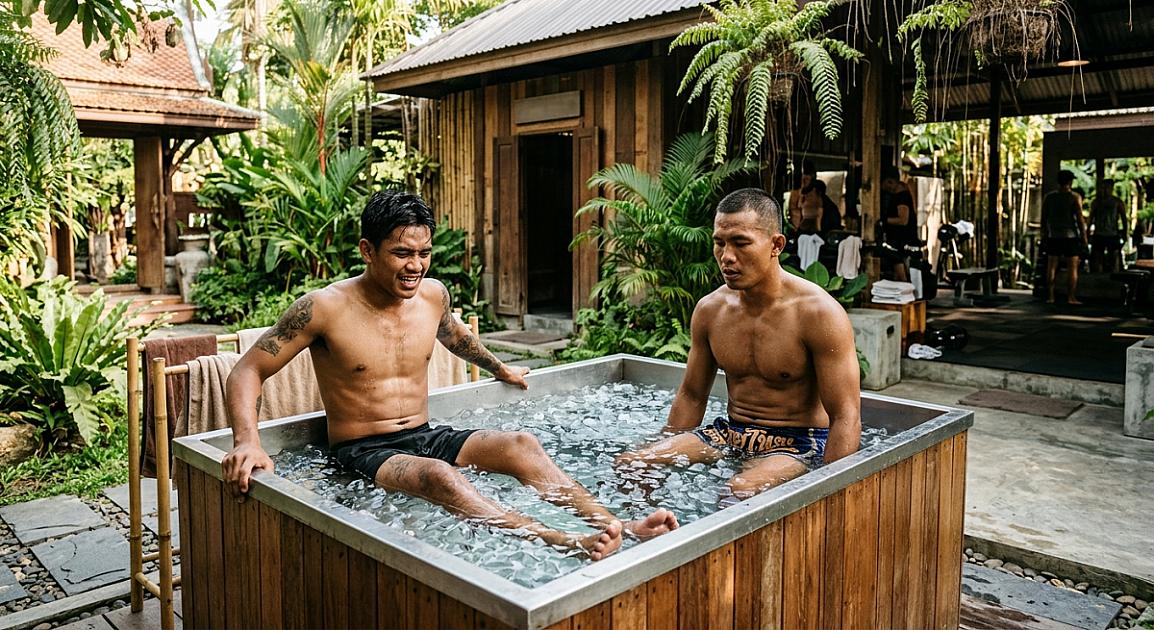
For people training on the eastern stretch of Sukhumvit, Musashi provides a basic ice bath setup alongside their open-air Muay Thai ring. It is built for fighters needing immediate post-clinch inflammation reduction.
Non-members can access the ice bath and sauna setup for approximately 300 THB. It is situated down Sukhumvit Soi 77, accessible by a short songthaew ride from BTS On Nut.
High-End Contrast Therapy Suites
Yunomori Onsen & Spa (Sukhumvit 26)
Yunomori bridges traditional Japanese onsen culture with modern athletic recovery. Located in the A-Square complex on Sukhumvit 26, it features hot mineral tubs, a cold deep-plunge pool held around 16 degrees, a steam room, and a dry sauna.
An all-day bath pass costs 550 THB. While 16 degrees is higher than a dedicated ice plunge, the prolonged soaking options combined with the cold pool offer effective systemic recovery. You can get there via a 15-minute walk or a quick motorcycle ride from BTS Phrom Phong.
Longevity and Cryo Clinics (Ekkamai / Wireless Road)
For whole-body nitrogen cryotherapy chambers cooled to minus 110 degrees, dedicated longevity clinics operate in Ekkamai and near Ploenchit. These three-minute sessions compress systemic recovery time without wet cold exposure.
Single sessions run from 1,800 THB to 2,500 THB. These facilities target high-performance runners, triathletes, and busy professionals who need rapid recovery without sitting in an ice tub.
What to Look for Before Booking
Water filtration varies across venues. Reputable commercial spots use continuous ozone, UV, or micron filtration to keep shared ice baths clean. Cheaper spots manually load ice blocks into standing tubs, which means water quality drops as the day goes on. Ask the staff about their filtration method if you have sensitive skin.
Temperature control is another factor. Serious athletic recovery requires temperatures below 8 degrees Celsius. Spa-focused centers often hover between 12 and 16 degrees. If your goal is nervous system down-regulation and extreme inflammation response, confirm the water temperature before paying a single session fee.
Practical Tips for Recovery in Bangkok
- Bring extra clothes. Humidity means gear does not dry in your gym bag. Bring a sealable waterproof bag for wet swimsuits.
- Hydrate with electrolytes. Sweating in an infrared sauna or steam room under Bangkok ambient heat drains sodium fast. Coconut water from any local street vendor or convenience store provides quick potassium, but add a salt packet if you did an intense session.
- Time your visit. Avoid peak commute hours (17:00 to 19:00) when traveling between BTS stations and back-alley locations via motorcycle taxi.
Frequently Asked Questions
How much does an ice bath cost in Bangkok?
Prices range from 150 THB at local Thai herbal saunas to 800 THB at modern athletic recovery hubs. High-end whole-body nitrogen cryotherapy chambers cost between 1,800 THB and 2,500 THB per session.
Do I need to book recovery sessions in advance?
Popular studios in Thonglor and Asok require advance booking during peak evening hours. Budget local saunas and large onsen facilities accept drop-ins at any time.
What is the water temperature in Bangkok ice plunges?
Dedicated athletic hubs maintain temperatures between 3 and 6 degrees Celsius. Wellness spas and onsens keep their cold pools warmer, usually between 12 and 16 degrees Celsius.