Muay Thai Camps in Koh Samui: What to Expect, Where to Train
Koh Samui is not the first place people think of for Muay Thai training. Phuket grabs most of that attention, and for good reason. But Samui has a solid collection of camps that suit a specific type of trainee: someone w
Koh Samui is not the first place people think of for Muay Thai training. Phuket grabs most of that attention, and for good reason. But Samui has a solid collection of camps that suit a specific type of trainee: someone who wants genuine Muay Thai training without being surrounded by fifty other tourists doing the same.
The Samui Training Scene
Koh Samui's Muay Thai scene is smaller and more relaxed than Phuket's. You will not find mega-camps with their own restaurants, Instagram walls, and merchandise shops. What you will find is a handful of legitimate gyms that have been operating for years, mostly run by Thai families or long-term expats with real fighting backgrounds.
The island draws a different crowd too. Because Samui has more five-star resorts and beach clubs than Phuket, the training camps here tend to attract people who want to split their time between serious training and actual holiday activities. That is neither better nor worse than Phuket, just different.
Camps Worth Knowing About
Lamai Muay Thai
Located in the Lamai area on the east coast, this is one of the longer-running camps on the island. Morning sessions start around 7:30am and run until roughly 10am. Evening sessions pick up again at 5pm. Prices sit around 300-350 THB per session or 2,500-2,800 THB for a weekly package. The trainers here are former fighters who take technique seriously, which makes it a good fit for people who actually want to improve rather than just get a workout.
Santai Muay Thai
Based near Bophut in the north, Santai is a newer operation with modern equipment and a cleaner facility. Drop-in rates run about 400 THB. They offer beginner packages that include accommodation referrals at nearby guesthouses, which makes logistics easier for people arriving without a plan. The training style leans toward fitness-focused Muay Thai rather than competition prep, so expect pad work, bag rounds, and conditioning drills more than heavy sparring.
Chaweng Muay Thai
In the Chaweng area, the busiest part of the island, there are a few smaller camps that cater more to tourists. These are fine for a one-off session if you are already on Samui and want to try something, but they are not where serious trainees spend a month. The instruction is lighter, the groups are larger, and the focus is on experience over development.
What to Expect From Training
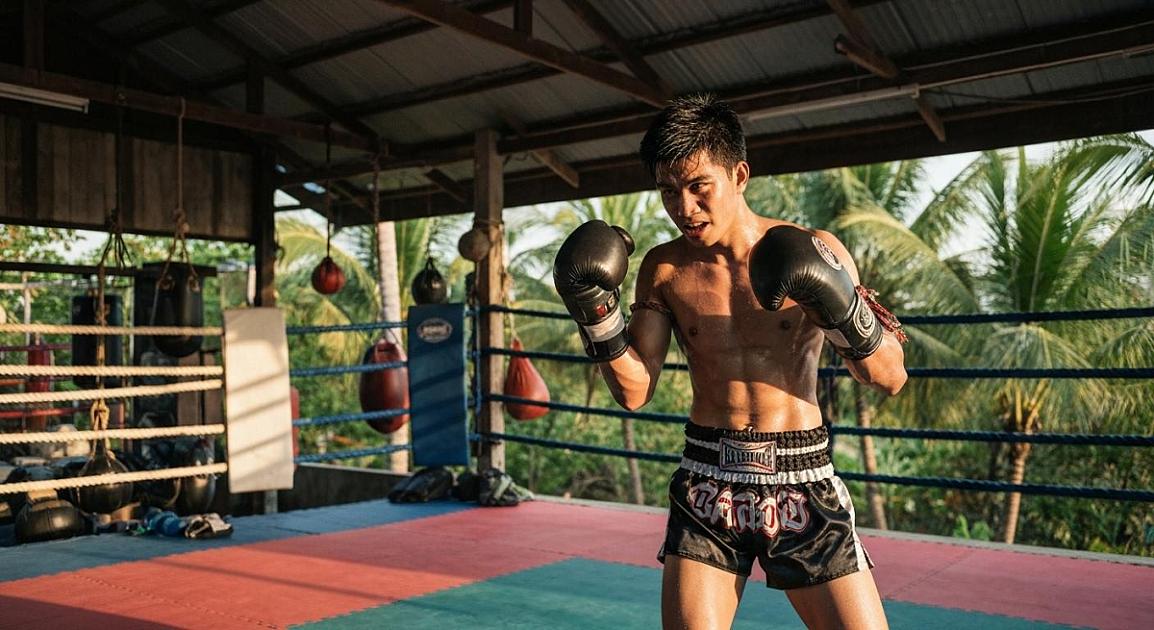
A typical Samui training session follows the same basic structure you would find anywhere in Thailand. You start with a run or skipping rope for 10-15 minutes, then move into shadow boxing, then partner pad work with a trainer, then bag rounds, then some conditioning work at the end. If you are a beginner, you will spend most of your time on the pads learning basic combinations. If you have experience, the trainer will push you harder and start adding clinch work and sweeps.
The heat is significant year-round. Morning sessions are the more bearable option. By the time afternoon rolls around, especially from March to June, training outdoors in full sun is genuinely difficult. Drink more water than you think you need and expect to sweat through whatever you are wearing within the first five minutes.
Samui vs. Phuket for Muay Thai
This comparison comes up constantly, and the honest answer is that it depends on your priority.
Phuket has the bigger camps. Tiger Muay Thai, Rawai Muay Thai, Suwit Muay Thai, AKA Thailand: these are operations with multiple trainers, twice-daily structured sessions, on-site weight cutting facilities, and a constant flow of international fighters preparing for actual bouts. If you want to be around competitive fighters or train with world-level coaches, Phuket is where you go.
Samui is better if you want a quieter experience and a more personal training relationship with your coach. The smaller camps mean you get more one-on-one time on the pads. You are not one of thirty people cycling through the gym on the same afternoon. And Samui as an island has a different energy: less chaotic than Phuket, slower-paced, easier to relax in after training.
The accommodation-to-camp integration is also different. Many Phuket camps have on-site rooms or direct partnerships with nearby hostels that create a full training community with meal plans and group dynamics. Samui camps tend to be more standalone, meaning you arrange your own place to stay and show up for training. That works well for people who prefer some separation between training time and personal time.
Prices and Packages
Single sessions at Samui camps generally run 300-400 THB. A weekly unlimited pass at a mid-level camp lands around 2,500-3,500 THB. Monthly packages at the more established gyms can go 8,000-12,000 THB depending on whether accommodation is included. These numbers are broadly similar to what you would pay at mid-tier Phuket camps, though the top-end Phuket operations charge more.
If you are staying for more than two weeks, always ask about a monthly rate even if it is not listed. Thai camp owners almost always have flexibility on pricing for people who commit to longer stays.
Gear and Logistics
Bring hand wraps. Most camps provide gloves but the quality varies. If you have your own gloves, bring them. Shorts are available to buy or rent at most camps, usually 200-400 THB to buy a pair of basic Thai shorts on-site.
Getting around Samui without a motorbike or rental car is inconvenient. Grab works but it is slower and more expensive than on the mainland. If your camp is not walking distance from where you are staying, factor transport into your planning. Motorbike rental runs about 200-300 THB per day from most rental shops along the main ring road.
Who Should Train in Samui
Samui makes the most sense for people who are already visiting the island for other reasons and want to add training to their trip, or for people who specifically want a lower-key Muay Thai experience without the structured intensity of a Phuket training camp. It also works well for beginners who might feel overwhelmed by the larger Phuket operations.
If your primary goal is Muay Thai and you are planning a training-focused trip to Thailand, Phuket or Chiang Mai still offer more options and a more developed training infrastructure. But if you are already on Samui, the camps here will give you a genuine workout and real instruction. The training quality at the better camps is solid.
Looking for a complete overview of training on the island? Read our full Koh Samui fitness guide or see our Phuket swimming lap pool guide for training on the mainland. For a broader view, check our comparison of Phuket vs Bangkok fitness scenes.
The RoamFit editorial team researches and maintains Thailand's fitness directory. We combine verified Google data, on-the-ground knowledge of gyms, Muay Thai camps and studios, and hands-on testing to help expats, health tourists and locals train anywhere in the country. Every guide is fact-checked against the listings in our directory.