30 Days of Muay Thai Training in Phuket: What Actually Happens
Week-by-week breakdown of 30 days training Muay Thai in Phuket — physical changes, mental shifts, recovery lessons, and honest results.
Thirty days of daily Muay Thai training in Phuket is one of those experiences that sounds extreme until you're actually doing it — at which point it stops feeling extreme and starts feeling like the most normal thing in the world. This is a guide to what actually happens: the physical changes, the mental shifts, the unexpected difficulties, and the things that make people come back and do it again.
The Structure of a 30-Day Camp
At a serious Muay Thai camp in Phuket, a standard training day runs roughly like this:
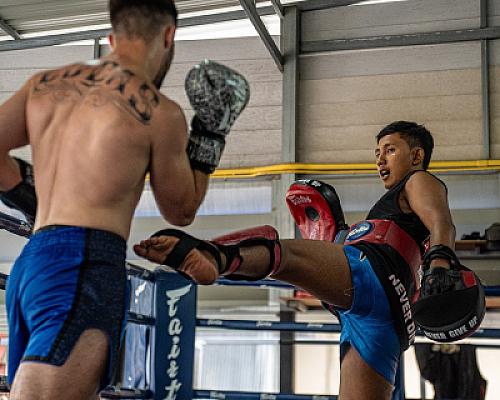
- 6:00–8:00 AM — Morning session: running, skipping, technique drilling, padwork, bag rounds
- 8:00 AM–3:00 PM — Rest, eating, recovery (massage, sleep, light movement)
- 3:00–5:30 PM — Afternoon session: more padwork, clinching, optional sparring
- Evening — Eating, stretching, sleep
That's roughly 4–5 hours of training per day. Across 30 days, you're looking at 120–150 hours of Muay Thai. For context, many recreational practitioners at home train 2–3 hours per week — meaning a month-long camp condenses nearly a year of training into one trip.
Week One: Survival Mode
The first week is about adaptation. Your body has never done this before, and it will make that clear.
The soreness peaks around day three, when accumulated fatigue from the first two sessions combines with the psychological weight of knowing there are 27 more days to go. Most people hit a low point somewhere in days two through four. Getting through it is largely a mental exercise — the body is capable of more than it feels like at this stage.
By day seven, something shifts. The movement patterns that felt completely foreign start to feel almost natural. Your jab-cross happens without thinking about it. The teep stop kick starts to have some timing to it. These are small changes, but they're real — and noticing them is motivating.
Physical changes in week one are minimal on the surface. You're mostly losing water weight and some inflammation. The real changes are building underneath.
Week Two: The First Turning Point
Week two is where most people fall in love with Muay Thai properly. The acute soreness has eased, heat acclimatisation is largely complete (it takes about 10–14 days), and the twice-daily structure has become a rhythm rather than a burden.
Technique starts improving noticeably. Your trainers begin pushing harder because they can see you're absorbing the basics. Padwork rounds feel more like a conversation and less like a test of endurance. The combinations — jab-cross-left kick, teep-cross-hook — start to flow.
Visible physical changes start appearing around day 10–14. The waist gets leaner, the shoulders more defined. Legs adapt particularly quickly to Muay Thai training — the explosive hip rotation of kicking builds muscle and burns fat simultaneously. Many people lose 2–4 kg of fat in the first two weeks while adding lean tissue.
Shin conditioning also accelerates in week two. The bruising that was sharp in week one becomes a background condition, and the nerve endings in the shin begin the slow process of becoming less sensitive.
Week Three: The Plateau and the Breakthrough
Week three often brings a brief plateau in apparent progress. You're still improving — the data is there in your padwork timing, your clinch entries, your ability to generate power — but it feels less dramatic than the jump from week one to week two. This is normal and worth understanding.
What's happening is that easy gains have been made and the remaining improvements require refinement rather than raw volume. Your guard needs to be tighter. Your weight distribution needs to shift slightly. The technique details your trainers have been mentioning casually in weeks one and two become the focus in week three.
This is also the week when sparring typically becomes productive rather than just educational. With the defensive basics in place and some ring sense developing, light technical sparring starts to make sense. It reveals gaps that padwork doesn't — timing, distance management, the ability to throw techniques when someone is trying to return them.
Mentally, week three is often the most settled. The end is visible, routine is established, and there's a confidence in the training environment that wasn't there on day one.
Week Four: Consolidation
The final week has a different quality. The awareness that the experience is ending sharpens attention. Sessions that would have felt difficult in week one now feel manageable — which is the clearest measure of how much has changed.
By week four, experienced trainers will have shaped their coaching to your specific weaknesses and strengths. The generic beginner programme has been replaced (informally) by something closer to personalised coaching. Your trainer knows your timing, knows which combinations you favour, knows where your defensive gaps are.
Physically, the month-end results are significant: typically 4–7 kg total weight loss for those starting from a normal fitness baseline, measurable improvement in cardiovascular capacity, increased shoulder and leg muscle definition, and — perhaps most practically — the ability to throw and receive techniques without thinking about the mechanics.
What Changes That You Don't Expect
Sleep Quality
Training twice daily produces a level of physical fatigue that makes sleep a different quality from everyday life. Most people report sleeping more deeply than they have in years within the first few days. The absence of phone-browsing and urban noise helps, but the physical load is the primary driver. Many people identify better sleep as one of the top benefits of a training trip long after the physical changes have faded.
Eating Habits
Two training sessions a day requires genuine nutrition. Most people find their appetite recalibrates toward protein and carbohydrates and away from alcohol and processed food — not through willpower, but because the body starts communicating its needs more clearly. The availability of good-quality Thai food near most Phuket camps makes this easier than it would be in most countries.
Relationship with Discomfort
Muay Thai training involves sustained mild-to-moderate discomfort: heat, soreness, the sting of taking a kick on the thigh, the effort of the last round when your arms are heavy. After 30 days, that relationship with discomfort changes. It doesn't stop being uncomfortable — it becomes something you move through rather than avoid. This mental adaptation carries into other areas of life in ways that are hard to explain but easy to notice.
Community
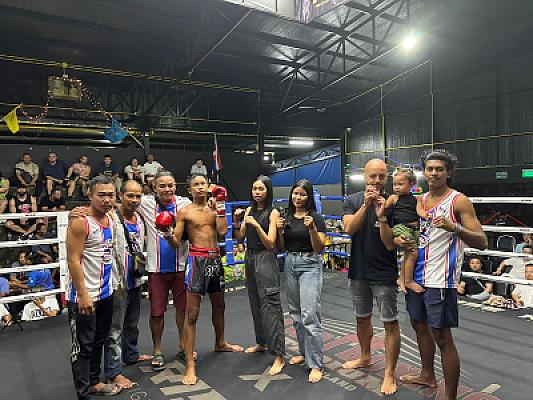
A month at a camp puts you in a small community of people doing something difficult together. The bonds formed in training environments are disproportionately strong given the time involved — an effect well-documented across military training, sports camps, and intensive courses. Many people leave Phuket with training partners they stay in contact with for years. See the expat and long-term resident guide for how these communities develop for those who stay longer.
The Practical Framework for 30 Days
Recovery is training: At twice-daily volume, recovery isn't optional — it's a third session. Sports massage two to three times per week is standard practice among serious trainees. Ice baths for acute soreness, compression for between-session recovery, and adequate sleep are all part of making the training sustainable. The sports massage guide and recovery tools guide cover the specifics.
Supplement with strength work: Pure Muay Thai volume without any strength training creates imbalances and increases injury risk. Most good camps encourage students to add two to three short strength sessions per week — kettlebell work, bodyweight exercises, core stability. The S&C for Muay Thai guide covers what to add and when.
Manage the social environment: Phuket's nightlife is genuinely excellent, and the temptation to experience it during a training month is real. Most experienced camp trainers are pragmatic — they don't expect monks, but they can see who came in hung over on the morning session. One moderate night out per week is survivable; more than that significantly degrades training quality in the next 48 hours. Be honest about what the month is for.
Choose the right camp: Not all camps are suited to 30-day programmes. Some are better structured for short-stay tourists than for sustained development. See the Muay Thai training camps guide for a comparison of options and what each offers for longer stays.
Is 30 Days Long Enough to Be Competitive?
No — and that's not the right frame. Competitive Muay Thai requires years of training and genuine Thai-style conditioning from youth in most cases. What 30 days does is build a real foundation: sound technique, ring sense, fighting fitness, and the ability to continue developing the sport intelligently when you return home.
Many people who complete a month-long camp continue training Muay Thai at home and return to Phuket for subsequent camps. The first trip changes the baseline — everything after builds on it. The guide to long-term training consistency covers how to maintain that foundation between Phuket trips.
Should You Do It?
If you're asking the question, the honest answer is probably yes. The experience is demanding enough to be genuinely transformative and accessible enough that any reasonably fit adult can complete it. The combination of physical challenge, skill acquisition, and community that a 30-day camp in Phuket provides is hard to replicate in any other setting.
Browse Phuket's Muay Thai camps to find programmes that offer monthly packages and accommodation. Many camps will have a place for you within a few days of contact.
The RoamFit editorial team researches and maintains Thailand's fitness directory. We combine verified Google data, on-the-ground knowledge of gyms, Muay Thai camps and studios, and hands-on testing to help expats, health tourists and locals train anywhere in the country. Every guide is fact-checked against the listings in our directory.