A traveler-friendly guide to staying fit in Seoul, with the best districts for gyms, public outdoor training by the Han River, and practical tips on memberships and drop-ins.
Fitness in Seoul: A Guide for Travelers
Seoul is one of the easiest big cities in Asia to stay fit in, but it still rewards planning. The transit is good, the neighborhoods have their own personalities, and the training scene changes a lot depending on where you stay. If you pick the wrong district, you end up commuting to the gym. If you pick the right one, fitness slides into the day almost automatically.
Gangnam for premium training
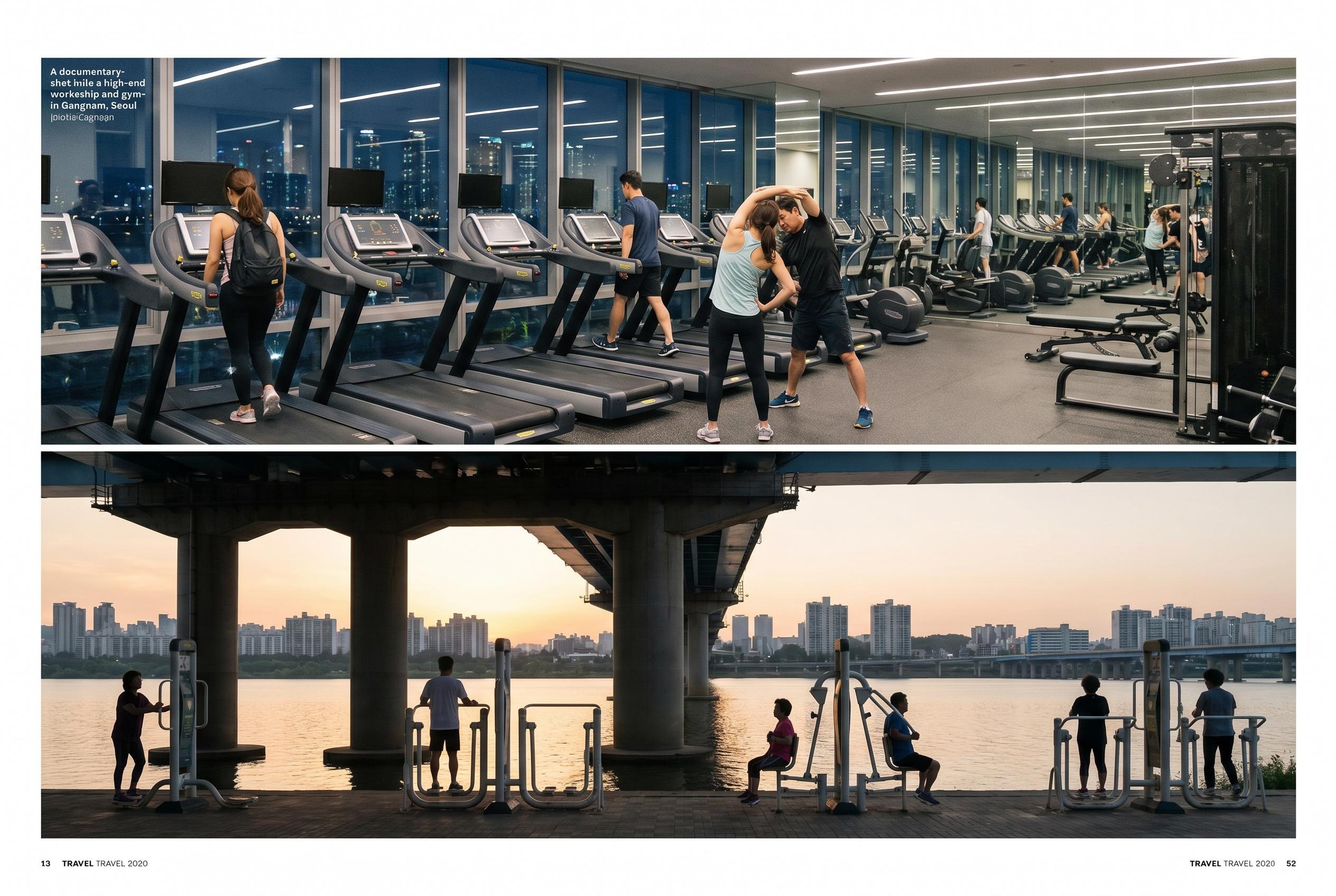
Gangnam is the obvious choice if you want a more polished experience. This is where you find the luxury side of Seoul fitness, along with clubs that care about service, branding, and a certain level of polish that many travelers notice immediately. If you want a place that feels close to a premium hotel gym but with a real training floor, Gangnam is where I would start.
It is also where the more specialized setups make sense. GDR-style facilities, golf and performance hybrids, and higher-end functional training spaces all fit here. You pay more, but the systems are usually smoother, and if you have limited time in the city, that can matter more than price.
Hongdae for a younger, looser rhythm
Hongdae feels different. It is less about polish and more about energy. You will find functional studios, F45-style classes, and smaller gyms that are built around quick sessions rather than long hangs. If you like training hard and moving on, this area is easy to live with.
For travelers, Hongdae is also useful because it does not feel as formal. You can walk in, train, grab food, and keep going. It suits people who want a place that feels a little less corporate and a little more immediate.
Han River and the free outdoor option
If the weather is decent, the Han River is the part of Seoul I would use the most. The running paths are excellent, and there are public outdoor gym stations in several areas. You will see people doing pull-ups, light circuits, and bodyweight work without paying anything. It is one of the best reminders that a good city does not always need a membership to stay active.
The one catch is seasonal weather. In summer, heat and humidity can be a factor. In winter, the wind can make a simple run feel much harder than it should. Still, if you are in Seoul for more than a few days, the river is worth using at least once.
Membership or drop-in?
This is where travelers can save themselves trouble. If you are in Seoul for just a few days, drop-in options and class packs are usually the easiest route. If you are there longer, a membership can make sense, but only if you are staying in the same district. Seoul is too spread out to buy access in one neighborhood and then spend half your life on the subway.
You also want to ask about the small stuff. Some places care about shoes, towels, lockers, and local payment methods more than you expect. Do not assume every club will be as easy as a hotel gym. Ask before you pay.
For a few practical comparisons, RoamFit already has useful guides that map onto the same decisions. Drop-in vs Monthly Gym Membership in Phuket is still the cleanest way to think about short stays versus longer ones. If you want the logic behind working out between meetings, Fitness and Coworking Spaces in Phuket for Digital Nomads is surprisingly relevant. And if you want a more outdoor-minded angle, Free Outdoor Training Spots in Phuket and Running and Cycling in Phuket are both worth a look.
The version of Seoul I would choose
If I were staying a week, I would probably choose Gangnam if I wanted a premium gym and Hongdae if I wanted a more casual, everyday routine. Then I would use the Han River for at least one run or bodyweight session, because Seoul makes that easy and it is a shame to ignore it.
The city is very workable if you treat fitness like part of the neighborhood, not a separate mission. Stay close to the district you actually want to use, and Seoul rewards you.