Gym Etiquette in Thailand: What Nobody Tells You Before You Go
Walking into a Thai gym for the first time without any context is a quick way to accidentally annoy people. Not because Thai gym culture is particularly difficult, but because some of the rules are invisible unless someo
Walking into a Thai gym for the first time without any context is a quick way to accidentally annoy people. Not because Thai gym culture is particularly difficult, but because some of the rules are invisible unless someone explains them. This is that explanation.
Remove Your Shoes Before Entering the Training Area
This is the single most consistent rule across Thai gyms, Muay Thai camps and yoga studios: shoes come off before you step onto the training floor. At Muay Thai gyms this usually means removing your shoes at the door or at the edge of the matted area. You will train barefoot or in boxing shoes (worn specifically in the ring or on the mat, never outside).
Tourists who walk onto the mat in their outdoor shoes cause visible discomfort among Thai trainers and fighters, even if no one says anything directly. The floor you are training on is clean for a reason. Respect that by checking where others are removing their footwear and doing the same.
Never Touch Someone's Head
In Thai culture, the head is considered the most sacred part of the body. Do not ruffle someone's hair or pat them on the head in a friendly gesture, even with a child. This applies in gyms too, though it is slightly less relevant in a combat sport context where head contact is part of training.
Related to this: never step over someone who is lying or sitting on the floor, and do not step over training equipment unnecessarily. These are considered disrespectful in Thai culture broadly, and you will see Thai fighters in traditional camps observing these customs as a matter of course.
The Wai: When and How
The wai (pressing palms together and bowing slightly) is the Thai greeting and shows respect. In a gym context, wai-ing your trainer at the start and end of a session is considered good form and will be genuinely appreciated. You do not need to wai every person you pass in the gym, but acknowledging your trainer and the gym owner with a wai is appropriate.
In Muay Thai specifically, the wai kru (a pre-fight ritual performed by fighters) has sacred significance. Tourists are not expected to perform this, but watching it with respect rather than treating it as a photographic opportunity is the right instinct. At some camps you will be taught the basics of wai kru as part of your training; follow the instructor's guidance on how seriously to take it.
Trainers Are Not Service Staff
This is one of the more important attitude adjustments for travellers from Western countries, particularly those paying premium prices for a training package. At a Thai Muay Thai camp, your trainer is an expert in their craft, often a former fighter with a real record. They are not your personal trainer in the Western sense, and approaching the relationship with too much consumer-service energy will get the training off to a bad start.
Do not demand one-on-one attention if you are in a group session. Do not negotiate aggressively on price directly with trainers (this should happen at the desk before signing up). Do not dismiss feedback or argue with technique corrections. Showing genuine respect for your trainer's knowledge makes for a much better experience on both sides, and the training quality you receive is directly affected by how the relationship goes.
For more on where to apply these rules, see our Phuket fitness guide or the Bangkok gym overview.
Sparring Etiquette
If you are new and want to spar, let your trainer assess your readiness rather than jumping into the ring at the first opportunity. At many camps, tourists with no prior experience push too hard to spar too soon, which is both a safety issue and signals poor judgment to the camp.
When you do spar, particularly with Thai fighters or more experienced foreign fighters, do not go full power. Sparring is a training exercise, not a fight. Going too hard too early is one of the fastest ways to be quietly side-lined from sparring sessions at a camp. Thai fighters spar with considerable technical control and expect you to reciprocate.
After a sparring round, it is customary to touch gloves or wai your partner to acknowledge the session. This is done regardless of what happened in the round.
Commercial Gyms: Different Rules
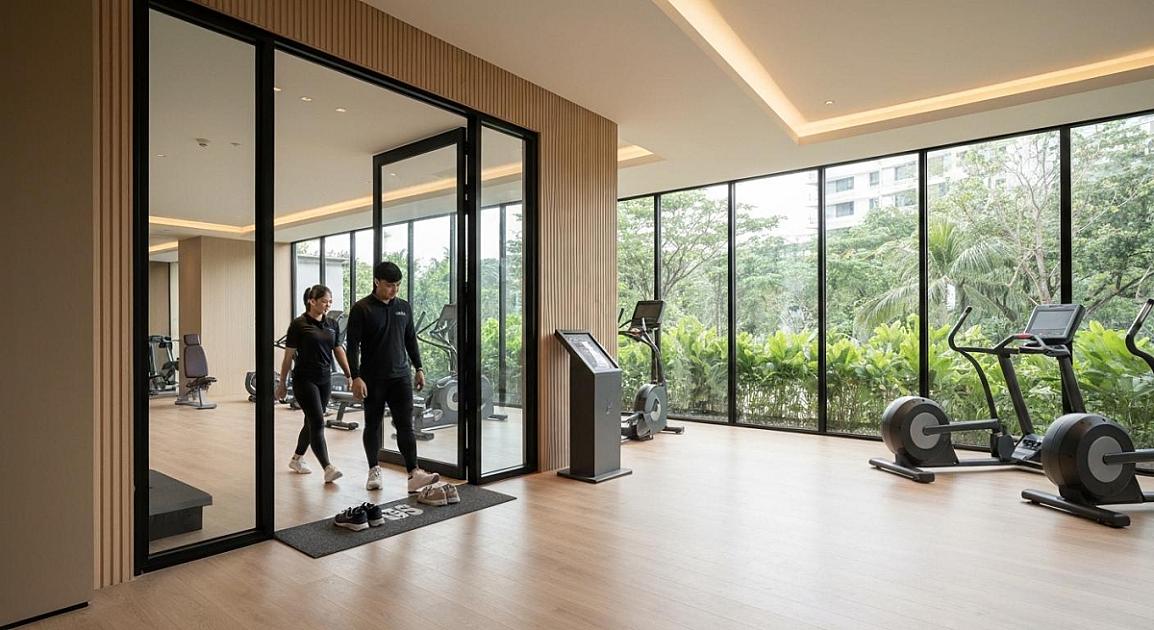
At Fitness First, Virgin Active and similar commercial gyms, the cultural gap is smaller. These gyms are designed for an international audience and operate with familiar Western-style gym protocols. That said, a few things remain relevant:
Wiping down equipment after use is expected and taken seriously. Most Thai commercial gyms provide spray bottles and cloths near equipment bays. Using them is basic courtesy that is genuinely observed, not just a sign on the wall.
Do not monopolise equipment during peak hours (typically 7-9am and 6-9pm in Bangkok). Leaving your things on a bench or machine while you do a long superset is the same gym crime everywhere, but in crowded Bangkok commercial gyms it creates real problems.
Taking photos at the gym is common in Thai fitness culture (gym selfies are very much part of the scene), but pointing your camera at others without their awareness is not appreciated. If you are filming yourself training, be aware of who is in the background.
Dress Code
At Muay Thai camps, standard training gear is appropriate: shorts (Muay Thai shorts are preferable and widely available for 250-600 THB at markets and sports shops), a t-shirt or sports bra. Shirts are generally expected during bag work and sparring. Training shirtless is more accepted at serious camps with a high proportion of Thai fighters; at tourist-facing gyms, keep the shirt on until you read the room.
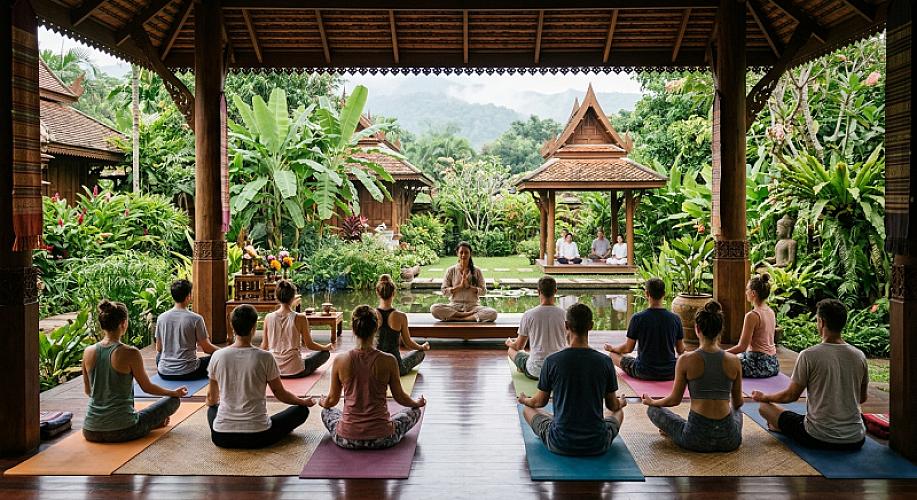
At yoga studios, the same modesty conventions that apply in Western studios apply here. Very revealing yoga wear is generally accepted in studios frequented by international visitors, though at traditional Thai yoga or wellness centres, more conservative clothing is appropriate.
Punctuality
Group sessions at Thai gyms generally start on time, particularly at Muay Thai camps where trainers run to a schedule. Arriving late means disrupting the group and making the trainer repeat instructions. Thai culture handles lateness differently in social contexts, but in a structured training environment, being on time is both respectful and practically useful.
Paying and Tipping
Most gyms and camps have a fixed pricing structure, and haggling is not generally appropriate once you are inside the gym. Price negotiation for packages happens at the front desk before signing up, not mid-session.
Tipping trainers is not mandatory but is common practice at Muay Thai camps, particularly for one-on-one sessions or pad work. An additional 50-200 THB given directly to a trainer after a good session is appreciated. Do this quietly and directly to the trainer; it is a personal gesture rather than a formal transaction.
Looking for the best places to train? Explore our Phuket fitness guide or see where to train Muay Thai as a beginner.
The RoamFit editorial team researches and maintains Thailand's fitness directory. We combine verified Google data, on-the-ground knowledge of gyms, Muay Thai camps and studios, and hands-on testing to help expats, health tourists and locals train anywhere in the country. Every guide is fact-checked against the listings in our directory.