Gym vs Muay Thai in Phuket: Which Fits Your Goals?
Deciding between a Western gym and a Muay Thai camp in Phuket? Here is a direct comparison of costs, training styles, and locations to help you choose.
Phuket has transitioned from a simple holiday island into a global fitness destination. People arrive here with different goals. Some want to shed body fat, others want to pack on muscle, and many want to learn a martial art. The choice between a traditional gym and a Muay Thai camp is not just about the type of exercise. It dictates your daily schedule, your social circle, your budget, and how much you sweat.
To get the most out of your time and money, you need to understand how these two training styles operate on the island. The training environments, costs, and physical demands are completely different.
The Muay Thai Camp Experience
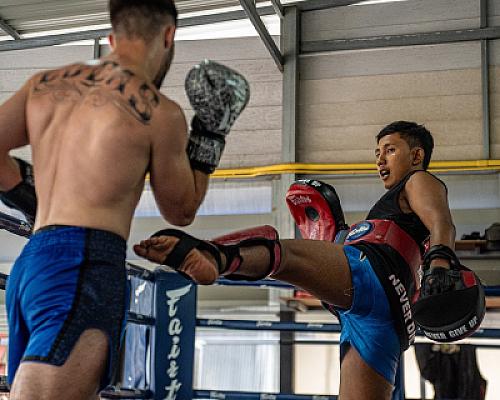
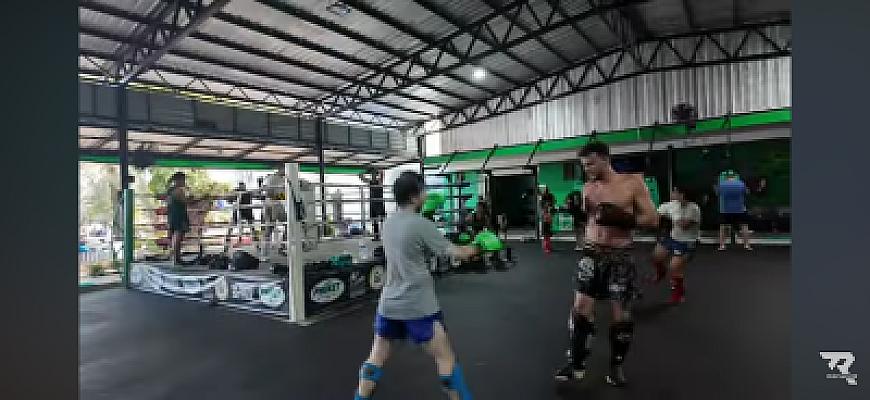
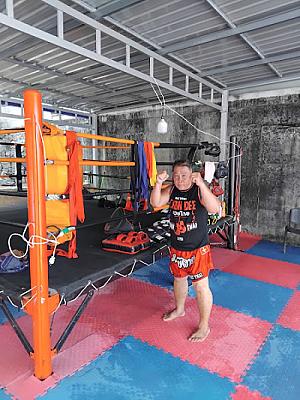
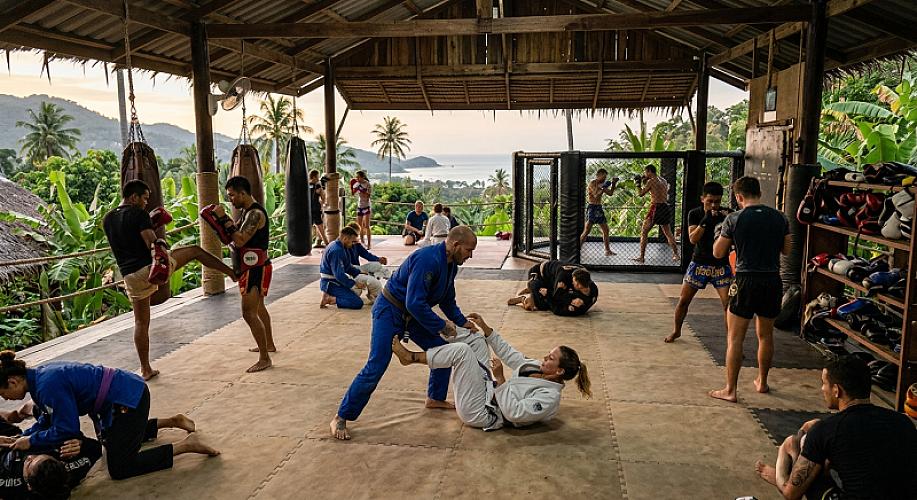
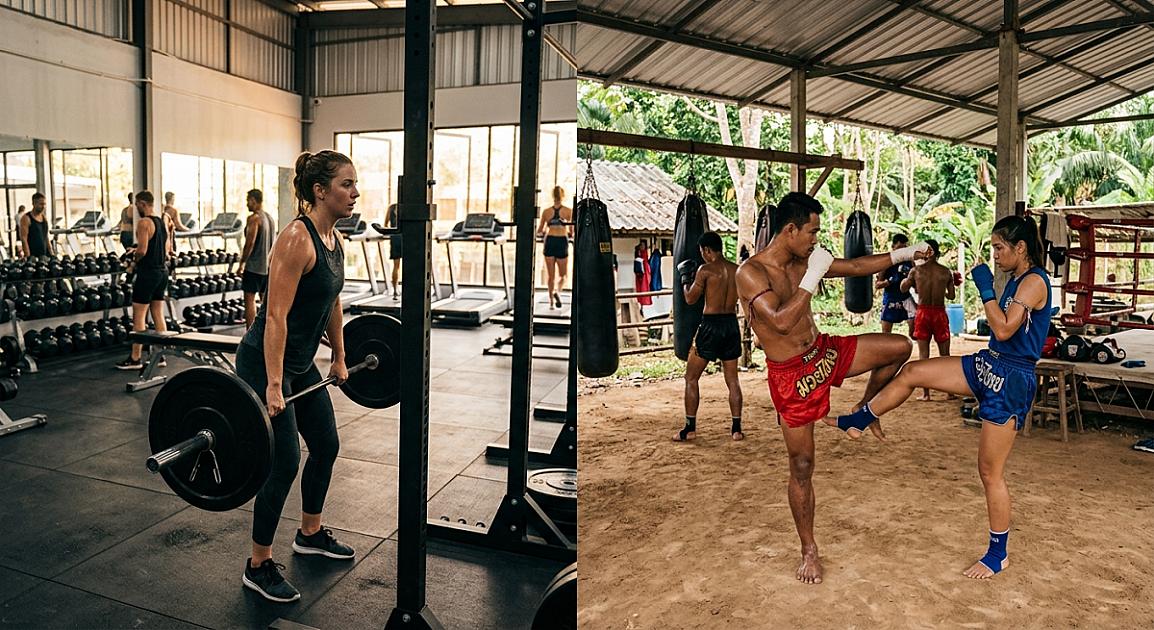
Muay Thai camps in Phuket are generally open-air, covered pavilions. They rely on natural breeze and large industrial fans to keep you cool. Training in this environment means dealing with intense heat and humidity. You will sweat heavily within the first ten minutes of warming up.
Most camps run two sessions a day. The morning session starts around 7:30 AM or 8:00 AM, before the midday heat peaks. The afternoon session begins around 4:00 PM as the temperature starts to drop. A typical session lasts two hours and follows a strict structure.
First, you warm up with a run or skipping rope for 15 to 20 minutes. This is followed by shadow boxing, where trainers watch your form. Next is pad work, where you get one-on-one time with a Thai trainer for three to five rounds. You then move to heavy bag work, partner drills, and sometimes clinching or light sparring. The session ends with conditioning work like sit-ups, push-ups, and stretching.
This training is highly cardiovascular. It builds explosive power, hip mobility, and mental toughness. The community aspect is strong. You train alongside the same people every day, which makes it easy to meet training partners and make friends.
The Western Gym Experience
Western-style gyms in Phuket range from small, local weight rooms to massive, multi-story fitness centers. The primary difference here is air conditioning. Training in a climate-controlled room allows you to focus purely on lifting weights without the exhausting drain of the tropical heat.
These gyms cater to strength training, bodybuilding, powerlifting, and functional fitness. You will find standard equipment like squat racks, dumbbells up to 50 kg, cable machines, and cardio equipment.
Some facilities, particularly in the Chalong and Bangtao areas, offer structured group classes. These include CrossFit, high-intensity interval training (HIIT), and spin classes. Unlike Muay Thai camps, you have complete control over your schedule. You can train at 12:00 PM or 9:00 PM depending on the gym's opening hours. It is a self-directed environment where you focus on your individual program.
Location Hotspots in Phuket
Where you stay in Phuket determines your training options. Three main areas dominate the fitness scene.
Chalong (Soi Ta-iad)
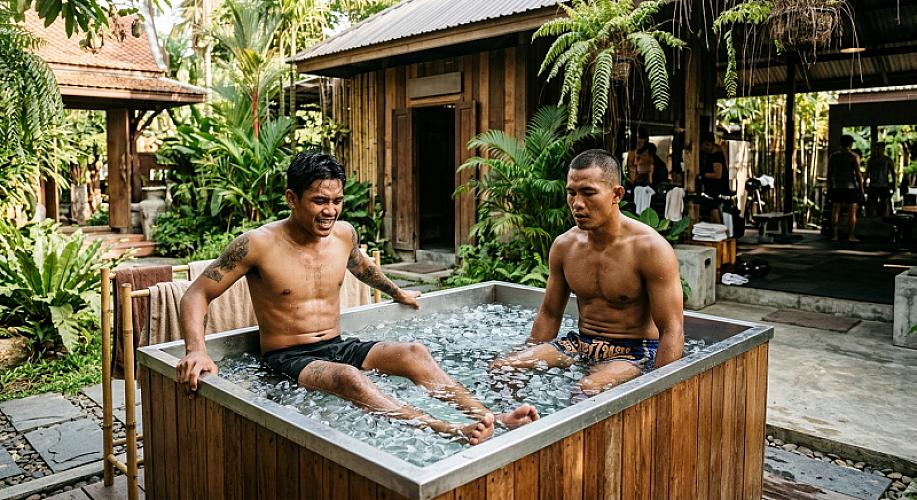
This single street is the fitness capital of the island. It is a one-kilometer stretch packed with Muay Thai camps like Tiger Muay Thai and Dragon Muay Thai, alongside specialized strength and conditioning gyms like Unit 27. The street is filled with healthy restaurants, supplement shops, massage parlors, and ice baths. It is highly concentrated and convenient, but it lacks a beach.
Rawai
Located at the southern tip of the island, Rawai offers a more relaxed coastal lifestyle. It has excellent Muay Thai camps like Sinbi Muay Thai and Kingka Muay Thai, alongside modern air-conditioned gyms like Rawai Fitness. Rawai is popular with expats and long-term visitors who want to balance hard training with beach access at Nai Harn.
Bangtao
This northern area is more upscale. It is home to Bangtao Muay Thai & MMA, a massive facility that combines high-level martial arts with a premium strength and conditioning setup. The area is quieter and more expensive than Chalong, attracting families, digital nomads, and professional athletes.
Cost Comparison: Gym vs Muay Thai
Your budget will play a major role in your decision. Muay Thai camps are generally more expensive because of the high ratio of trainers to students.
Muay Thai Camp Costs
- Single Session: 400 to 600 THB
- Weekly Pass: 2,500 to 3,500 THB
- Monthly Pass (Unlimited training): 10,000 to 15,000 THB
- Private Lesson (1 hour): 700 to 1,000 THB
Western Gym Costs
- Single Day Pass: 250 to 450 THB
- Weekly Pass: 1,200 to 2,000 THB
- Monthly Pass: 2,500 to 4,500 THB (Premium functional fitness gyms with classes can cost up to 8,000 THB per month)
Many Muay Thai camps offer all-inclusive packages that include on-site accommodation and meal plans. These packages can range from 30,000 to 60,000 THB per month depending on the quality of the room.
Matching Your Fitness Goals
To make the right choice, you must align your training with your specific physical goals.
For Fat Loss and Conditioning
Muay Thai is highly effective for fat loss. A single two-hour session can burn between 800 and 1,000 calories. The constant movement, kicking, and core engagement provide a full-body workout that improves cardiovascular endurance quickly. The heat increases the intensity, forcing your body to adapt to working under stress.
For Building Muscle and Strength
If your goal is to pack on size or increase your squat max, a Western gym is the correct choice. Muay Thai is highly catabolic. The high volume of cardio makes it difficult to maintain a caloric surplus, which is necessary for muscle growth. A dedicated weight gym provides the progressive overload and recovery conditions needed to build muscle.
For Mental Variety and Skill Acquisition
Lifting weights can become repetitive. Muay Thai offers a steep learning curve. You are learning a complex martial art, mastering footwork, timing, and defense. This keeps your brain engaged and provides a sense of progression that goes beyond just looking at a scale or a barbell weight.
Logistics and Daily Life
Getting around Phuket requires transport. Most people rent a scooter, typically a Honda Click or Yamaha Aerox, which costs between 200 and 300 THB per day. You must have an international driving permit and a motorcycle license to ride legally. Police checkpoints are common in Rawai and Chalong, and fines for riding without a helmet or proper license start at 500 to 1,000 THB.
If you prefer not to ride a scooter, use the Bolt or Grab mobile apps to book car or bike rides. The local blue songthaews (open-air buses) run along main routes for 30 to 50 THB, but they are slow and do not run in the evenings.
Nutrition is easy to manage in the fitness areas. A standard Thai meal of chicken and rice costs 60 to 80 THB at a local shop. Western-style health cafes serve protein shakes, avocado toast, and clean meal prep for 200 to 350 THB per meal. Hydration is critical. You will need to drink three to four liters of water daily, supplemented with electrolyte packets available at any 7-Eleven for 5 to 10 THB.
Frequently Asked Questions
Can I do both Muay Thai and gym training in Phuket?
Yes. Many people buy a monthly gym membership and pay for individual Muay Thai sessions, or train at hybrid facilities like Bangtao Muay Thai or Tiger Muay Thai which offer both options under one roof.
Do I need experience to join a Muay Thai camp?
No. All major camps in Phuket have dedicated beginner rings. Trainers will teach you the basic stance, punches, and kicks from scratch, alongside other beginners.
What gear do I need for Muay Thai in Phuket?
You need hand wraps and boxing gloves. You can buy these at the camp shops or local gear stores for 1,500 to 3,000 THB. Shin guards are useful but usually provided by the camp for sparring.
Is it too hot to train in Phuket?
It is very hot, especially between March and May. Train early in the morning or late in the afternoon, drink plenty of water with electrolytes, and allow your body a week to acclimatize.