Olympic Weightlifting in Phuket: Gyms, Gear, and Coaches
A practical guide to finding Olympic weightlifting platforms, quality barbells, and coaches in Phuket, focusing on Chalong and Rawai.
Finding a proper Olympic weightlifting setup in Phuket is more difficult than finding a Muay Thai camp. Most fitness centers on the island cater to general tourists, meaning they are packed with resistance machines and cardio gear but lack the specialized equipment needed for snatches and clean and jerks.
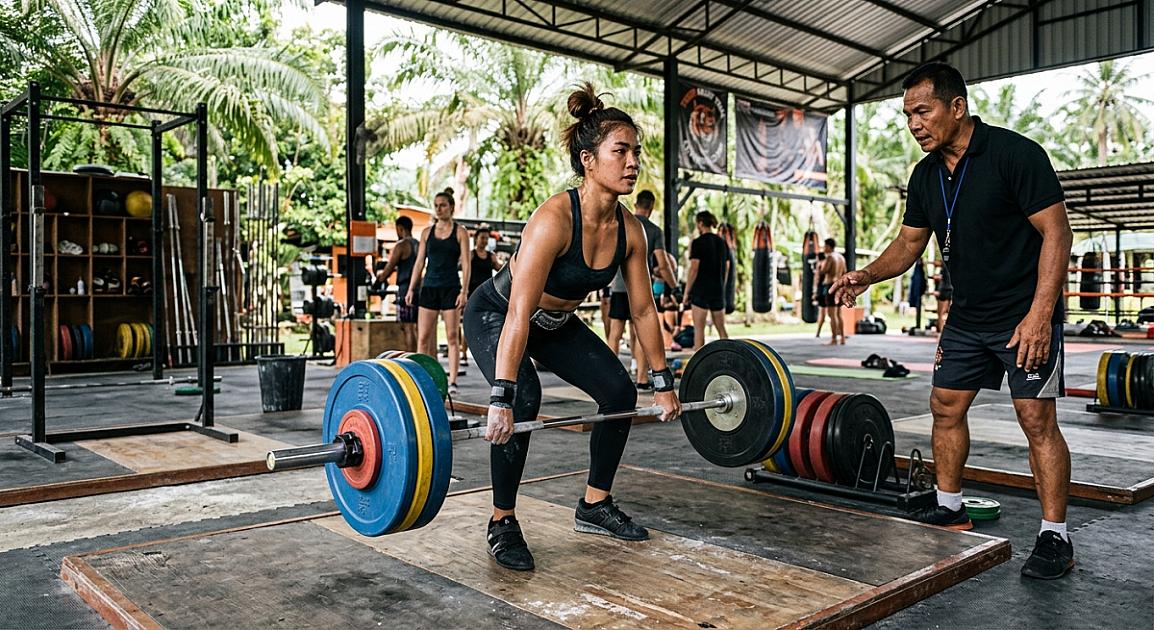
To train Olympic lifting safely, you need three things: barbells with rotating sleeves, rubber bumper plates, and dedicated lifting platforms. You also need a gym culture that tolerates the noise of heavy drops. This guide covers the specific gyms in Phuket that provide this setup, along with practical details on pricing, locations, and local training conditions.
The Reality of Lifting in the Tropics
Phuket is hot and humid. Average temperatures hover around 30 degrees Celsius, and humidity regularly exceeds 80 percent. This climate directly impacts your training and the equipment you use.
First, sweat is a major safety factor. Your hands will slip on the bar. While some gyms provide chalk buckets, others restrict dry chalk because it clogs air conditioning filters. It is wise to pack your own liquid chalk.
Second, the humidity causes barbells to rust quickly, especially in open-air gyms. Rust slows down the spin of the sleeve. For Olympic lifting, you need needle-bearing bars that spin freely to protect your wrists during the transition phase of the clean or snatch. Always test the sleeve spin before you load your plates.
Top Gyms for Olympic Weightlifting in Phuket
Most of the serious strength facilities are concentrated in Chalong, particularly on and around Soi Ta-iad, and down south in Rawai.
CrossFit Phuket (Chalong)
Located just off the main fitness strip of Soi Ta-iad, CrossFit Phuket is one of the best spots for weightlifting. Because the gym focuses on functional fitness, they have the exact infrastructure Olympic lifters require.
- The Gear: They have dedicated wooden lifting platforms with rubber drop zones. You will find high-quality Olympic barbells, including women's 15kg bars and men's 20kg bars, with reliable sleeve rotation. They stock bumper plates in kilograms.
- The Environment: The training area is semi-open-air. It gets hot, but the airflow is decent. You can drop weights without issue.
- Pricing: A single drop-in session costs 500 THB. A weekly pass is 2,200 THB, and a monthly pass costs around 5,500 THB.
Unit 27 (Chalong)
Unit 27 is a massive strength and conditioning complex on Soi Ta-iad. They operate two main spaces: a conditioning gym and a dedicated heavy lifting gym called Primal Fitness.
- The Gear: Primal Fitness is fully air-conditioned, which is a massive advantage during the midday heat. They have high-spec lifting platforms, Eleiko and Rogue barbells, and calibrated bumper plates. The maintenance here is excellent, so the bars spin smoothly.
- The Environment: This is a serious, high-performance facility. It is loud, air-conditioned, and fully equipped for heavy lifting.
- Pricing: Drop-in rates start at 600 THB. Monthly memberships for the weight room only are around 6,000 THB.
Action Point (Rawai)
If you prefer to stay in the south of Phuket near Nai Harn Beach, Action Point is your best option. It is a multi-level fitness resort that caters to strength athletes.
- The Gear: They have a functional training area equipped with lifting platforms, quality barbells, and rubber bumper plates. While not as heavily focused on competitive weightlifting as the Chalong gyms, it has everything needed for a complete clean and snatch session.
- The Environment: It is cleaner and quieter than the busy gyms on Soi Ta-iad. You get a mix of holidaymakers and serious lifters.
- Pricing: Drop-in passes cost 450 THB. Weekly and monthly packages are available on-site.
What to Look For in a Phuket Lifting Gym
Before you pay for a weekly or monthly membership, do a quick walk-through of the gym to check these specific details:
- Barbell Sleeve Spin: Grab the sleeve of an unloaded bar and spin it. If it stops immediately or feels gritty, the bearings are rusted. This will strain your wrists during cleans.
- Plate Measurements: Some older gyms in Phuket have a mix of pound and kilogram plates. Ensure the gym you choose uses standard Olympic color-coded kilogram plates to make your percentage work easier to calculate.
- Platform Levelness: In semi-outdoor gyms, concrete floors can settle unevenly, or wooden platforms can warp from humidity. Check that the platform is level so your bar does not roll away between reps.
Transport and Logistics
To get to these gyms, renting a scooter is the most practical option. Scooter rentals cost between 200 and 300 THB per day, depending on the model and rental duration. Always wear a helmet and carry an International Driving Permit, as police checkpoints are common in Chalong and Rawai.
If you do not ride a scooter, Grab taxi is available on the island, but it is expensive. A ride from Rawai to Chalong can easily cost 300 to 400 THB one way. The local blue songthaew, a passenger truck, runs along the main roads between Phuket Town, Chalong, and Rawai for about 40 THB per ride, but they run infrequently and stop operating around 4:30 PM.
Frequently Asked Questions
Can I drop weights at these gyms?
Yes. CrossFit Phuket, Unit 27, and Action Point all have rubber bumper plates and dedicated platforms designed for dropping weights from overhead.
Do I need to bring my own chalk?
It is highly recommended. Some gyms provide chalk, but others restrict dry chalk due to air conditioning. Carrying liquid chalk in your gym bag is the safest option.
Are there dedicated Olympic weightlifting coaches in Phuket?
Most coaches on the island are CrossFit or general strength coaches. However, facilities like CrossFit Phuket and Unit 27 often have coaches with specific weightlifting certifications who offer private sessions.
Are the barbells in kilograms or pounds?
Most serious strength gyms in Phuket use standard Olympic plates measured in kilograms, though you may find older gyms with plates measured in pounds.