Yoga in Phuket: Best Areas, Prices, and Studio Types
An honest, local guide to finding the right yoga studio in Phuket, covering real prices, neighborhood vibes, and transport tips.
Phuket has become one of the primary wellness destinations in Southeast Asia, but the island is large and highly fragmented. If you book a hotel in Patong expecting a quiet daily Mysore practice, you will be disappointed. The yoga scene here is split into distinct geographic pockets, each catering to a different budget and lifestyle.
To get the most out of your trip, you need to match your practice style with the right neighborhood. This guide covers the actual costs, the types of studios you will encounter, and how to choose the best area for your stay.
The Best Areas for Yoga in Phuket
Phuket is not walkable, and traffic can turn a ten kilometer drive into a forty minute ordeal. Choosing your base camp is the most important decision you will make.
Rawai and Chalong (The Southern Fitness Hub)
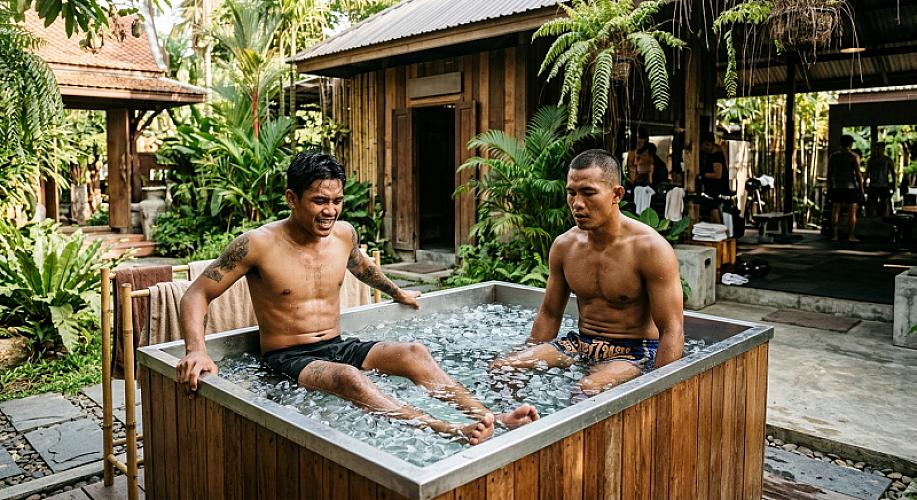
This is the center of gravity for active expats, Muay Thai fighters, and digital nomads. The vibe here is casual, athletic, and highly social. You will find a mix of traditional open-air shalas and modern fitness centers.
Soi Ta-iad in Chalong is famous for Muay Thai, but it also hosts excellent yoga classes designed for athletic recovery. If you want to combine yoga with strength training or martial arts, this is your area. Rawai, just south of Chalong, offers a more relaxed coastal feel with several dedicated yoga spaces.
- Key Studios: Kim White Yoga (Rawai) is highly regarded for alignment-focused Hatha and Vinyasa. Action Point (Chalong) offers rooftop classes with great views.
- Vibe: Athletic, community-focused, casual.
Bangtao and Cherngtalay (The Upscale Expat Enclave)
Located on the west coast, this area is home to Laguna Phuket, high-end villas, and trendy beach clubs. The yoga scene here caters to affluent expats and luxury tourists. Studios are generally air-conditioned, modern, and offer premium amenities like high-end mats, showers, and organic cafes on site.
- Key Studios: Baan Yoga Phuket offers intimate classes in a quiet garden setting. Open Yoga Shala provides structured classes near the Laguna area.
- Vibe: Premium, clean, quiet.
Kata and Karon (The Classic Beach Towns)
These adjacent beach towns offer a middle ground. They are touristy, but they retain a solid wellness community. The yoga here often focuses on hot yoga, yin yoga, and gentle flows designed for travelers looking to unwind after a day on the sand.
- Key Studios: Kata Hot Yoga is a staple in this area, offering hot Bikram-style classes that complement the tropical climate.
- Vibe: Holiday-makers, relaxed, beach-centric.
Studio Types and What to Expect
You will encounter three main types of yoga spaces in Phuket. Each offers a different environment and level of comfort.
1. Traditional Open-Air Shalas
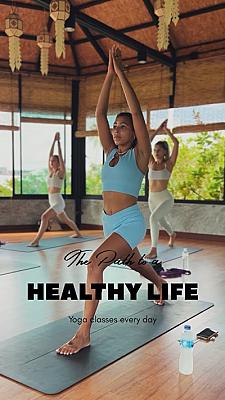
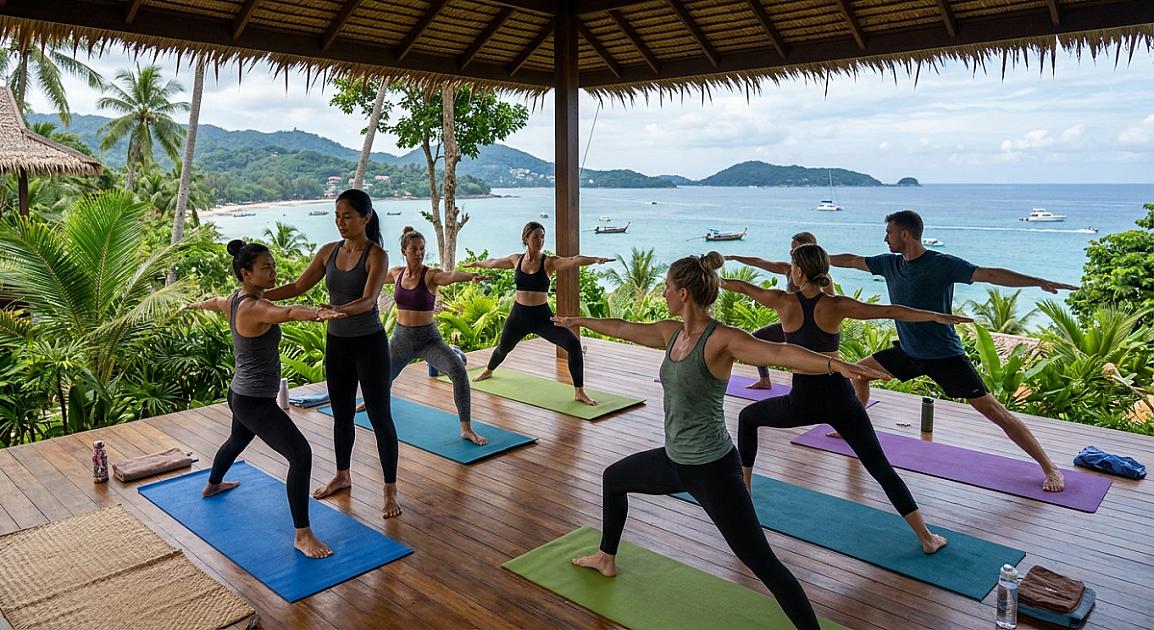
These are wooden or concrete pavilions with thatched or tin roofs, surrounded by tropical gardens. They rely on ceiling fans and natural breezes for cooling.
- What to expect: You will sweat heavily. Mosquitoes can be an issue during early morning or evening classes, so bring natural repellent. The connection to nature is excellent, but you must accept the humidity.
- Best for: Ashtanga, Yin, and traditional Hatha.
2. Air-Conditioned Boutique Studios
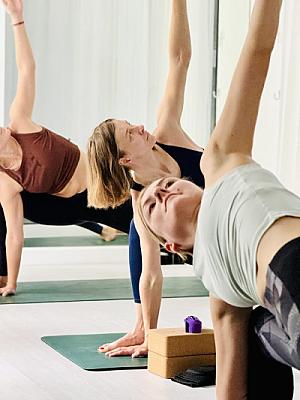
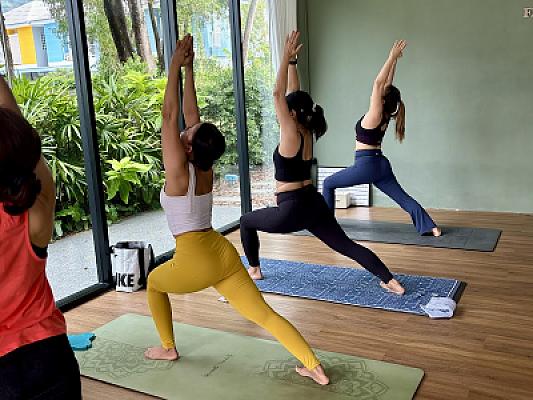
These are modern, enclosed spaces similar to what you would find in London or New York. They offer climate control, professional sound systems, and high-quality props.
- What to expect: A clean, sweat-free environment where you can focus without dealing with the tropical heat. These studios often have changing rooms and showers.
- Best for: Vinyasa Flow, Power Yoga, and Yin.
3. Gym-Based Yoga Classes
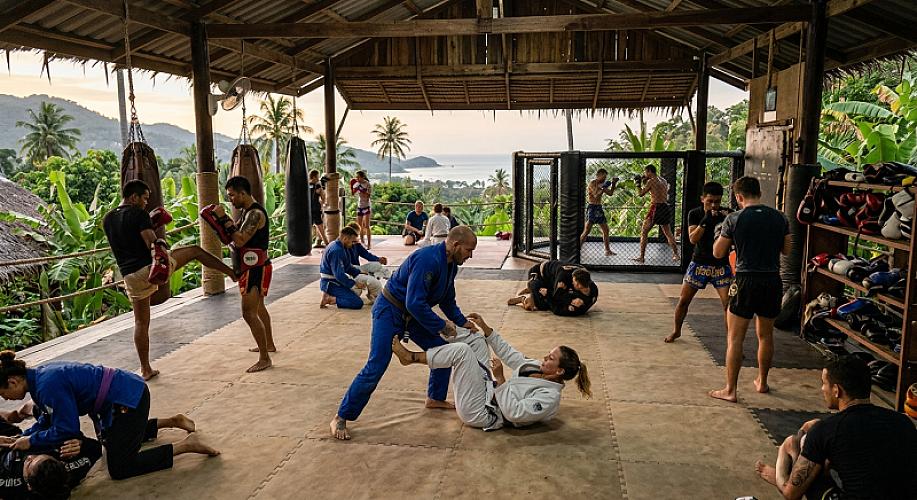
Many of the large fitness camps in Chalong and Rawai include yoga in their class schedules.
- What to expect: These classes are often held in covered outdoor areas or large functional fitness rooms. The focus is usually on deep stretching, mobility, and recovery for athletes. They can be noisy due to nearby weightlifting or Muay Thai training.
- Best for: Active recovery and budget-conscious travelers who want to combine gym workouts with yoga.
Class Prices and Packages in Phuket
Yoga prices in Phuket are higher than in Chiang Mai or Bali, but they remain highly affordable compared to Western countries. Most studios offer discounts if you buy multi-class passes.
Here is what you can expect to pay in Thai Baht (THB):
- Single Drop-in Class: 350 to 500 THB. Premium resort studios may charge up to 800 THB.
- 5-Class Pass: 1,600 to 2,200 THB. Usually valid for one month.
- 10-Class Pass: 3,000 to 4,000 THB. Usually valid for two months.
- One Month Unlimited: 4,500 to 6,000 THB. Ideal for those staying in one area for a longer period.
Mat rental is almost always included in the price, though some budget gym classes might charge a small fee of 50 THB if you do not bring your own.
Practical Tips for Your Practice
To make your experience smoother, keep these practical realities of Phuket in mind.
Transport is Essential
Phuket does not have a mass transit system like Bangkok. There is no BTS or MRT. To get to your studio, you have three main options:
- Scooter Rental: The most common choice for expats and long-term visitors. It costs 200 to 300 THB per day. Only choose this if you have an international driving permit and experience riding in chaotic traffic.
- Ride-Hailing Apps: Use Bolt or InDrive. They are significantly cheaper than local tuk-tuks, which charge high flat rates.
- Songthaews: These blue open-air buses run fixed routes between Phuket Town and the main beaches. They cost 30 to 50 THB but are slow and do not run in the evenings.
Manage the Heat
If you practice in an open-air shala, the humidity will drain your fluids quickly. Drink water before you arrive. Many studios provide free filtered water refills, so bring a reusable bottle. Electrolyte packets, available at any 7-Eleven for about 5 to 10 THB, are highly useful for preventing cramps and dehydration.
Respect Local Customs
While Phuket is a beach destination, Thai culture is conservative. Always remove your shoes before entering the studio lobby or the practice floor. Avoid walking through local villages or convenience stores in just your sports bra or shirtless after class. Throw on a light t-shirt or sarong when you leave the studio premises.
Frequently Asked Questions
Do I need to book yoga classes in Phuket in advance?
For most independent studios, you can simply walk in 15 minutes before class. However, during the peak tourist season from December to March, popular classes can fill up, so booking online via their website or WhatsApp is recommended.
Are yoga mats provided at the studios?
Yes, almost all dedicated yoga studios in Phuket provide mats, blocks, and straps for free. If you practice at a martial arts gym or a budget fitness center, they may charge a small rental fee of 50 THB.
What is the best time of day to practice yoga in Phuket?
Early morning classes around 7:30 AM or 8:00 AM are best. The temperature is cooler, especially in open-air shalas, and the island is quiet. Evening classes around 5:30 PM are also popular but can be warmer.
Can I find English-speaking yoga teachers in Phuket?
Yes, virtually all yoga classes in Phuket are taught in English. The student base is highly international, consisting of expats, tourists, and digital nomads.