Comment choisir un camp de Muay Thai a Phuket : guide complet pour debutants
Phuket has over 200 Muay Thai gyms and camps. Here is the framework that cuts through the noise and helps you find the right one for your goal, budget, and experience level.
Choosing the wrong Muay Thai camp in Phuket is one of the most common mistakes first-time visitors make: and it's almost entirely avoidable with the right framework. The island has over two hundred gyms and camps, ranging from world-class professional training facilities to tourist operations charging premium prices for substandard instruction. This guide gives you the criteria that actually matter.
Decide What You're Actually There For
The single most important clarification before choosing a camp is being honest about your goal. Phuket's camps serve two fundamentally different populations, and gyms optimised for one are often a poor fit for the other.
If your goal is fitness and experience: losing weight, getting fit, learning basic technique, enjoying the Thailand experience: then camp environment, facilities, and English-speaking instruction matter most. Price per session and overall comfort are legitimate factors. You don't need to find the gym that produces professional fighters.
If your goal is genuine skill development: fighting at amateur or professional level, competing, building real Muay Thai ability: then trainer quality and training culture matter more than facilities or price. You want a camp where fighters are training seriously alongside you, where the instruction is technically rigorous, and where sparring is available and structured.
Most visitors fall into the first category. Acknowledging that openly helps you stop optimising for the wrong things.
Key Criteria for Choosing a Camp
Trainer Quality and Experience
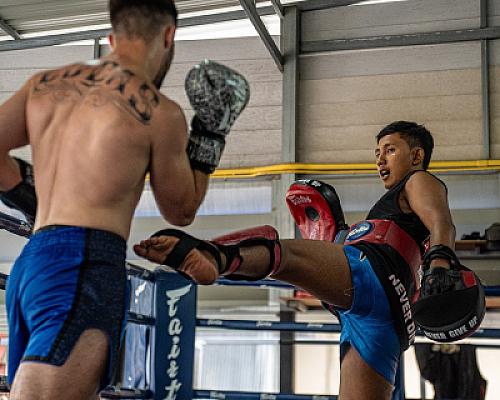
The most important factor at any Muay Thai camp is who is holding the pads. Pad work is where technique develops, and a trainer who communicates clearly, corrects errors consistently, and adjusts to your level produces far better results than a superior facility with indifferent instruction.
Signs of good trainers: they watch you during bag work and correct form rather than just keeping time; pad rounds feel like a teaching session, not just cardio; they remember your weaknesses from session to session; they adapt the session to your current energy level rather than running the same template regardless.
Signs of poor trainers: they're on their phones during your bag rounds; pad rounds are fast and sloppy with no technique feedback; they give the same session to the forty-year-old beginner and the experienced amateur fighter.
Class Size and Trainer-to-Student Ratio
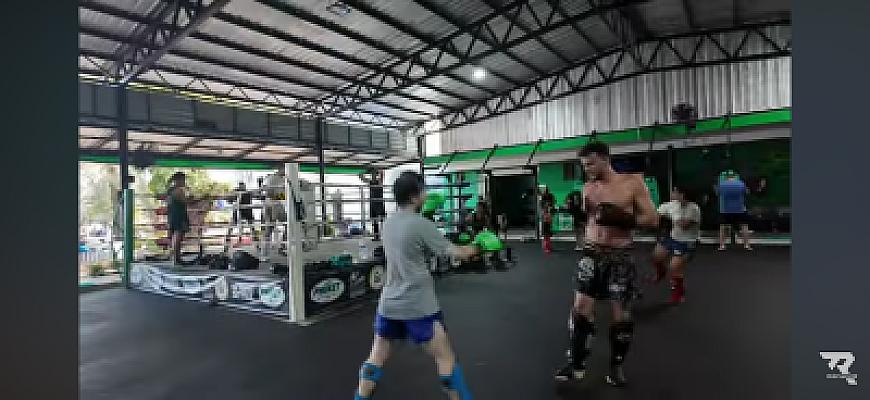
This matters more than most guides acknowledge. A camp running sixty students with eight trainers produces an average of seven-and-a-half students per trainer. During pad rounds, that means each student gets one trainer round of undivided attention: but the trainer is also watching the bag work of five other students simultaneously. Attention is diluted.
Smaller camps with five to fifteen students and three to four trainers deliver more instruction per session. If pad time and trainer attention are priorities: and they should be: ask about class sizes before booking.
Training Schedule and Structure
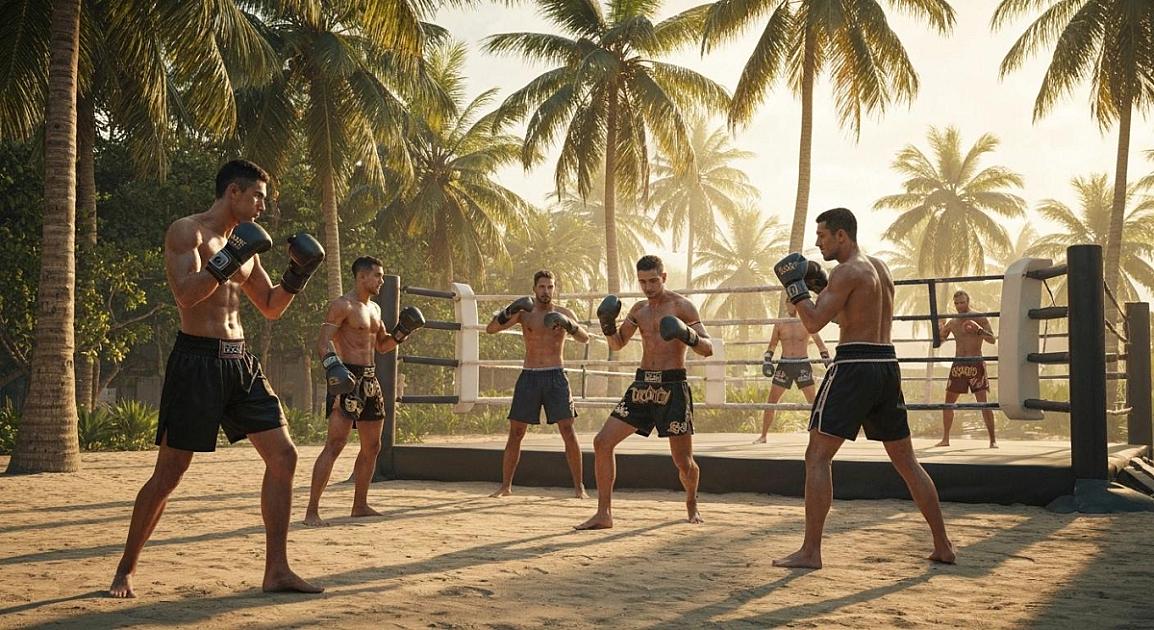
A proper Muay Thai camp runs two sessions per day: morning (typically 7:00–9:00 AM) and afternoon or evening (4:00–6:30 PM). Camps that offer only one daily session are limiting your development if you're there for more than a week. Camps that run sessions whenever students show up rather than on a fixed schedule are optimised for tourist convenience, not serious training.
Look for camps where the session structure is consistent: rope, shadow, bags, pads, optional sparring. Variation in the specific drills is fine; absence of structure is a warning sign.
Location
Phuket's geography means that camp location affects your entire trip experience, not just training. Camps in the Chalong and Soi Taied areas are convenient to a large concentration of other gyms, sports massage, supplement shops, and the kind of infrastructure that a training-focused stay needs. Camps in Rawai and Nai Harn suit visitors who want a quieter, more residential feel. Camps in Kamala and Bang Tao sit closer to the beach resort strip, which suits visitors combining training with beach time.
There's no wrong location if it matches your lifestyle preferences: but being forty-five minutes from everything else you want to do adds friction that compounds over a two-week stay.
Accommodation Options
Many Phuket camps offer on-site accommodation, which simplifies logistics significantly: wake up, train, eat, rest, train again, without commuting. On-site rooms vary from basic fan rooms at budget camps to air-conditioned bungalows with pools at premium facilities.
Staying off-site and commuting to train is a viable alternative that gives more flexibility in accommodation quality and price. The tradeoff is that commuting friction: even a ten-minute motorbike ride: reduces how often you actually show up for the second session of the day when you're tired.
Camps Worth Knowing About
Tiger Muay Thai is Phuket's largest and most internationally known facility. It's large, well-equipped, has multiple rings, and offers Muay Thai alongside MMA, boxing, and fitness classes. The scale means large class sizes at peak times but also the most structured timetable on the island. Good for visitors who want professional facilities and a broad program.
Sinbi Muay Thai in Rawai consistently receives strong reviews for trainer quality and training culture. It attracts serious recreational trainees alongside professional fighters and maintains a reputation for genuine instruction rather than tourist-oriented programming.
Sitsongpeenong Phuket is an affiliate of a respected Thai fighting camp and runs a programme oriented toward serious skill development. The training environment is authentic and the instruction quality is high. Better suited to visitors with some prior Muay Thai experience than complete beginners.
Bangtao Muay Thai and MMA in the north of the island offers Muay Thai alongside mixed martial arts training. The location suits visitors staying in the Laguna and Bang Tao area.
Revolution Muay Thai Camp is a well-regarded mid-size camp that balances training quality with accessibility for international visitors. Trainer feedback is consistently positive and class sizes are manageable.
Questions to Ask Before Booking
Contact the camp before committing to a week or more and ask directly:
- How many students are currently training? How many trainers?
- What does a typical training session look like?
- Do you offer two sessions per day? Are both included?
- Is sparring available? Is it supervised?
- Are trainers assigned to specific students or rotated?
- What experience level do most current students have?
A camp that answers these questions clearly and specifically is more likely to be genuine than one that responds with marketing language about world-class facilities and legendary trainers.
How Long to Stay
One week is the minimum that produces meaningful learning. In the first two to three days you're adapting to the training load, the heat, the jet lag, and the session structure. Days four through seven are where actual learning begins. Two weeks is the sweet spot for noticeable skill development. A month produces genuinely meaningful progress for a visitor with no prior experience.
For more on what to expect week by week, the first week at a Muay Thai camp guide and the 30 days of Muay Thai training guide cover the progression in detail.
Cost Benchmarks
Daily training at a quality Phuket camp runs 500–900 THB for drop-in sessions. Weekly training packages range from 3,000 to 6,500 THB. Monthly training packages run 8,000 to 18,000 THB. Accommodation adds 400–1,200 THB per day depending on standard. The full cost picture for a Phuket training trip: including flights, food, accommodation, and training: is covered in the Phuket training trip budget breakdown.
The RoamFit editorial team researches and maintains Thailand's fitness directory. We combine verified Google data, on-the-ground knowledge of gyms, Muay Thai camps and studios, and hands-on testing to help expats, health tourists and locals train anywhere in the country. Every guide is fact-checked against the listings in our directory.