Phuket has over 200 gyms, but choosing the wrong one can ruin your trip. I've put together a simple framework to help you find the right camp for your goals and budget.
I’ve seen it happen dozens of times. Someone arrives in Phuket, spends a week at a camp they found on Instagram, and leaves feeling like they didn't actually learn anything. With over two hundred gyms on the island, it’s easy to get overwhelmed by the "world-class" marketing and flashy facilities. Choosing the right spot is actually pretty simple once you know what to look for. I've put together this guide to help you find a camp that actually fits your goals.
Be honest about why you’re here
Before you book anything, you need to be honest with yourself about your goal. We usually see two types of people coming to train in Phuket, and a gym that’s great for one might be a terrible fit for the other.
If you’re here for fitness and the experience: You want to lose weight, learn the basics, and enjoy being in Thailand. In this case, the gym environment, how clean the facilities are, and whether the trainers speak good English are the most important things. You don't need a gym that produces world champions to have a great time and get a killer workout.
If you’re here to build real skill: Maybe you want to fight, or you just want to take your technique to a serious level. In this case, the trainers' quality and the gym culture matter more than a fancy pool. You want a place where active fighters are training right next to you and where the sparring is structured and technical.
Most of our guests fall into the first category. Knowing which one you are helps you stop worrying about the wrong things.
What actually matters when choosing a camp
1. Who is holding your pads?
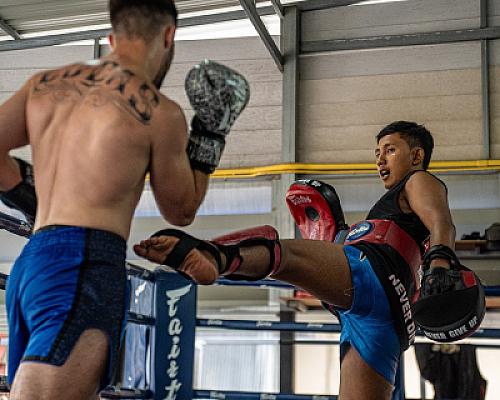
This is the single most important factor. Pad work is where your technique actually develops. I always tell people: a great trainer who communicates well and corrects your form is worth ten times more than a gym with the newest equipment.
Look for trainers who:
- Watch you while you’re on the heavy bags and fix your form.
- Make pad rounds feel like a lesson, not just a cardio session.
- Remember what you struggled with in the last class.
- Adjust the intensity based on how you’re feeling that day.
Run the other way if:
- They’re on their phones while you’re hitting the bags.
- They give the exact same session to a 40-year-old beginner and a pro fighter.
- The pad rounds feel rushed and sloppy with zero feedback.
2. The trainer-to-student ratio
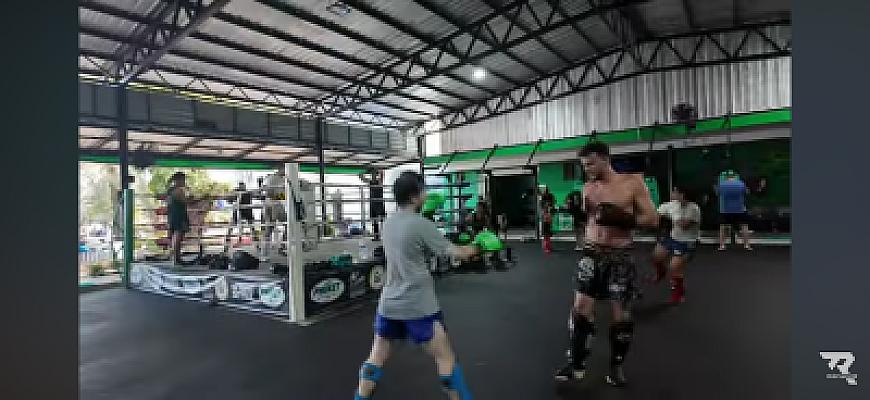
This is something a lot of guides miss. If a camp has sixty students and only eight trainers, you’re only getting a fraction of their attention. Your pad rounds will be short, and nobody will be watching your bag work. I prefer smaller camps with five to fifteen students where you can actually get some one-on-one time. Ask about their typical class size before you book.
3. Schedule and structure
A serious camp usually runs two sessions a day: one in the morning (usually 7:00 to 9:00 AM) and one in the afternoon (4:00 to 6:30 PM). If a gym only offers one session a day, or says you can "show up whenever," they’re probably catering to tourists rather than providing a real training program. Look for a consistent structure: jumping rope, shadow boxing, bag work, pads, and then optional sparring or clinching.
4. Choosing the right neighborhood
In Phuket, where you stay changes your whole experience.
- Chalong and Soi Taied: This is the fitness heart of the island. You’re surrounded by gyms, healthy cafes, and sports massage shops. It’s perfect if you want to be fully immersed in "training mode."
- Rawai and Nai Harn: My personal favorite. It’s a bit quieter and more residential, but still has great gyms like Sinbi.
- Kamala and Bang Tao: These are closer to the resort areas. Great if you want to mix training with a beach holiday.
5. On-site vs. off-site accommodation
Staying at the camp makes life easy. You wake up, walk to the mats, and you’re done. But camp rooms can be basic. Staying nearby in a private villa or hotel gives you more comfort, but you’ll have to hop on a scooter for every session. I find that when people stay off-site, they’re much more likely to skip that second session of the day when they’re tired!
A few camps I recommend
Tiger Muay Thai is huge and famous for a reason. They have everything from Muay Thai to MMA and fitness. It can get crowded, but the schedule is very professional.
Sinbi Muay Thai in Rawai is a fantastic balance. They have a great reputation for technical instruction and they attract a mix of beginners and pros.
Sitsongpeenong Phuket is a serious camp. If you want to really dial in your technique and don't mind a tough environment, this is a top choice.
Bangtao Muay Thai and MMA offers great facilities in the north of the island. Perfect if you’re staying near the Laguna area.
Revolution Muay Thai Camp is a solid mid-sized camp that feels very welcoming to international visitors without sacrificing training quality.
Questions to ask before you pay
Don't be afraid to message them and ask:
- How many students and trainers are there right now?
- Are both daily sessions included in the price?
- Is the sparring supervised?
- Are trainers assigned to us, or do we rotate?
If they give you a vague marketing answer, keep looking.
How long should you stay?
One week is the bare minimum to really feel the benefits. The first few days are always a shock to the system with the heat and the intensity. By the second week, you’ll actually start to see progress. If you can stay for a month, you’ll come home a different person.
I’ve linked our guides on what to expect in your first week and training for 30 days if you want to dive deeper.
Cost Benchmarks
Expect to pay between 500 and 900 THB for a single session. Weekly packages are usually 3,000 to 6,500 THB, and monthly is anywhere from 8,000 to 18,000 THB. We have a full budget breakdown for a Phuket training trip if you want to see the total numbers.
See you on the mats!
Grace
The RoamFit editorial team researches and maintains Thailand's fitness directory. We combine verified Google data, on-the-ground knowledge of gyms, Muay Thai camps and studios, and hands-on testing to help expats, health tourists and locals train anywhere in the country. Every guide is fact-checked against the listings in our directory.