Total Cost of a Phuket Training Trip: Budget Breakdown for 1 Week and 2 Weeks (2026)
Full cost breakdown for a Phuket training trip in 2026 — accommodation, gym fees, food, and recovery at budget, mid-range, and premium levels.
One of the most common planning questions for a Phuket training trip is: "What will this actually cost?" Gym fees get quoted easily, but the full picture — accommodation, food, transport, recovery, and incidentals — is harder to find in one place. This guide breaks down realistic costs for one-week and two-week training trips at three budget levels, so you can plan accurately rather than discover surprises on arrival.
All figures are in Thai Baht (THB) with USD equivalents at approximately 35 THB per USD. Costs are current for 2026.
The Three Budget Levels
Budget: Guesthouse accommodation, street food, local transport, no luxury extras. Maximises training value per baht spent.
Mid-range: Comfortable hotel or camp guesthouse, mix of local and café eating, some recovery spending. The most common approach for serious fitness travellers.
Premium: Resort hotel or villa, restaurant dining, full recovery toolkit. For those who want high-quality training without compromising on comfort.
Accommodation
Accommodation near Phuket's main training areas (Chalong, Rawai, Kata) runs across a wide range depending on what you're looking for.
Budget: 400–700 THB/night (~$11–20)
Basic guesthouses and camp dormitory rooms. Air-conditioned, clean, WiFi. Often within walking distance of major gyms on Soi Taied. Private rooms at this price point exist but competition for the best spots means booking ahead for the dry season (December–March).
Mid-range: 800–1,800 THB/night (~$23–51)
Private rooms at camp guesthouses, small boutique hotels, and serviced apartments. This range offers meaningful comfort improvements — better beds, more reliable hot water, sometimes a small pool — without moving into resort territory. The 1,000–1,500 THB range is the sweet spot for most training visitors.
Premium: 2,500–6,000+ THB/night (~$71–170+)
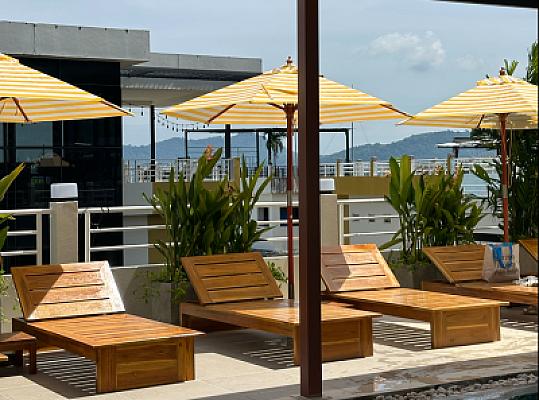
Resort hotels, private villas, and high-end boutique properties. Access to pool, better breakfast options, and facilities that support recovery. Worth considering for two-week trips where accumulated fatigue makes comfort more of a factor.
Training Costs
Training is the most variable category depending on how you structure your sessions. See the full gym prices guide for a comprehensive breakdown by gym type.
Muay Thai Camp Package (Most Common)
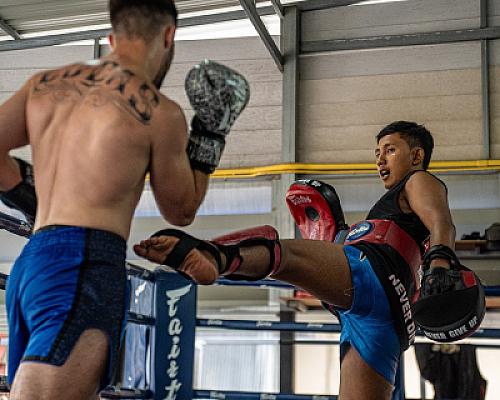
Monthly packages that include twice-daily training run 8,000–18,000 THB/month (~$230–515) at most serious camps. Weekly equivalents work out to 2,500–5,000 THB/week (~$71–143). Day passes for drop-in training run 300–600 THB/session.
Camp packages often include accommodation at a discount — a monthly training-plus-room package at a mid-tier camp can run 12,000–20,000 THB/month total, which represents excellent value compared to paying for gym and accommodation separately. See the camps guide for package comparisons.
Commercial Gym / CrossFit
Day passes: 250–500 THB. Weekly passes: 900–1,500 THB. Monthly memberships: 1,500–3,500 THB. CrossFit drop-in is typically 400–600 THB per session.
Yoga
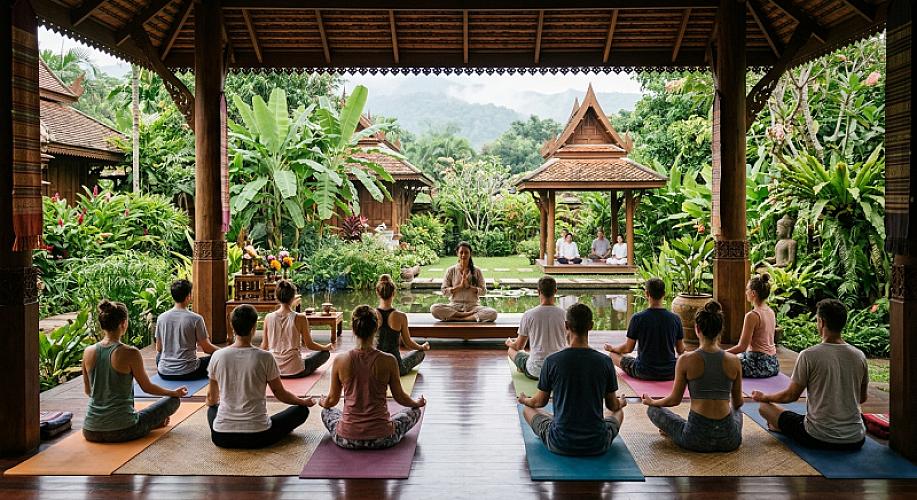
Drop-in yoga classes: 250–500 THB. Weekly unlimited packages: 1,200–2,500 THB. Retreat packages vary significantly by property.
Personal Training
One-on-one Muay Thai padwork with a trainer: 500–1,200 THB/hour depending on trainer level and gym. Private yoga: 800–1,500 THB/session. See the PT costs guide for detailed breakdowns. For budget training that doesn't compromise quality, the affordable gyms guide covers sub-1,000 THB per day options.
Food
Food is where Phuket genuinely rewards the non-tourist approach. Street stalls and local Thai restaurants near training areas serve the kind of high-protein, rice-based meals that suit training nutrition at a fraction of tourist-restaurant prices.
Budget: 250–450 THB/day (~$7–13)
Three meals at street stalls or local restaurants. Khao man gai (50–70 THB), pad kra pao (60–80 THB), pad thai (60–80 THB), fresh fruit shakes (40–60 THB). Coconut water from a stall: 30–40 THB. This level of eating is nutritionally excellent for training and genuinely enjoyable — not a hardship.
Mid-range: 500–900 THB/day (~$14–26)
Mix of street stalls, local restaurants, and occasional café meals. Adds options like smoothie bowls, healthier western-style breakfasts, and post-training protein shakes. A sit-down restaurant meal with a drink runs 200–400 THB at mid-range venues near training areas.
Premium: 1,200–2,500 THB/day (~$34–71)
Restaurant dining, resort breakfast, quality coffee, and health-food café options. The gap between mid-range and premium food quality in Phuket is genuinely smaller than the price difference suggests — local food is very good.
Transport
Transport costs in Phuket are low if you use local options.
Scooter rental: 200–350 THB/day
The most practical option for getting between gym, accommodation, and food. Monthly rental reduces to 3,500–5,500 THB. Requires a licence (international driving permit covers most needs) and appropriate caution, particularly at night.
Songthaew (shared red truck taxi): 30–80 THB/trip
On fixed routes within Phuket. Cheap but slow and route-limited. Fine for the main tourist corridors.
Grab (ride-hailing): 80–200 THB/trip
Practical for specific trips without renting a scooter. More expensive than scooter rental for daily use but no vehicle responsibility.
From the airport: 300–600 THB
Airport taxis or Grab to Chalong/Rawai/Kata area.
Recovery and Extras
Recovery spending is where training visitors most commonly underbudget. At twice-daily training volume, recovery isn't optional.
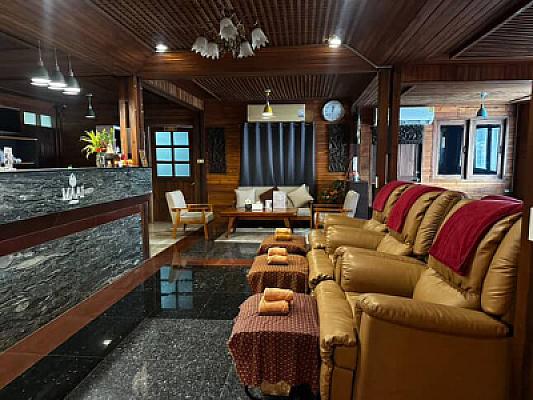
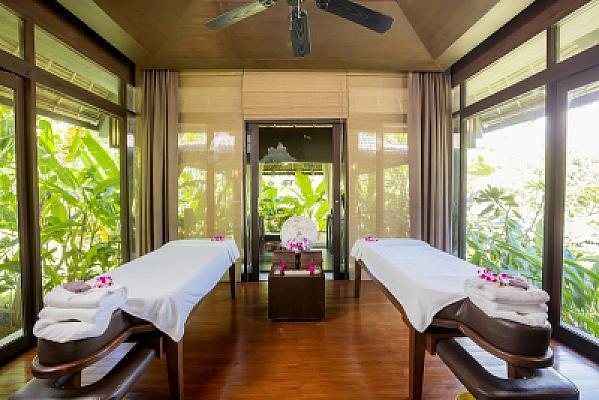
Thai sports massage: 400–600 THB/hour at reputable therapists near training areas. Budget for 2–3 sessions per week for serious training. See the sports massage guide for what to look for.
Supplements and electrolytes: 500–1,500 THB/week depending on what you're using. Protein powder, creatine, magnesium, and electrolyte sachets all available locally.
Laundry: 50–80 THB/kg at local laundry services. Budget 200–400 THB/week for training kit.
SIM card: 300–500 THB for a 30-day data SIM (AIS or DTAC). Essential for navigation and Grab.
Complete Budget Summary
One-Week Budget (7 nights)
| Category | Budget | Mid-Range | Premium |
|---|---|---|---|
| Accommodation (7 nights) | 3,500–4,900 | 7,000–12,600 | 17,500–42,000 |
| Training (weekly package) | 2,500–3,500 | 3,500–5,000 | 5,000–8,000 |
| Food (7 days) | 1,750–3,150 | 3,500–6,300 | 8,400–17,500 |
| Transport | 1,400–2,450 | 1,400–2,450 | 2,000–4,000 |
| Recovery/extras | 1,500–2,500 | 3,000–5,000 | 5,000–8,000 |
| Total (THB) | 10,650–16,500 | 18,400–31,350 | 37,900–79,500 |
| Total (USD) | $305–$470 | $525–$895 | $1,080–$2,270 |
Two-Week Budget (14 nights)
| Category | Budget | Mid-Range | Premium |
|---|---|---|---|
| Accommodation (14 nights) | 5,600–9,800 | 11,200–25,200 | 35,000–84,000 |
| Training (2-week package) | 4,500–6,000 | 6,000–9,000 | 9,000–15,000 |
| Food (14 days) | 3,500–6,300 | 7,000–12,600 | 16,800–35,000 |
| Transport | 2,100–3,500 | 2,100–3,500 | 3,500–7,000 |
| Recovery/extras | 2,500–4,000 | 5,000–8,000 | 8,000–14,000 |
| Total (THB) | 18,200–29,600 | 31,300–58,300 | 72,300–155,000 |
| Total (USD) | $520–$845 | $895–$1,665 | $2,065–$4,430 |
Flights not included — these vary enormously by origin and booking window.
Tips for Getting the Best Value
Book camp packages over day passes: A weekly or monthly package almost always costs less per session than paying day-by-day, often by 30–40%. The commitment also ensures you actually train rather than talking yourself out of sessions.
Eat at stalls near the gym: The street food within 500m of major training areas is specifically good because it serves people with hard training schedules. Quality is high and prices are a quarter of tourist restaurant rates.
Rent a scooter for stays of five days or more: The daily rental cost pays back within two or three Grab rides. The freedom to move around the island cheaply also improves the trip beyond just the financial saving.
Book accommodation with a kitchen for longer stays: Serviced apartments with basic cooking facilities allow simple meal preparation (protein shakes, eggs, fruit) that reduces food costs and gives more control over nutrition.
See the fitness trip planning guide for how to structure the schedule around these budget considerations.
The RoamFit editorial team researches and maintains Thailand's fitness directory. We combine verified Google data, on-the-ground knowledge of gyms, Muay Thai camps and studios, and hands-on testing to help expats, health tourists and locals train anywhere in the country. Every guide is fact-checked against the listings in our directory.