Bangkok vs Chiang Mai: Digital Nomad Fitness Guide
An honest comparison of gym costs, transport logistics, air quality, and healthy food options for remote workers in Thailand's two biggest nomad hubs.
Working online from a laptop in Thailand sounds ideal until your lower back locks up and you realize you have gained five kilograms from eating pad thai every night. To stay in shape while managing client deadlines, you need a reliable fitness routine. Bangkok and Chiang Mai are the two primary bases for digital nomads in Thailand, but they demand entirely different fitness lifestyles. Your choice between them dictates how much you will spend, how you will travel to your workouts, and whether you will be breathing clean air.
Here is a direct, practical comparison of the fitness realities in both cities, based on real prices, locations, and daily logistics.
Gym Quality, Variety, and Monthly Costs
Bangkok is dominated by air-conditioned, multi-story fitness centers and specialized strength facilities. If you live along the Sukhumvit BTS line, you will find premium chains like Virgin Active and Fitness First. These cost between 2,500 and 4,000 THB per month. They offer top-tier equipment, saunas, and clean towel service, but they require long-term contracts. For serious lifters, Bangkok has world-class independent gyms. Muscle Factory in On Nut is a massive warehouse filled with hammer strength machines and power racks, costing around 1,800 to 2,200 THB per month. Base Bangkok offers high-intensity interval training and personal training starting at 600 THB per class.
Chiang Mai is much cheaper and more relaxed. The famous Go Gym, located near the superhighway, is a massive, semi-outdoor warehouse. It costs only 900 to 1,200 THB per month, or 100 THB for a day pass. It has heavy iron and a great community, but it gets hot in the afternoon. For air-conditioned comfort, Harris Fitness or the gym at Hillside 4 in Nimman cost around 1,200 to 1,600 THB per month. The equipment in Chiang Mai is often older and has some rust, but the low prices make up for it.
Transport and Daily Logistics
In Bangkok, your fitness routine depends entirely on the mass transit system. If your gym is not within a five-minute walk of a BTS Skytrain or MRT Subway station, you will end up skipping workouts. Walking long distances in Bangkok is sweaty and difficult due to broken pavements and intense heat. Taking a motorbike taxi costs 20 to 50 THB per trip, which adds up quickly over a month. You must choose your condo location based on your gym location.
In Chiang Mai, almost everyone rents a scooter for 2,500 to 3,500 THB per month. This gives you the freedom to drive to any gym in the city within fifteen minutes. If you do not ride a scooter, you must rely on red songthaews or Grab, which is slower but still affordable. The lack of traffic compared to Bangkok makes getting to your workout much less stressful.
The Air Quality Factor
This is the biggest differentiator between the two cities. From February to April, Chiang Mai suffers from the agricultural burning season. The air quality index regularly exceeds 200, making outdoor running, cycling, or even training in open-air gyms like Go Gym a serious health hazard. If you plan to be in Thailand during these months, Bangkok is the safer choice for your lungs. Bangkok has air pollution too, but it rarely reaches the sustained, hazardous levels of the northern burning season, and almost all Bangkok gyms have heavy-duty air conditioning and air purifiers.
Yoga, Pilates, and Wellness Communities
If your fitness routine leans toward yoga, mobility, and recovery, Chiang Mai is the clear winner. The Nimman and Santitham neighborhoods are packed with independent yoga studios like Wild Rose Yoga and Yoga Mind Yoga Body. Classes cost 250 to 350 THB. The city also has a massive community focused on ice baths, breathwork, and saunas. Venues like Alt_ChiangMai and Chiang Mai Holistic host regular social recovery sessions for 300 THB, making it easy to meet other remote workers.
Bangkok treats yoga and Pilates as premium luxury services. Reformer Pilates studios like Absolute You cater to high-income locals and expats, charging 700 to 1,000 THB per class. There are excellent yoga studios, but they are corporate, expensive, and lack the community feel of the north.
Muay Thai Training
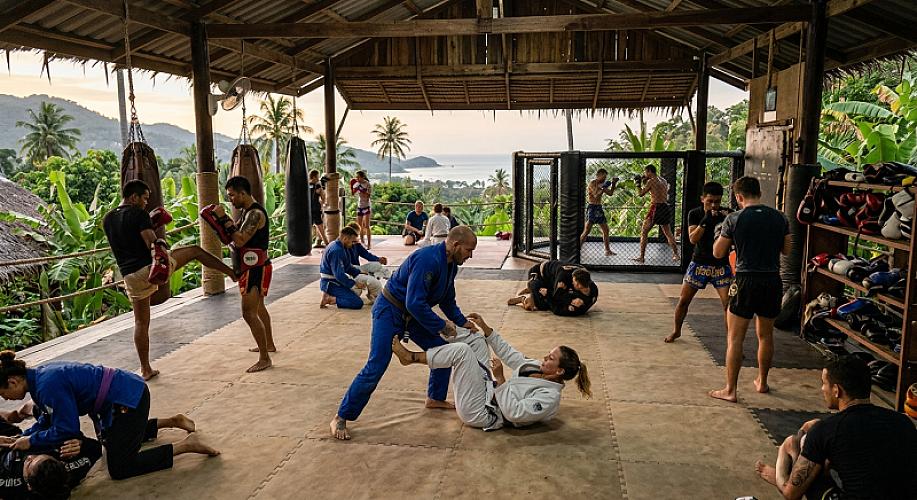
For Muay Thai, both cities are excellent but offer different training environments. Bangkok is home to legendary fight gyms where active stadium fighters train. Elite Fight Club in Phrom Phong or Khongsittha in Lat Phrao offer intense workouts. Expect to pay 500 to 700 THB for a single group session, or 10,000 to 12,000 THB for a monthly unlimited pass.
Chiang Mai offers a more scenic, relaxed training environment. Gyms like Santai Muay Thai, located just outside the city, or Lanna Muay Thai offer world-class instruction for 300 to 400 THB per session, or 6,000 to 8,000 THB per month. It is much easier to integrate Muay Thai into a casual lifestyle here without the stress of Bangkok traffic.
Nutrition and Eating for Gains
Eating clean is easy in both cities, but the execution differs. Bangkok has a highly developed meal prep industry. Companies like Paleo Robbie and Nutrition Depot deliver high-protein, weighed meals directly to your condo lobby. This is convenient but expensive, costing 250 to 400 THB per meal.
In Chiang Mai, you can eat healthy on a budget by visiting local markets or health cafes. Nimman has places like The Salad Concept, and local street food stalls serve chicken breast with rice (Khao Man Gai) for 50 to 70 THB. You can easily hit your protein targets for half the price of Bangkok, though you will have to do more of the sourcing and ordering yourself.
Which City Should You Choose?
Choose Bangkok if you have a higher budget, want modern air-conditioned facilities, rely on public transport, and plan to train during the spring burning season.
Choose Chiang Mai if you want to save money, prefer a community-driven wellness scene, ride a scooter, and want easy access to outdoor activities during the wet and cool seasons.
Frequently Asked Questions
Which city has cheaper gym memberships?
Chiang Mai is significantly cheaper. A monthly pass at a good gym in Chiang Mai costs 900 to 1,600 THB, while a similar gym in Bangkok costs 1,800 to 4,000 THB.
Can I train outdoors in Chiang Mai year-round?
No. From February to April, the air quality in Chiang Mai is hazardous due to agricultural burning. Outdoor workouts during these months are not recommended.
Is it easy to find healthy meal prep in Bangkok?
Yes. Bangkok has excellent meal prep delivery services like Paleo Robbie that deliver macro-tracked meals directly to your condo, though they cost 250 to 400 THB per meal.
Do I need a scooter to get to gyms in Chiang Mai?
While not strictly mandatory, renting a scooter for 2,500 to 3,500 THB per month is the most practical way to access gyms and studios in Chiang Mai.