BJJ and MMA Gyms in Koh Samui: Training, Open Mats and Fees
A realistic guide to training Brazilian Jiu-Jitsu and MMA in Koh Samui. Breakdowns of top gyms, open mat policies, drop-in rates, and practical climate tips.
Koh Samui has traditionally been known for Muay Thai, but the island now supports a solid grappler community. Whether you are living on the island or visiting for two weeks, finding quality mat space with consistent rolls, clean facilities, and realistic training schedules takes some planning. Samui is split into distinctly different areas, and transport costs can add up quickly if you pick a gym on the wrong side of the island.
Here is a realistic breakdown of training BJJ and MMA on Koh Samui, including gym options, schedule details, drop-in pricing, and practical tips for surviving the tropical heat on the mats.
Top BJJ and MMA Gyms on the Island
Superpro Samui (Chaweng Beach)
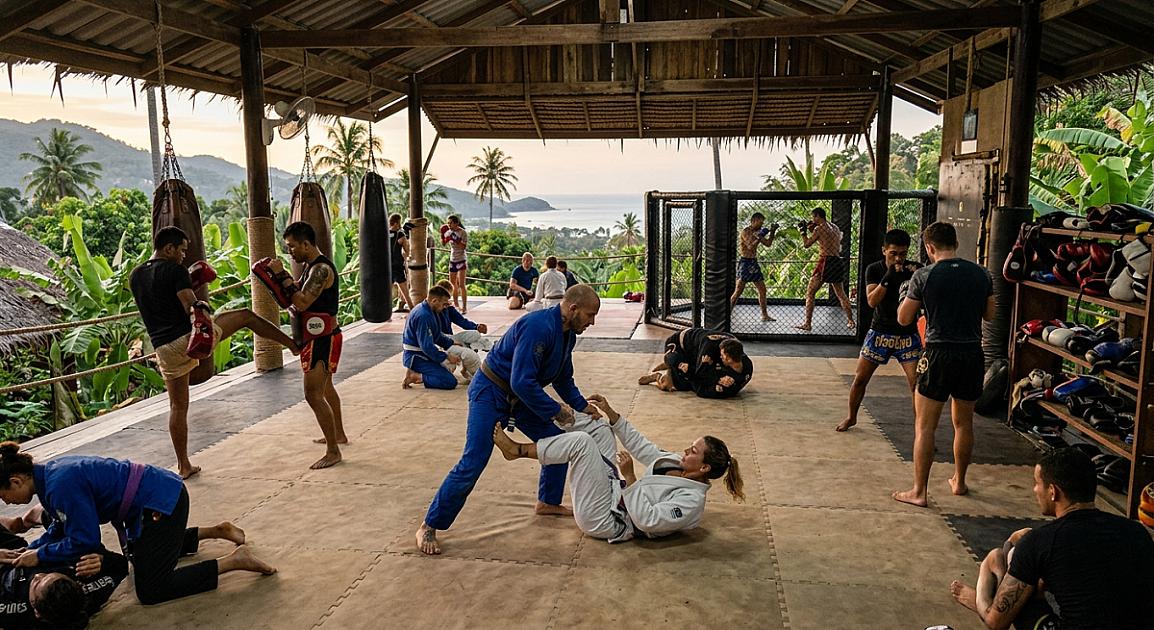
Superpro is one of the oldest established combat sports facilities on the island. Located just off the main ring road near Chaweng, it offers a large covered outdoor training space with high-quality puzzle mats and a full MMA cage.
- Training Focus: No-Gi BJJ, MMA striking, wrestling, and Muay Thai. They run dedicated morning and evening sessions.
- Coaching & Vibe: The environment is beginner-friendly but draws experienced fighters passing through Chaweng. It is a commercial setup, meaning high turnover in classes during high season.
- Facilities: On-site accommodation, swimming pool, weight room, and heavy bags. The mat area is open-air, so expect high humidity.
Samui Fight House (Lamai)
Situated in Lamai, Samui Fight House provides a more tight-knit, community-focused environment. It caters heavily to expats living long-term on the south side of the island alongside short-term visitors.
- Training Focus: Both Gi and No-Gi BJJ classes, submission grappling, and MMA fundamentals. Classes usually start with technical drilling followed by specific sparring and free rounds.
- Coaching & Vibe: Smaller class sizes compared to Chaweng gyms. You get far more individual feedback from the coaches, making it a strong choice if you want to fix specific holes in your game.
- Facilities: Clean, well-maintained indoor mat area with fans and good ventilation.
Jun Muay Thai & BJJ (Lamai / Hua Thanon border)
While primarily a respected traditional Muay Thai camp, Jun has expanded its schedule to include No-Gi BJJ and submission wrestling sessions to cater to cross-training combat athletes.
- Training Focus: No-Gi grappling integrated with MMA-style conditioning.
- Coaching & Vibe: Hard-working, direct, and no-nonsense atmosphere. Good option if you want to split your day between Muay Thai pads in the morning and grappling in the afternoon.
Dropping In: Rates, Gi Rentals, and Etiquette
Drop-in pricing across Koh Samui is consistent. Most facilities accept cash on arrival, though some larger centers accept card payments with a small surcharge.
- Single Session Drop-in: 400 THB to 500 THB.
- Day Pass (Multiple Classes + Gym Access): 600 THB to 800 THB.
- Weekly Pass: 2,000 THB to 2,500 THB.
- Monthly Unlimited: 6,500 THB to 9,000 THB.
Gi vs. No-Gi Availability
No-Gi dominates the island. Due to the tropical heat and high humidity, most gyms run No-Gi or submission grappling sessions three to four times more often than Gi classes.
If you prefer Gi training, bring your own lightweight travel gi (350 GSM or lower). Few gyms rent gis on-site, and those that do usually charge 150 THB to 200 THB per session. Buying a new gi on Samui is difficult, as retail options are limited to basic equipment at local fight shops.
Open Mat Culture
Open mats typically happen on Friday evenings or Saturday mornings. Most gyms charge standard drop-in fees for non-members attending open mats, though some offer discounted 200 THB entry. Etiquette is informal, but washing your gear immediately after rolling is non-negotiable due to local climate conditions.
Managing Heat, Humidity, and Hygiene
Training BJJ in Samui is physically harder than training in cooler climates. High humidity prevents sweat from evaporating efficiently, leading to rapid dehydration and overheating during live rounds.
Staying Hydrated
Drink at least 1.5 liters of water before stepping onto the mat. Plain water is usually not enough; buy electrolyte sachets (such as Royal D or Sponsor) at any 7-Eleven for 6 THB to 10 THB and add them to your water bottle. Keep a spare bottle at mat-side for rest intervals.
Skin Infections and Laundry
Tropical heat combined with shared mat space creates an ideal environment for ringworm, staph, and bacterial infections. Protect yourself by taking these precautions:
- Wear Spats and Long-Sleeve Rashguards: Even during Gi training, lightweight compression gear reduces direct skin contact with the mats.
- Shower Immediately: Wash with antibacterial soap or tea tree body wash within 20 minutes of finishing your session.
- Do Laundry Daily: Never leave wet gear in a gym bag overnight. Local wash-and-fold laundromats charge 40 THB to 60 THB per kilo, but ensure you ask for a fast turnaround or wash your rashguards by hand in your room shower and hang them near a fan.
Getting Around: Location and Transport Tips
Koh Samui is larger than many visitors expect. Driving from Chaweng in the east to Nathon in the west takes roughly 35 minutes by scooter.
- Renting a Scooter: The most economical way to get to training. Rental rates run from 200 THB to 300 THB per day, or 3,500 THB to 4,500 THB monthly. Always check tire tread and brakes, as road surfaces near gym entrances can be slick with loose sand.
- Songthaews (Baht Buses): These covered pickup trucks run along the main ring road. Fares range between 50 THB and 150 THB depending on distance. They stop running frequently after 6:00 PM, which can make returning from evening sparring sessions tricky.
- Grab / Bolt Apps: Rideshare options operate across Samui. Bolt is generally cheaper than Grab, but cars near Lamai or Maenam can take 15 minutes to arrive during peak hours.
Frequently Asked Questions
Can I train BJJ in Koh Samui as a complete beginner?
Yes. Most gyms offer all-levels classes that break down basic positions, escapes, and safe sparring habits suitable for first-time practitioners.
Do I need to bring my own Gi to Koh Samui?
Yes. Lightweight travel gis are recommended. Rental gis are rarely available on the island, and buying one locally is difficult due to limited fight stock.
How much does a drop-in BJJ session cost on Samui?
A standard single-session drop-in costs between 400 THB and 500 THB across most gyms on the island.
Is No-Gi or Gi training more popular on the island?
No-Gi is far more common on Koh Samui due to the extreme heat and high humidity.