A no-nonsense guide to the best Muay Thai and Western boxing gyms in Chiang Mai, including real prices, locations, and training expectations.
Most people who come to Chiang Mai looking for boxing are actually looking for Muay Thai. The city is one of the best places in the world to train. It is cheaper than Phuket, less chaotic than Bangkok, and home to legendary champions. However, if you want traditional Western boxing, your options are more limited but still available.
Training in the north of Thailand has its own rhythm. The mountain air makes early mornings cooler, but by afternoon, the humidity rises. You will sweat through your gear in thirty minutes.
This guide breaks down the top gyms in Chiang Mai, what you will pay, and how to choose the right gym for your fitness level.
The Best Gyms for Muay Thai and Boxing
Gyms in Chiang Mai generally fall into three categories. You have central gyms catering to tourists and expats, serious fighter camps on the outskirts, and multi-discipline MMA gyms.
Dang Muay Thai
Located just outside the eastern moat near Thapae Gate, Dang Muay Thai is highly accessible. It is popular with expats and travelers who live in the Old City or Chang Moi.
The trainers here are incredibly friendly but will not let you slack off. They focus heavily on correct form, making it an excellent spot for beginners. Because of its central location, classes can get crowded during the high season from November to February.
- Location: Kotchasarn Road, near the Old City.
- Price: 300 THB per single session. 1,500 THB for a weekly pass.
- Best for: Beginners, intermediate students, and those staying in the city center.
Santai Muay Thai
If you want to experience a traditional, high-intensity camp, Santai is the standard. It is located in San Kamphaeng, a rural district about 30 minutes east of the city center.
This is where you go to fight or train like a professional. The style taught here is traditional Stadium Muay Thai, focusing on heavy kicks, clinching, and physical conditioning. Many students stay on-site in the gym's shared or private bungalows.
- Location: San Kamphaeng (requires a motorbike or Grab ride from the city).
- Price: 400 THB per session. 2,500 THB per week. Accommodation packages are available.
- Best for: Serious practitioners, fighters, and those wanting an immersive camp experience.
Chiang Mai Muay Thai Gym
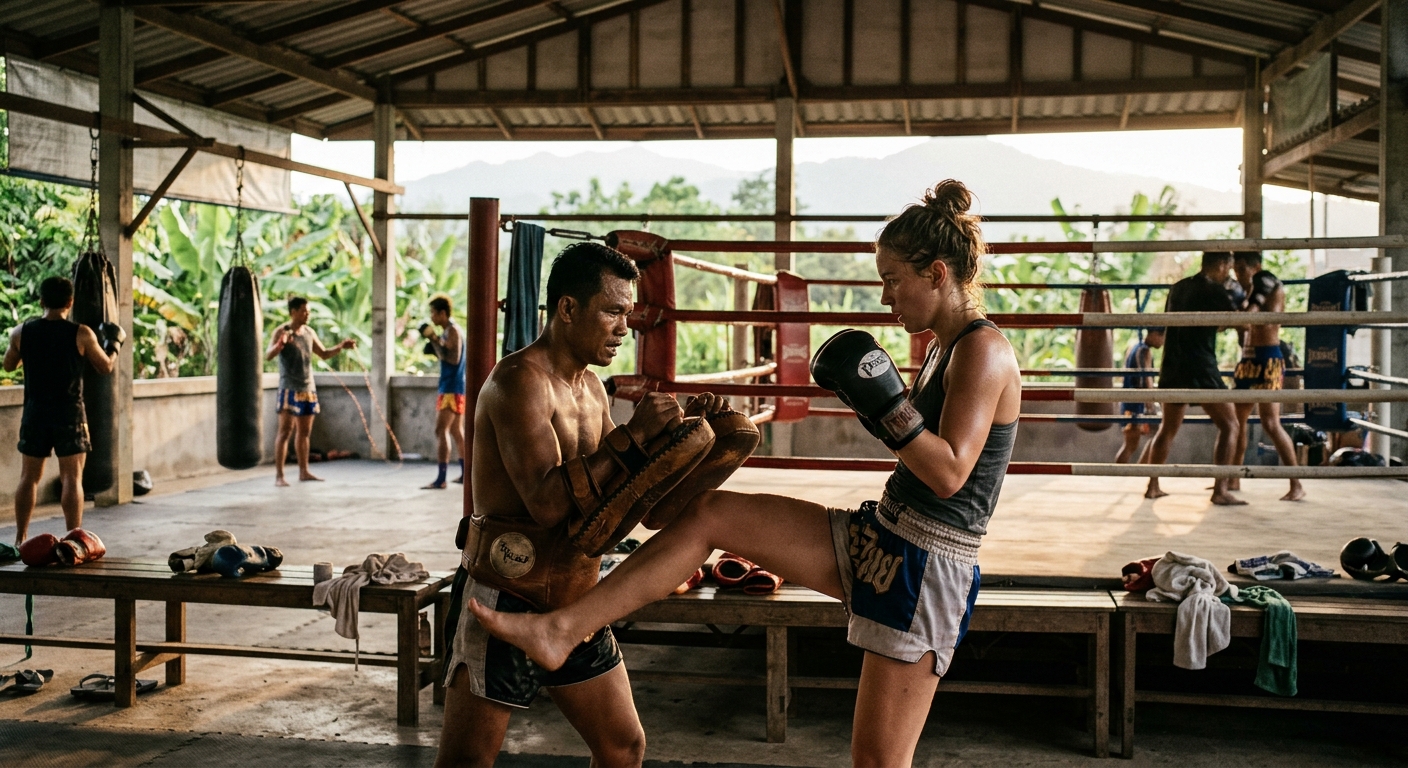
This gym sits inside the Old City walls, making it the easiest to reach if you are exploring the temple districts on foot. It is an open-air facility with a ring and plenty of heavy bags.
The crowd here is a mix of tourists doing a one-off class and expats who train three times a week. The trainers adapt well to your fitness level. If you want a hard cardio workout without commuting, this is your best option.
- Location: Phra Sing, Old City.
- Price: 300 THB per session. 1,200 THB for five sessions.
- Best for: Casual trainers and tourists.
Team Quest Thailand
For those specifically looking for Western boxing alongside Muay Thai, Team Quest is the top choice. Located south of the airport, this is a complete mixed martial arts facility.
They offer dedicated wrestling, Brazilian Jiu-Jitsu, and Western boxing classes in addition to Muay Thai. The coaching is highly structured, and the gym attracts professional athletes from around the world.
- Location: Near Central Plaza Airport.
- Price: 400 THB per class. Monthly memberships start around 4,500 THB.
- Best for: Western boxing, MMA, and multi-discipline training.
What to Expect During a Session
A typical training session lasts between 90 minutes and two hours. Thai gyms run on a standard routine that has not changed in decades.
- The Warm-up: You will start with 10 to 15 minutes of skipping rope. Thai jump ropes are thick, heavy plastic tubes that tire your shoulders quickly. This is followed by stretching and shadow boxing.
- Bag Work: You will kick and punch the heavy bags for three to four rounds. Trainers will watch and correct your stance.
- Pad Work: This is the core of the session. You will get in the ring with a trainer for three to five rounds of pad work. They will call out combinations, catch your kicks, and push your cardio to its limit.
- Clinching or Sparring: If you are intermediate or advanced, you will spend time clinching with other students or trainers. Sparring is always optional and usually light. Thais do not believe in hurting each other during training.
- Conditioning: The session ends with core work, push-ups, and stretching.
Prices and Hidden Costs
Training in Chiang Mai is highly affordable compared to Western countries. Here is what you should budget in Thai Baht (THB):
- Single Drop-in Class: 300 to 400 THB
- Weekly Pass (One session per day): 1,500 to 2,000 THB
- Monthly Pass (One session per day): 4,000 to 6,000 THB
- Monthly Pass (Two sessions per day): 7,000 to 10,000 THB
- Private Lesson (1-on-1): 600 to 1,000 THB per hour
Gear and Extra Costs
Most gyms provide gloves and shin guards for free, but they smell like years of sweat. If you plan to train for more than a week, buy your own gear.
You can buy high-quality, Thai-made brands like Fairtex, Twins, or Top King at shops around the city or directly from the gyms. Expect to pay around 1,500 to 2,500 THB for leather gloves and 300 THB for handwraps. Handwraps are essential to protect your wrists.
Logistics and Local Tips
Getting Around
If you train in the Old City or Nimman, you can walk, use a bicycle, or take a red songthaew (communal truck) for 30 to 50 THB. For gyms further out like Santai, renting a scooter is the most common option. This costs about 150 to 250 THB per day. Always wear a helmet and carry an international driving permit, as police checkpoints are frequent.
The Burning Season
If you are planning a trip specifically to train, avoid Chiang Mai from February to April. This is the agricultural burning season. The air quality index (AQI) regularly climbs to hazardous levels. Training hard in an open-air gym during these months is bad for your lungs. The best months to train are November through January, when the mornings are cool and dry.
Gym Etiquette
- Take off your shoes: Never wear shoes onto the canvas mats or inside the ring.
- Wai your trainers: A simple wai (pressing your palms together at chest level) to your trainers when you arrive and leave shows respect.
- Dry your gear: Hang your handwraps and gloves up to dry immediately after training. The Chiang Mai humidity will turn damp gear moldy overnight.
Frequently Asked Questions
Do I need to be in shape to start boxing in Chiang Mai?
No. Trainers are accustomed to working with absolute beginners of all fitness levels. They will adjust the intensity of the pad work to match your current stamina.
Can I rent boxing gear at the gyms?
Most gyms let you use their communal gloves and shin guards for free. However, buying your own handwraps is highly recommended for hygiene reasons.
Is Western boxing available, or is it only Muay Thai?
While Muay Thai is dominant, gyms like Team Quest Thailand offer dedicated Western boxing classes. You can also request Western-only boxing during private sessions at most Muay Thai gyms.
How do I get to gyms outside the city center?
The most reliable options are using the Grab ride-hailing app or renting a scooter. A Grab car to outer districts like San Kamphaeng costs around 200 to 300 THB each way.
The RoamFit editorial team researches and maintains Thailand's fitness directory. We combine verified Google data, on-the-ground knowledge of gyms, Muay Thai camps and studios, and hands-on testing to help expats, health tourists and locals train anywhere in the country. Every guide is fact-checked against the listings in our directory.