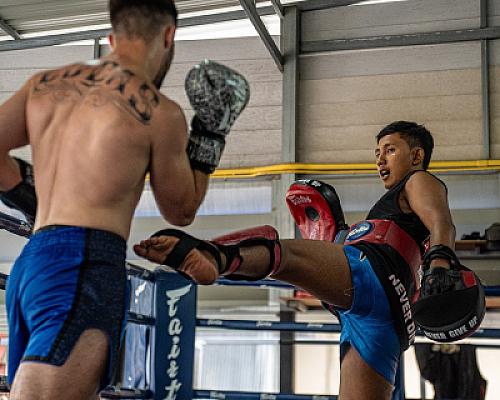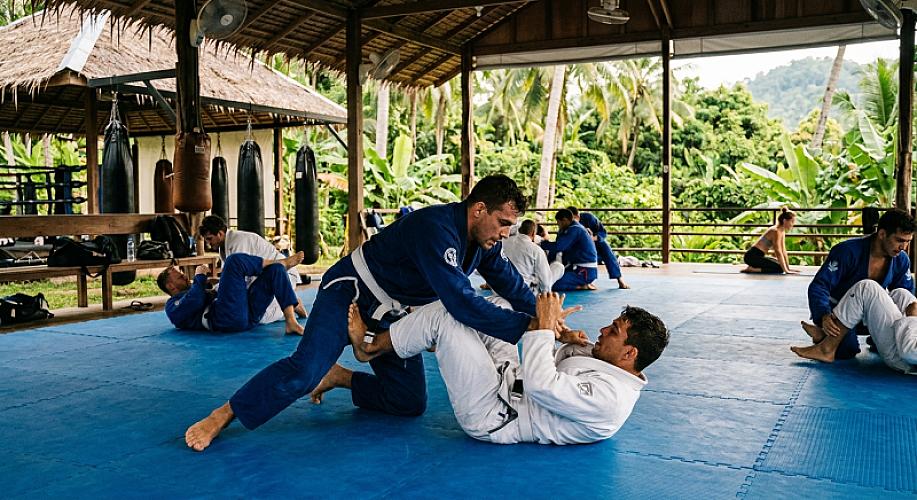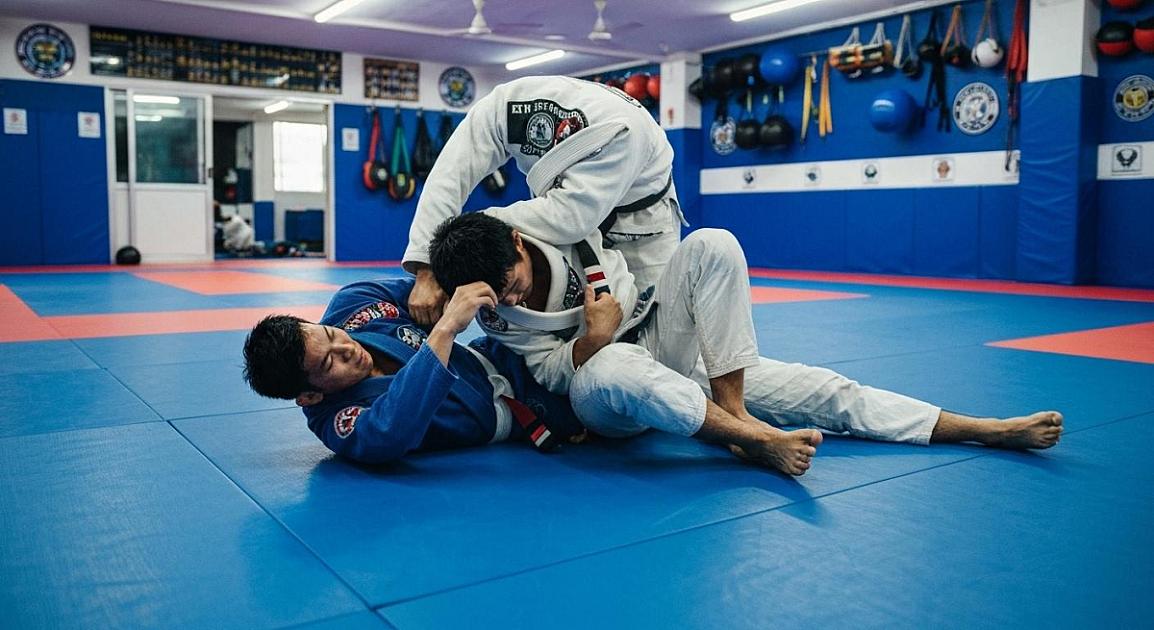
Phuket has a serious BJJ and grappling scene alongside its dominant Muay Thai culture. Here are the best academies and what to expect when training jiu-jitsu on the island.
Brazilian jiu-jitsu has found a natural home in Phuket. The island's existing infrastructure for combat sports tourism — accommodation built around training schedules, a large community of visiting fighters, and a culture comfortable with hard training — transfers directly to BJJ. Several serious academies have established themselves alongside the dominant Muay Thai scene, and the quality of instruction available in Phuket is higher than most visiting grapplers expect.
Why Phuket Works for BJJ
The same factors that make Phuket work for Muay Thai apply to BJJ. High-quality visiting practitioners from around the world create training partners of varied backgrounds and skill levels. The warm climate keeps the body loose and supple — relevant for grappling in a way it isn't for striking sports. And the local culture of serious daily training means academies here maintain standards that recreational facilities in cooler climates often don't reach.
Phuket also sits within Thailand's broader MMA ecosystem. Mixed martial arts has grown significantly in the region, and BJJ is a core component of that development. Academies in Phuket train alongside MMA fighters, Muay Thai practitioners, and wrestling specialists, creating a cross-disciplinary environment that develops more complete grapplers than a standalone BJJ-only gym can produce.
Where to Train BJJ in Phuket
Born to Roll — BJJ Brazilian Jiu-Jitsu Phuket
Born to Roll is one of Phuket's dedicated BJJ academies, running gi and no-gi classes for all levels. The academy focuses specifically on jiu-jitsu rather than blending it into a broader MMA programme, which suits practitioners who want technical depth in grappling rather than cross-training exposure. Class structure covers positions, escapes, submissions, and competition preparation. Open mat sessions are typically available for more experienced practitioners.
Phuket Grappling Academy
Phuket Grappling Academy covers the full grappling spectrum — BJJ, wrestling, submission grappling, and clinch work. The broader approach suits Muay Thai practitioners and MMA fighters who want grappling competency without specialising exclusively in BJJ. The integration of wrestling takedowns alongside BJJ ground work is particularly relevant for Muay Thai fighters developing a more complete game.
Phuket Wrestling Club
Phuket Wrestling Club focuses on wrestling as a discipline — takedowns, clinch wrestling, top control — rather than submission grappling. For Muay Thai fighters, wrestling is a high-value addition: the ability to control where a fight goes (stay standing or go to ground) and to execute or defend takedowns in clinch exchanges is increasingly relevant in MMA and opens dimensions of Muay Thai clinch work that pure striking gyms don't address.
BJJ for Muay Thai Practitioners
The combination of Muay Thai and BJJ is one of the most effective cross-training partnerships available. They are complementary in the most literal sense: Muay Thai is the complete striking system, BJJ is the complete ground system. The gap between them — the clinch, takedowns, and the transition between standing and ground — is where wrestling fills in.
Many visitors to Phuket's Muay Thai camps add BJJ sessions to their weekly schedule, typically in the afternoon after morning Muay Thai. The physical demands are different enough that the disciplines don't directly interfere: Muay Thai training taxes the cardiovascular system and striking muscles intensely; BJJ training loads the grip, neck, and stabilising muscles. Acute fatigue from one doesn't prevent effective training in the other in the same day.
For a broader comparison of how BJJ fits into the combat sports landscape alongside Muay Thai, boxing, and MMA, see the Muay Thai vs Boxing vs MMA vs BJJ comparison.
Gi vs No-Gi: What to Train in Phuket
New practitioners sometimes ask which to prioritise — gi or no-gi — and the answer in Phuket is almost always no-gi, for practical reasons. The tropical heat makes gi training genuinely unpleasant compared to temperate environments. No-gi training is more directly applicable to MMA and self-defence. And the cross-training value for Muay Thai and wrestling is primarily in no-gi grappling patterns rather than gi-specific techniques.
Experienced gi practitioners will still find gi classes available and valuable, particularly for the technical rigour that the collar and sleeve grips enforce. But visitors with limited time in Phuket who want the maximum return from their grappling sessions should prioritise no-gi.
Competition and Level
Phuket's BJJ academies occasionally host and attend regional competitions — particularly ADCC-style submission wrestling events and IBJJF-affiliated gi tournaments in Bangkok and elsewhere in Thailand. For practitioners with competitive goals, training in Phuket gives access to a peer group with genuine competitive experience and coaching oriented toward competition preparation rather than purely recreational development.
Most academies welcome complete beginners. The learning curve in BJJ is steep — most practitioners take months to feel competent and years to feel skilled — but Phuket's training environment accelerates development through the quality and volume of available rolling partners.
Injury Risk and Prevention
BJJ carries a different injury profile from Muay Thai. In striking sports, bruising, shin and forearm conditioning soreness, and lip or eyebrow cuts are common. In BJJ, the injury concerns centre on joints: fingers, wrists, elbows, knees, and shoulders. Tapping early and often — particularly as a beginner — is the primary injury prevention strategy, and reputable academies enforce a culture where ego-driven injury is not tolerated.
Combining BJJ with Muay Thai training amplifies total load on the body. Monitoring for overtraining signs is important when cross-training at high volume. The overtraining guide covers what to watch for when training volume is high.
Practical Information
Cost
Drop-in BJJ classes in Phuket typically run 400–600 THB. Monthly memberships at dedicated academies range from 3,500 to 6,000 THB for unlimited classes. Some academies offer combined Muay Thai and grappling packages for visitors training both disciplines.
What to Bring
For no-gi: compression shorts or spats, rash guard, and mouthguard. Ear guards for practitioners prone to cauliflower ear. For gi classes: a Brazilian jiu-jitsu gi (not a judo gi — the cut is different). Most academies have loaner gis for single sessions but buy your own for regular training.
Fitting BJJ into a Phuket Schedule
The most common scheduling approach for visitors cross-training Muay Thai and BJJ: morning Muay Thai session, afternoon BJJ or grappling. This pattern runs six days with one full rest day. It's demanding but sustainable for athletes who arrive in good physical condition. For guidance on the full Phuket MMA training ecosystem, see the MMA training in Phuket guide.
The RoamFit editorial team researches and maintains Thailand's fitness directory. We combine verified Google data, on-the-ground knowledge of gyms, Muay Thai camps and studios, and hands-on testing to help expats, health tourists and locals train anywhere in the country. Every guide is fact-checked against the listings in our directory.