Eating for Performance in Phuket: A Food Guide for Training Travellers
What to eat before, during, and after training in Phuket — best Thai dishes for recovery, meal timing tips, and where to eat near major gyms.
What you eat during a Phuket training trip directly affects how much you get out of it. Two sessions a day in 32°C heat creates nutritional demands that home eating habits often don't account for — and the good news is that Thai food, eaten correctly, is genuinely excellent fuel for hard training. This guide covers what to eat, when to eat it, what to avoid, and where to find the best options near major training areas.
The Nutritional Reality of Twice-Daily Training
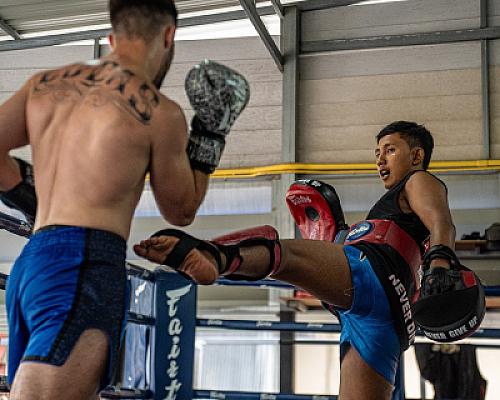
Training twice daily in tropical heat burns significantly more calories than a typical gym session at home. A 90-minute Muay Thai session — padwork, bag rounds, clinching — burns roughly 600–900 kcal for a 75kg person, depending on intensity and how much of that time is active versus instruction. Two sessions means 1,200–1,800 kcal from training alone, before accounting for basal metabolic rate.
The practical implication: you need to eat more than your instincts tell you. Many people arrive in Phuket wanting to lose weight, restrict calories, and train hard simultaneously. The result is usually poor recovery, flat sessions after day three, and a higher risk of injury. Training hard with adequate nutrition beats training hard in a deficit — the weight loss happens regardless at this volume, and the training quality stays high. See the full nutrition guide for macronutrient targets during a training trip.
What Thai Food Does Well
Thai cuisine is, structurally, very well suited to athletes. The typical Thai plate — rice, protein, vegetables, broth — provides a good ratio of carbohydrates for energy, protein for muscle repair, and micronutrients from the herbs and vegetables that feature in most dishes. The portions are generally not excessive, which means eating twice or three times after training sessions keeps the body fuelled without overcrowding digestion.
Best Thai Dishes for Training Recovery
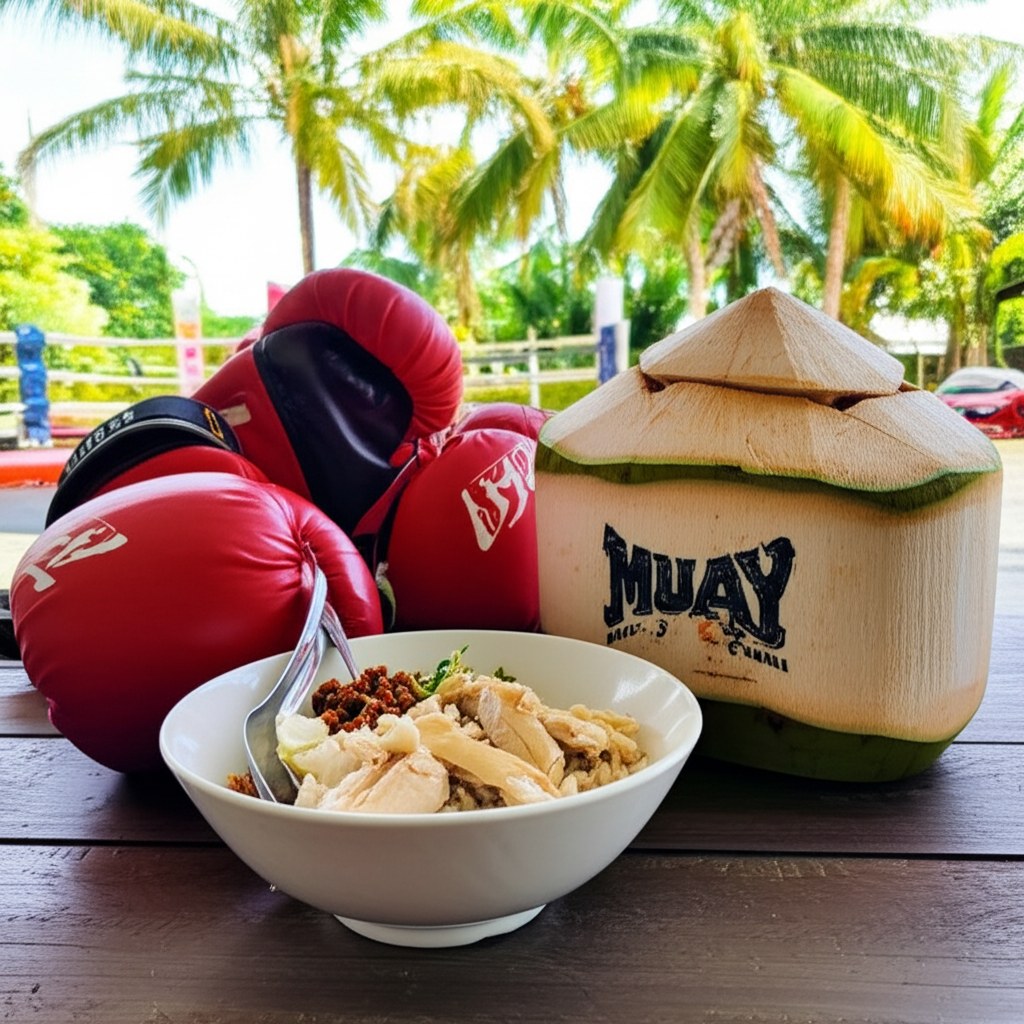
Khao man gai (chicken rice): Poached chicken on jasmine rice with broth and ginger dipping sauce. High protein, easily digestible, available at street stalls from 5 AM. One of the best post-morning-session meals available in Thailand — not heavy enough to interfere with the afternoon session.
Kao pad (fried rice) with egg and protein: Straightforward carbohydrate and protein replenishment. Egg adds leucine for muscle protein synthesis. Available everywhere. The version with pork, chicken, or prawn adds useful variety without significantly changing the nutritional profile.
Tom yum soup: Broth-based, high in electrolytes from the salt, lime, and fish sauce. Excellent for rehydration after a sweat-heavy session, particularly the version with chicken or prawn. The chilli and galangal also have anti-inflammatory properties.
Larb (Thai meat salad): Minced meat — usually pork or chicken — with toasted rice, fresh herbs, fish sauce, and lime. High protein, low carbohydrate, and genuinely flavourful. Common in northern-style Thai restaurants and good for an evening meal when the next session isn't until morning.
Pad kra pao (stir-fried basil): Minced pork or chicken with holy basil, chilli, and egg on rice. High protein, fast-absorbing carbs, anti-inflammatory basil. The most popular lunch dish in Thailand for a reason — it's balanced, fast, cheap, and satisfying without being heavy.
Timing Meals Around Sessions
The two-session structure requires more attention to meal timing than single daily training. Getting this wrong — eating too much too close to a session, or arriving at training in a caloric deficit — has a direct impact on session quality.
Pre-Morning Session (Night Before and Early Morning)
The morning session typically starts at 6:00 AM. Most experienced trainees eat a light snack 30–45 minutes before — a banana, a small bowl of rice, or a protein shake. A full meal before a 6 AM Muay Thai session in the heat is a recipe for nausea.
The more important meal is dinner the previous evening. This is when you load carbohydrates for the morning session: rice, noodles, or pad thai provide muscle glycogen that the morning session will run on.
Post-Morning Session (8:00–10:00 AM)
The post-morning session window is the most important meal of the day. You have 4–5 hours until the afternoon session — enough time to eat a proper meal, digest it, and still be settled before training resumes. This is when to eat your biggest serving of protein (minimum 30–40g), carbohydrates for glycogen replenishment, and vegetables for micronutrients.
Khao man gai, pad kra pao on rice, or a full noodle soup are all appropriate. Avoid heavy fried or fatty foods — they slow digestion and will sit badly in the heat.
Pre-Afternoon Session (12:00–2:00 PM)
A light meal 2–3 hours before the 3 PM session. Rice-based, moderate protein, minimal fat. This is not the time for a restaurant meal with multiple dishes — something simple and digestible. Street stall rice dishes work well here.
Post-Afternoon Session (5:30 PM Onward)
The evening meal can be more flexible — the next session is 12+ hours away. This is when to eat your second large protein serving, enjoy more variety, and replenish electrolytes lost in the afternoon heat. Night markets near most Phuket training areas offer excellent options at low cost. See the twice-daily training guide for the full twice-daily structure.
What to Avoid (or Limit)
Heavy fried food within 3 hours of training: Pad see ew, deep-fried curries, and similar dishes sit in the stomach and create discomfort under training load. Fine as evening meals when the next session is morning.
Alcohol: Dehydrating, inflammatory, and directly measurable in training performance the following morning. Even moderate amounts (two beers) impair glycogen synthesis and sleep quality. Camps are pragmatic about this — one drink occasionally is manageable, but three nights a week of drinking significantly degrades a training trip.
Excessive spice before sessions: Very spicy food irritates the digestive system and can cause significant discomfort during intense exercise. The training version of this problem — needing to stop a padwork round due to stomach cramps — is common among visitors who eat an extremely spicy meal directly before training.
Skipping meals to "cut weight": Weight loss happens at training volume regardless. Skipping meals to accelerate it produces poor sessions and often leads to binge eating of lower-quality food later. If weight loss is a goal, the focus should be on avoiding alcohol and processed snacks rather than restricting quality meals.
Hydration: The Most Underestimated Variable
Phuket's combination of heat, humidity, and twice-daily training creates sweat rates that most visitors significantly underestimate. A conservative estimate is 1–1.5 litres of sweat per session hour — meaning 2–3 litres lost in training daily, before accounting for general heat exposure.
Plain water is necessary but not sufficient at this output. Electrolytes — sodium, potassium, magnesium — are lost in significant quantities in sweat. The symptoms of electrolyte depletion (muscle cramps, headaches, flat energy despite sleeping well) are common among training visitors who drink plenty of water but no electrolytes.
Practical options available everywhere in Phuket:
- Coconut water: Natural electrolytes, potassium-rich, available at street stalls for 30–50 THB. Not sufficient alone for very high-output training but an excellent supplement.
- Electrolyte sachets: Sold at most pharmacies and many 7-Eleven stores. Mix with water between sessions.
- Sports drinks: Readily available but sugar-heavy. Fine during sessions; less useful between them.
- Oral rehydration salts (ORS): Available at pharmacies. The most efficient rehydration option for days with particularly high sweat output.
Supplements Worth Considering
Most supplements are secondary to getting the basics right. But a few are useful specifically in the context of high-volume training in heat. The Phuket supplements guide covers where to buy and what to expect in terms of pricing and availability. Key items:
Creatine: Well-evidenced for short-burst power output and recovery. Useful for Muay Thai's explosive techniques. Take with adequate water.
Magnesium: Common deficiency under heavy training, particularly when sweating heavily. Supports muscle function and sleep quality. Available cheaply at pharmacies.
Protein powder: Useful when hitting protein targets through food alone is inconvenient — typically for the post-morning session window when appetite is suppressed by heat. Whey available at supplement shops near most major gym areas.
Where to Eat Near Phuket's Training Areas
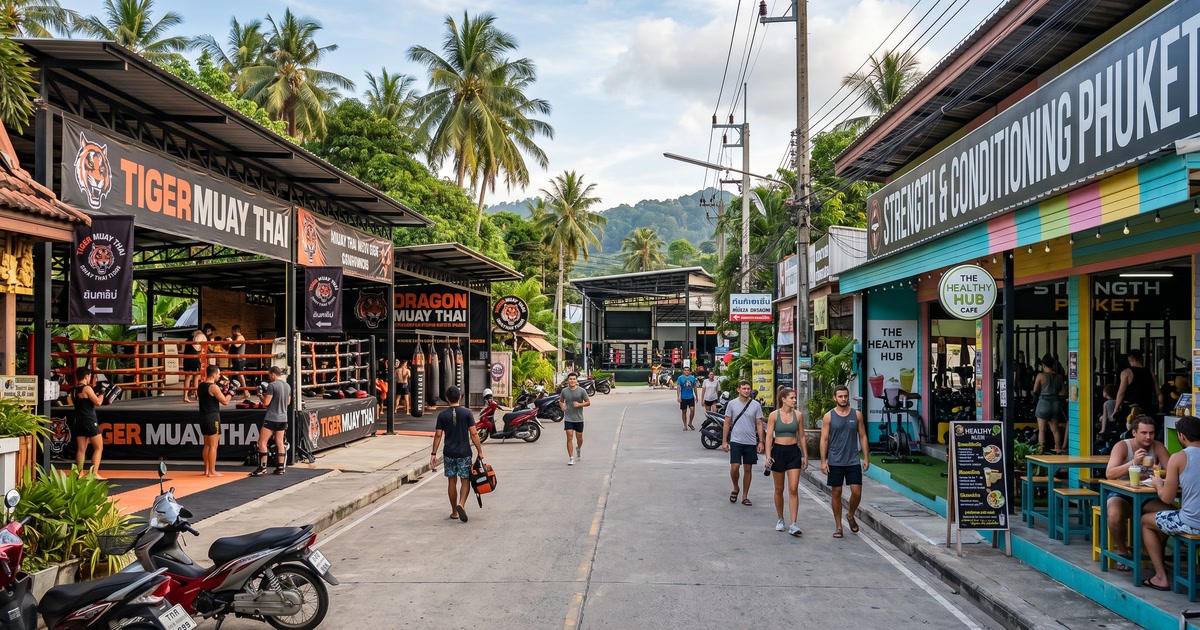
Soi Taied / Chalong area: The highest concentration of Muay Thai gyms is surrounded by multiple Thai food stalls, convenience stores, and small restaurants open from early morning. The street stalls near Tiger Muay Thai and Sitsongpeenong serve exactly the kind of rice-and-protein post-session food described above, at 50–100 THB per meal.
Night markets: The Chalong and Rawai night markets (typically running from late afternoon) offer grilled meats, seafood, and rice dishes that are excellent for the post-afternoon session meal. Budget 150–250 THB for a solid training recovery meal.
Near resort gyms: Hotels with gym facilities often have in-house restaurants or cafés that cater to fitness-oriented guests. Pricing is higher but convenience is a factor — for those staying at resort properties, the path of least resistance to a post-session meal is often the hotel restaurant. See the recovery guide for how to integrate food with other recovery tools.
The Simple Rule
Eat Thai food at street stalls and local restaurants rather than tourist restaurants. The food is cheaper, more nutritious, less processed, and structurally better suited to training. Rice and protein three times daily, adequate water and electrolytes continuously, and enough vegetables to cover micronutrient needs. Everything else is optimisation on top of that foundation.
Browse Phuket gyms and training facilities — most camps can direct you to the best local eating options near their facility.