Gym Day Passes vs Monthly Memberships in Thailand
Compare the real costs, hidden fees, and convenience of gym day passes versus monthly memberships in Bangkok, Chiang Mai, and Phuket.
Choosing how to pay for your workouts in Thailand depends on more than just your budget. The tropical heat, your transport options, and how long you plan to stay in one neighborhood all dictate whether you should buy day passes or commit to a monthly membership.
Many fitness tourists and digital nomads waste thousands of Thai Baht (THB) by choosing the wrong option. A monthly membership looks cheap on paper, but hidden sign up fees and strict cancellation policies can quickly make day passes the smarter financial choice. This guide breaks down the real costs, the logistics, and the local realities of gym access in Thailand.
The Math: Day Passes vs. Monthly Memberships
Gym prices in Thailand vary wildly depending on the city and the level of amenities. To make the right choice, you need to calculate your break even point.
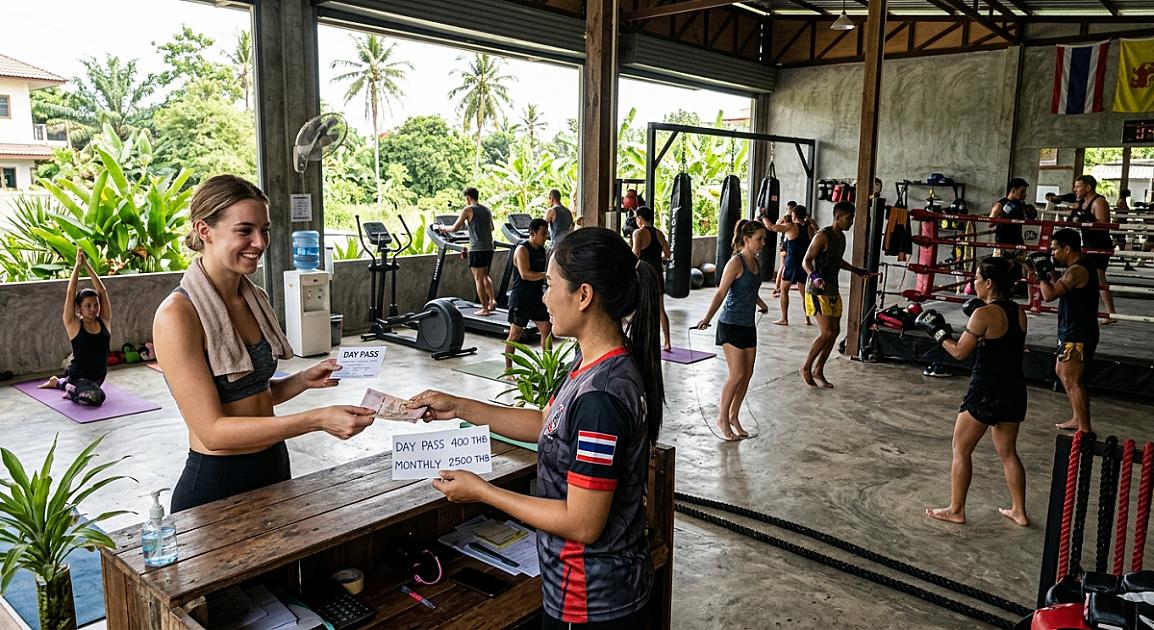
Day Passes (150 to 600 THB)
Local, non air conditioned gyms (often called iron gyms) charge between 100 and 200 THB per day. Mid range commercial gyms with air conditioning charge between 350 and 500 THB for a single entry. Premium clubs in Bangkok, such as Virgin Active or Fitness First, charge 800 to 1,000 THB for a day pass.
Weekly and Multi Visit Passes (800 to 2,000 THB)
Many independent gyms offer a 10 pass card or a weekly pass. These are highly practical. A 10 pass card usually costs around 2,500 to 3,500 THB and is valid for three months. This is often the best middle ground for travelers staying for a few weeks.
Monthly Memberships (1,200 to 4,500 THB)
A basic monthly membership at a local gym costs around 1,200 to 1,800 THB. Commercial 24 hour chains like Jetts Fitness charge around 1,600 to 2,000 THB per month. Premium wellness clubs cost 3,000 to 4,500 THB per month.
Finding Your Break Even Point
If you train at a mid range gym charging 400 THB per day pass, and a monthly membership costs 2,000 THB, your break even point is five workouts. If you plan to train more than five times in a month, the monthly membership is cheaper.
However, this math only works if you avoid the setup fees. Many commercial gyms charge a joining fee of 1,000 THB and an access card fee of 500 to 1,000 THB for monthly contracts. Always ask if these fees are waived before signing.
The Climate Factor: Air Conditioning vs. Open Air
Thailand has three main seasons: hot, wet, and cool. Even in the cool season, temperatures rarely drop below 30 degrees Celsius during the day. Humidity levels regularly exceed 80 percent.
If you choose a cheap local gym with day passes to save money, you will likely be training in an open air warehouse with wall fans. For a quick 45 minute weight session, this is manageable. For intense cardio or long workouts, the heat can be dangerous if you are not acclimatized.
If you need high quality air conditioning, you must target commercial gyms. These almost always require a higher day pass rate or a monthly commitment. Do not underestimate the Thai heat. Paying extra for a monthly membership at an air conditioned facility is often a necessity rather than a luxury.
Location, Transport, and Traffic Logistics
Your transport method should heavily influence your gym choice. Commuting in Thailand can be stressful and expensive, which might prevent you from using a monthly membership.
Bangkok
Traffic in Bangkok is notoriously slow. If your gym is not within walking distance of a BTS Skytrain or MRT Subway station, you will rely on motorcycle taxis (Win) or Grab cars. A motorcycle taxi ride costing 50 THB each way adds 100 THB to your daily workout cost. Over a month, that is an extra 2,000 THB just in transport. If you buy a monthly membership at a gym far from the train line, you might stop going entirely due to commute fatigue.
Chiang Mai and Phuket
In these regions, you will likely rent a scooter. While this makes commuting easier, the afternoon downpours during the monsoon season (July to October) can flood roads instantly. A gym that is a 15 minute drive away can become inaccessible. If you are staying during the rainy season, buying day passes at a smaller, nearby gym is often better than committing to a monthly pass at a premium facility across town.
Gym Categories and What You Get
1. The Local Thai Iron Gym
These are family owned facilities. They have heavy dumbbells, plate loaded machines, and basic cardio equipment.
- Best for: Powerlifters, bodybuilders, and budget travelers.
- Pricing: 100 to 150 THB day pass. 1,000 to 1,500 THB monthly.
- Pros: No contracts, no sign up fees, very welcoming atmosphere.
- Cons: No air conditioning, older equipment, basic showers.
2. The 24 Hour Commercial Chain
Chains like Jetts 24 Hour Fitness and Fitness24Seven are common in Bangkok and Chiang Mai.
- Best for: Expats, digital nomads, and night owls.
- Pricing: 400 to 500 THB day pass. 1,600 to 2,000 THB monthly.
- Pros: Modern equipment, cold air conditioning, access to multiple locations.
- Cons: High sign up fees for short term memberships.
3. The Destination Fitness Camp
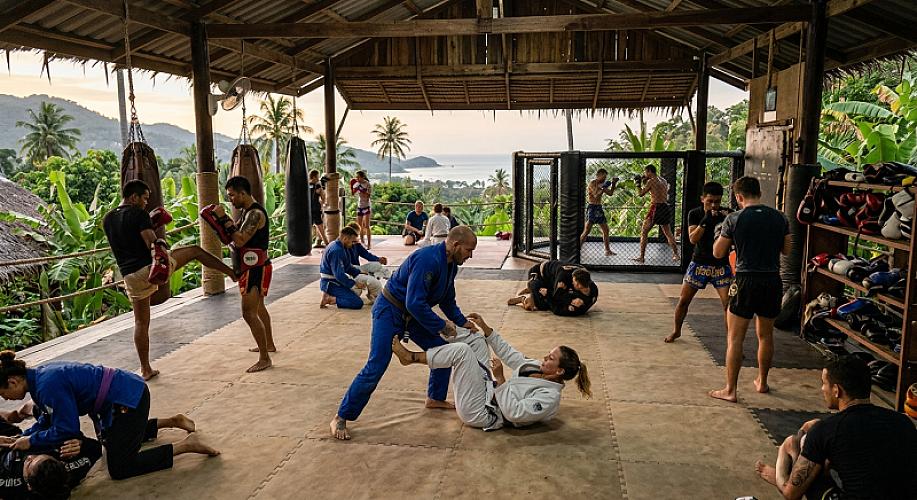
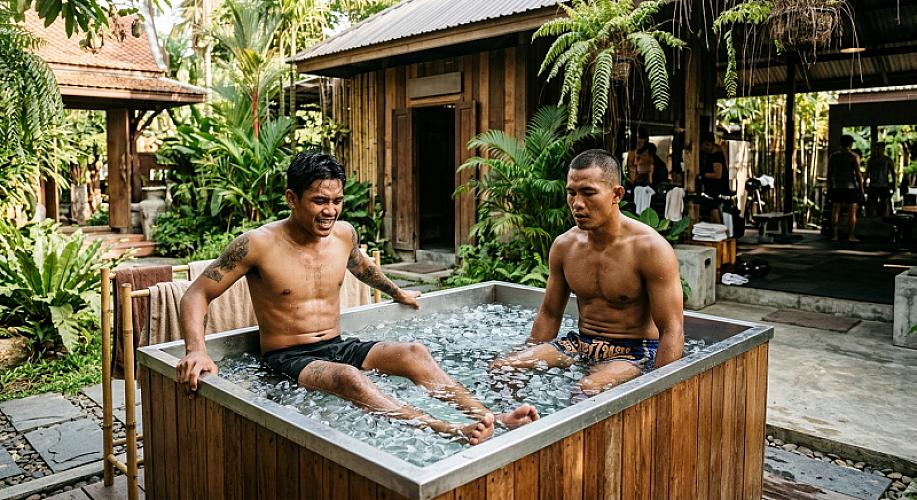
Located in areas like Soi Ta-iad in Phuket or Chalong. These are massive outdoor and indoor complexes combining Muay Thai, strength and conditioning, and ice baths.
- Best for: Health tourists and serious athletes.
- Pricing: 400 to 600 THB day pass. 4,000 to 6,000 THB monthly.
- Pros: World class coaching, community atmosphere, recovery facilities.
- Cons: Very expensive, crowded during peak season (December to March).
Hidden Costs and the Fine Print
Before you hand over your cash or credit card, you must understand how gym contracts work in Thailand.
The 7% VAT
Advertised prices in Thailand do not always include the 7 percent Value Added Tax. Always ask if the quoted price is net (inclusive of tax) or if VAT will be added at checkout.
Cancellation Policies
Many commercial gyms require a 30 day written notice to cancel a monthly membership. If you sign up for a monthly rolling contract on January 1st and plan to leave Thailand on February 1st, you must submit your cancellation form on the day you sign up. If you forget, your card will be charged for a second month.
Passport Requirements
To sign up for any monthly membership, you must provide a copy of your passport. Some gyms also require a local Thai phone number. Day passes rarely require identification, though some high end hotel gyms may ask for a room number or name.
Payment Methods
Local gyms prefer cash or bank transfers (using Thai QR codes via banking apps). Commercial gyms require a credit card for monthly recurring memberships. Be aware of foreign transaction fees on your home country credit card if you use it for monthly billing.
Summary: Which Option is Best for You?
- Buy Day Passes if: You are staying in an area for less than ten days, you want to try different styles of training, or you prefer training in open air, local environments.
- Buy a Multi Visit Pass if: You are staying for two to three weeks and plan to train three times a week. This avoids sign up fees while keeping the cost per session low.
- Buy a Monthly Membership if: You are staying in one location for at least a month, you require air conditioning, and the gym is located within a ten minute walk or short scooter ride from your accommodation.
Frequently Asked Questions
Can I negotiate gym membership prices in Thailand?
You cannot negotiate prices at major commercial chains like Jetts or Fitness First. However, at independent local gyms and Muay Thai camps, you can often get a discount if you pay for two or three months upfront in cash.
Do Thai gyms provide towels and water?
Premium gyms and hotel fitness centers provide towels and water dispensers. Mid range chains usually have water fountains but charge extra for towel rental. Local iron gyms rarely provide either, so bring your own.
Is a tourist visa sufficient for a monthly gym membership?
Yes. Most gyms only require a copy of your passport photo page and an address in Thailand, which can be your hotel or condo. You do not need a work permit or long term visa.
Are gym memberships cheaper in Chiang Mai than Bangkok?
Yes. Local and independent gyms in Chiang Mai are generally 20% to 30% cheaper than equivalent gyms in Bangkok. However, national commercial chains maintain the same pricing across all provinces.