Gym Etiquette in Thailand: What Visitors Need to Know
Avoid cultural missteps and train like a local. This guide covers the unwritten rules of Thai gyms, from footwear customs to dress codes and hygiene.
Working out in Thailand is different from training in Western countries. The climate, the cultural norms, and the variety of facilities require some adjustment. If you walk into a local powerlifting gym in Chiang Mai or a high-end fitness club in Bangkok expecting the exact same social rules as home, you might cause offense without realizing it.
Thai culture is deeply rooted in respect, cleanliness, and a concept called kreng jai, which translates to a desire to avoid bothering or inconveniencing others. This mindset extends directly onto the gym floor. Whether you are hitting a commercial gym near a BTS station or training at an open-air Muay Thai camp in Phuket, here is what you need to know to fit in and show respect.
The Footwear Rule is Absolute
In Thailand, feet are considered the lowest and dirtiest part of the body. This belief dictates how shoes are treated. You must pay close attention to where you put your feet and what you wear on them.
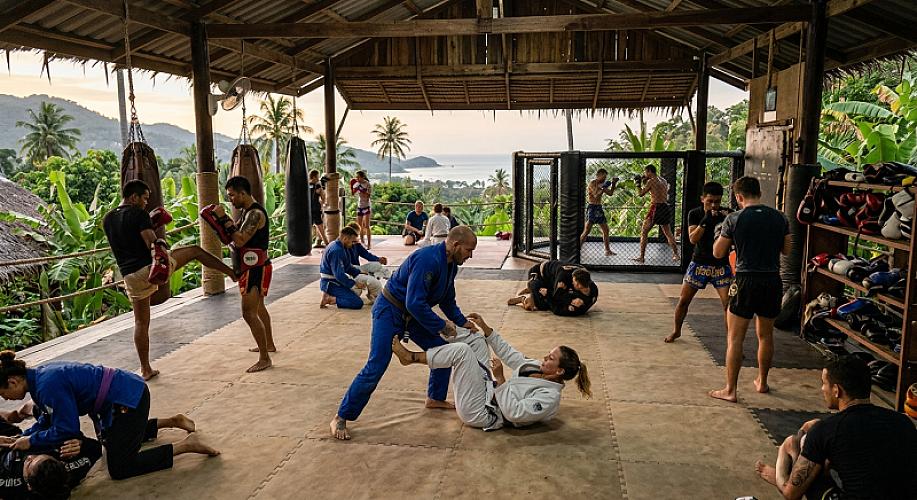
At open-air Muay Thai camps, such as those along Soi Ta-iad in Phuket, you must take your shoes off before stepping onto the canvas or the padded mats. You will see a row of shoes lined up at the edge of the training area. Do not step onto the mats with your shoes on, even for a second.
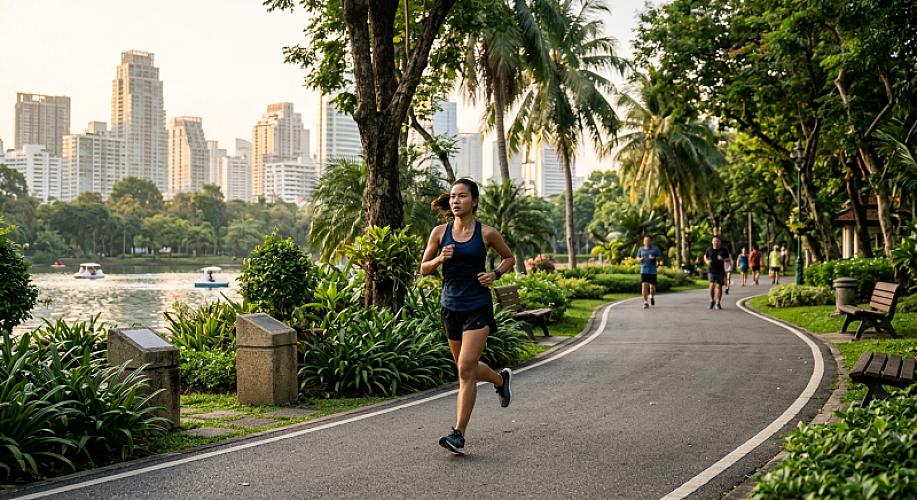
In modern, air-conditioned commercial gyms like Jetts Fitness, Fitness First, or Muscle Factory in Bangkok, you must wear shoes. However, these shoes must be clean. Many gyms require you to bring a separate pair of clean indoor trainers. Do not wear the same shoes you just wore to walk through the dusty streets of Bangkok or ride on the back of a motorbike taxi. Change into your clean workout shoes in the locker room.
Never point the soles of your feet at anyone. If you are stretching on the floor, avoid pointing your feet directly at another gym member or a trainer. This is considered highly offensive in Thai culture.
Sweat, Hygiene, and the Smell Factor
Thailand is hot and humid. Even in air-conditioned gyms, you will sweat. Thai people are highly sensitive to body odor and cleanliness. Showing up to a gym smelling of stale sweat is considered a major social failure.
Always wear clean clothes. Do not reuse a workout shirt from the day before, even if it dried out in your air-conditioned hotel room. Apply deodorant before you start your session.
Always carry a sweat towel. Many commercial gyms in Bangkok, such as Virgin Active at EmQuartier, provide towels. Smaller local gyms, which might cost 100 to 200 THB for a day pass, usually do not. Bring your own. Use it to wipe down every bench, machine, and mat you use. Leaving a puddle of sweat on a bench is incredibly rude and will quickly alienate you from the local members.
Dress Codes and Modesty
Despite the tropical heat, Thai society is relatively conservative. What is acceptable to wear in a gym in Miami or Sydney might not be welcome in Bangkok.
In commercial gyms, men must keep their shirts on. Training shirtless is strictly forbidden in air-conditioned malls and fitness centers. Women generally wear leggings and t-shirts or supportive tank tops. While sports bras are common in high-end studios, wearing just a sports bra without a shirt in a mid-range or local neighborhood gym can sometimes feel out of place. Observe what the locals are wearing and match their level of coverage.
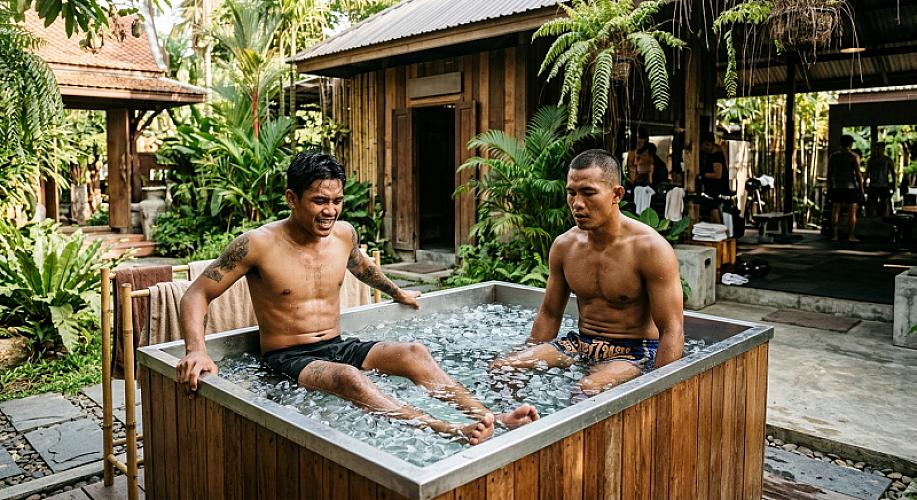
Open-air Muay Thai camps and rustic bodybuilding gyms are different. At these venues, men frequently train shirtless due to the intense heat. However, you should still wear proper training shorts. Do not wear short, loose running shorts without compression underwear underneath.
Noise Levels and the Concept of Kreng Jai
Western gyms can be loud, aggressive environments. You often hear heavy grunting, clanging weights, and loud motivational shouting. Thai gyms are generally much quieter.
Because of the cultural value of kreng jai, Thai lifters try to minimize their impact on others. Dropping weights unnecessarily is frowned upon. Unless you are on a dedicated weightlifting platform with bumper plates, lower your dumbbells and barbells under control.
Keep your grunting to a minimum. Loud, theatrical breathing or shouting during a heavy set will draw uncomfortable stares. It is not seen as a sign of hard work; it is seen as a lack of self-control and a disturbance to the peace of the room.
If you are listening to music, use headphones. Never play music or videos out loud on your phone speaker. This rule applies to the locker rooms as well.
Interacting with Trainers and Staff
Respect for authority and elders is a pillar of Thai society. Gym trainers, instructors, and even the cleaning staff should be treated with high respect.
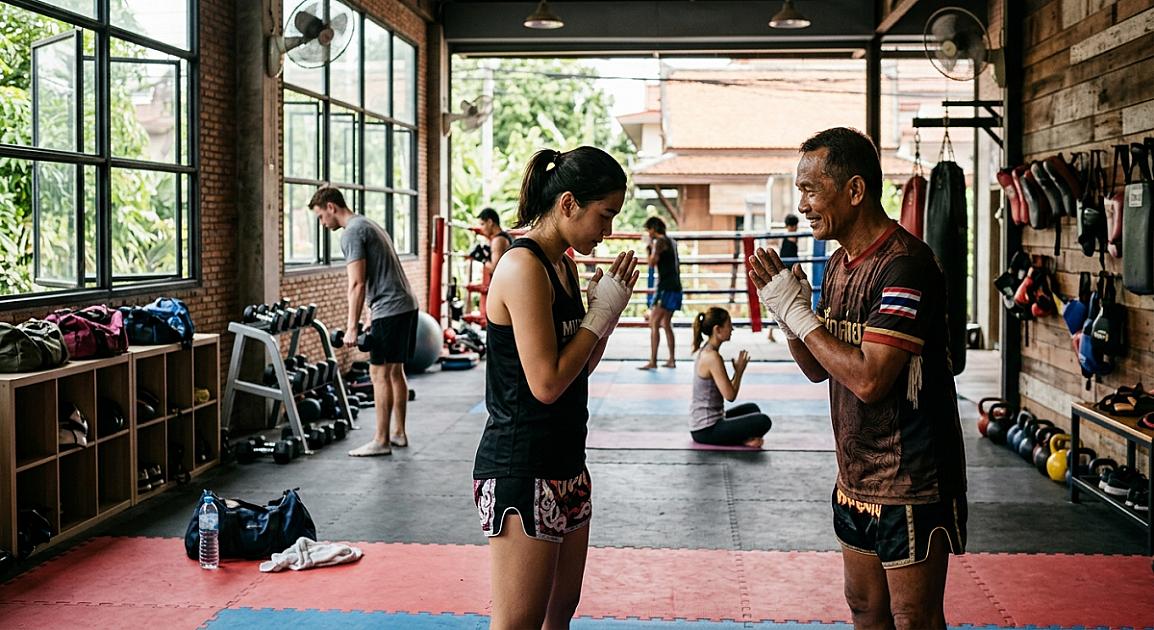
When you enter a Muay Thai camp or a local gym, it is polite to greet the head trainer or owner with a wai. This is the traditional Thai gesture where you press your palms together near your chest and bow slightly. You do not need to do this to every person you see, but doing it to the head Kru (teacher) at a fight gym shows you understand and respect their culture.
If a trainer offers you advice or corrects your form, accept it politely. Even if you are an experienced lifter or fighter, do not argue or try to prove them wrong. Nod, say thank you, and try their suggestion. Saving face is important in Thailand, and publicly disagreeing with a trainer causes them to lose face.
Practical Tips for Gym Visitors
If you are planning to train during your trip, keep these practical details in mind:
- Day Pass Prices: Expect to pay 100 to 300 THB for a day pass at a local, non-air-conditioned gym. High-end commercial gyms in Bangkok charge between 500 and 800 THB for a single visit.
- Peak Hours: Gyms in Bangkok get incredibly busy between 5:30 PM and 8:30 PM as office workers flood in. If you want a quiet session, train between 10:00 AM and 4:00 PM.
- Transportation: Choose a gym near a BTS Skytrain or MRT subway station if you are in Bangkok. Traffic can make a short three-kilometer drive take forty minutes during rush hour. In places like Chiang Mai or Phuket, renting a scooter or using the Grab app is the most reliable way to reach your workout spot.
Frequently Asked Questions
Can I train shirtless in Thai gyms?
Only at open-air Muay Thai camps or specific rustic bodybuilding gyms. In air-conditioned commercial gyms and mall fitness centers, you must keep your shirt on at all times.
Do I need to bring my own towel?
Yes, unless you are visiting a premium commercial gym that explicitly provides them. Always use a towel to wipe down equipment after use to respect other members.
Is it okay to drop weights in Thailand?
Generally, no. Dropping weights is considered loud and disruptive. Unless you are using bumper plates on a lifting platform, control your weights back to the floor.
What should I do with my shoes at a Muay Thai gym?
Take them off before stepping onto any mats or canvas training areas. Place them neatly on the shoe racks provided near the entrance.