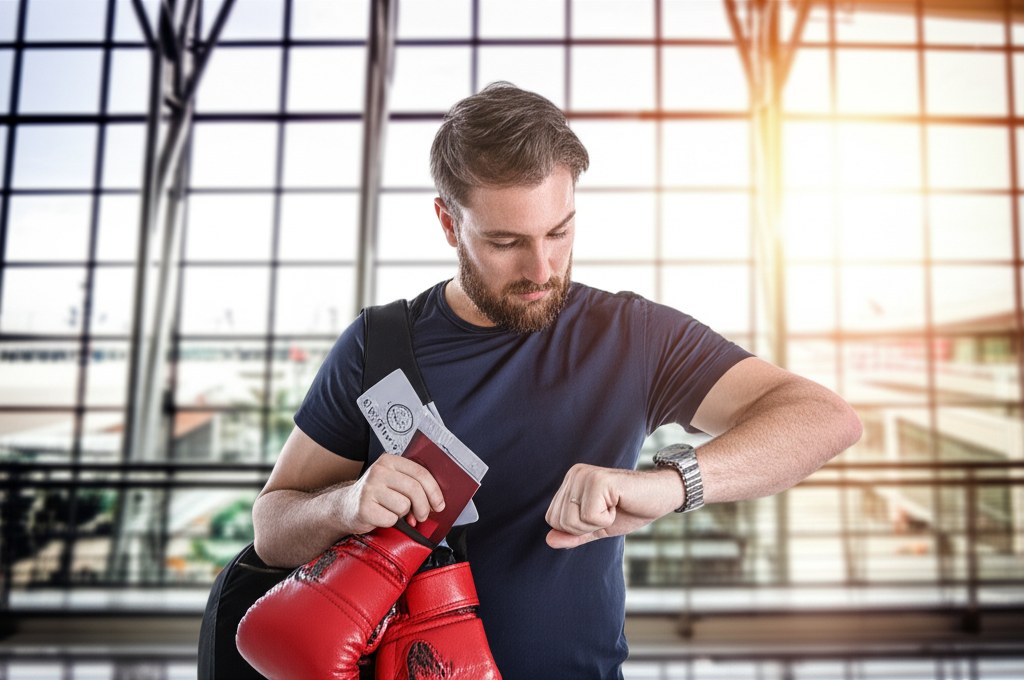
Training Through Jet Lag in Phuket: How to Handle the First 48 Hours
How to handle jet lag on arrival for a Phuket training trip — practical steps for the flight, arrival day, first night, and day two.
You land in Phuket after a 10, 14, or 20-hour journey. Your training camp starts tomorrow. Your body thinks it's 2 AM even though the clock says noon. How you handle the next 48 hours sets the tone for the entire trip — either you sync up quickly and hit the first session feeling capable, or you spend days one through four in a fog and come home wondering why the camp felt harder than expected.
This guide covers how to minimise jet lag specifically in the context of training, what to do and avoid in the first two days, and how long the adjustment realistically takes.
How Bad Is It, Really?
Jet lag severity depends on direction of travel and how many time zones you cross. The Bangkok time zone (ICT, UTC+7) means:
- From Western Europe (GMT+0): 7-hour difference. Typically manageable within 2–3 days.
- From Eastern US (GMT-5): 12-hour difference. More significant — can take 5–7 days to fully resolve.
- From Western US/Australia: Mixed results depending on direction; Australia eastward is often the least disruptive to Southeast Asia.
Eastward travel (US to Thailand flying east via Europe) tends to produce worse jet lag than westward travel, because it asks your body to advance its clock rather than delay it — which is physiologically harder.
For training purposes, the most important effects are: disrupted sleep, suppressed immune function, impaired decision-making, and reduced physical performance. All of these resolve with time and can be accelerated with the right approach.
The Flight: What to Do Before You Land
Set Your Watch to Bangkok Time Immediately
On boarding, set your watch (and phone) to Bangkok time and start thinking in that timezone. Eat when Bangkok says it's mealtime, sleep when Bangkok says it's night. This mental anchoring helps start the circadian shift before you land.
Sleep Strategy
If you're arriving in Phuket in the morning or afternoon (most long-haul flights do), try to sleep on the plane during Bangkok's night hours and stay awake during Bangkok's day hours. Use noise-cancelling headphones, eye mask, and a neck pillow to make aircraft sleep as effective as possible. Avoid sleeping pills that have long half-lives — waking up in Bangkok groggy from medication is worse than natural mild jet lag.
Hydration and Alcohol
Aircraft cabins are typically at 10–15% humidity — significantly drier than normal air. Dehydration worsens jet lag and amplifies next-day fatigue. Drink water consistently throughout the flight. Alcohol is doubly counterproductive: it dehydrates and disrupts the sleep architecture, meaning you arrive with compounded fatigue. Skip the in-flight drinks for a better first day.
Day of Arrival: The Critical Decisions
Stay Awake Until Local Bedtime
The most important rule: do not go to bed when you arrive, however tempting. If you land at noon and sleep until 8 PM, your circadian clock doesn't shift — you'll be awake at 3 AM and useless for the 6 AM training session. Land, check in, eat something, and force yourself to stay awake until at least 9–10 PM Bangkok time.
Get Outside in Natural Light
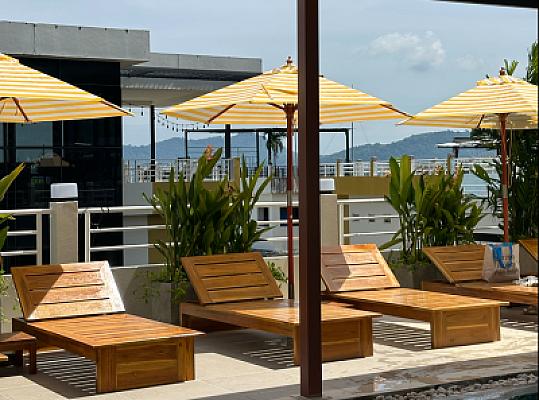
Sunlight is the most powerful circadian zeitgeber (time cue) available. Exposure to bright natural light in the afternoon tells your body it's afternoon and suppresses melatonin production appropriately. Take a walk, sit by the pool, do anything that gets you outside for 60–90 minutes in the afternoon of your arrival day. Phuket's reliable sunshine makes this easy year-round.
A Light Training Session
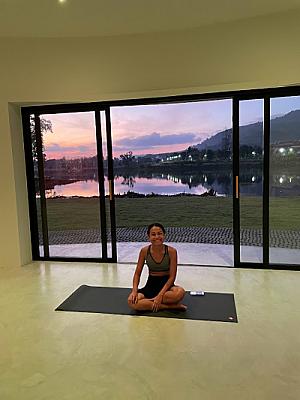
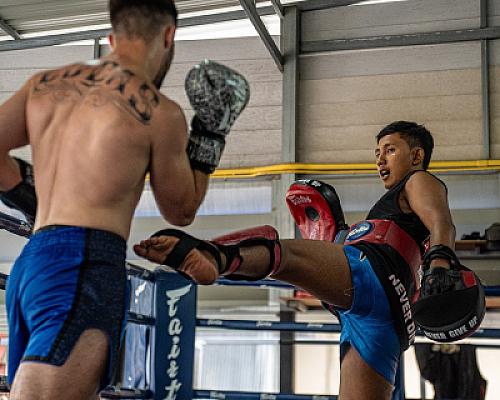
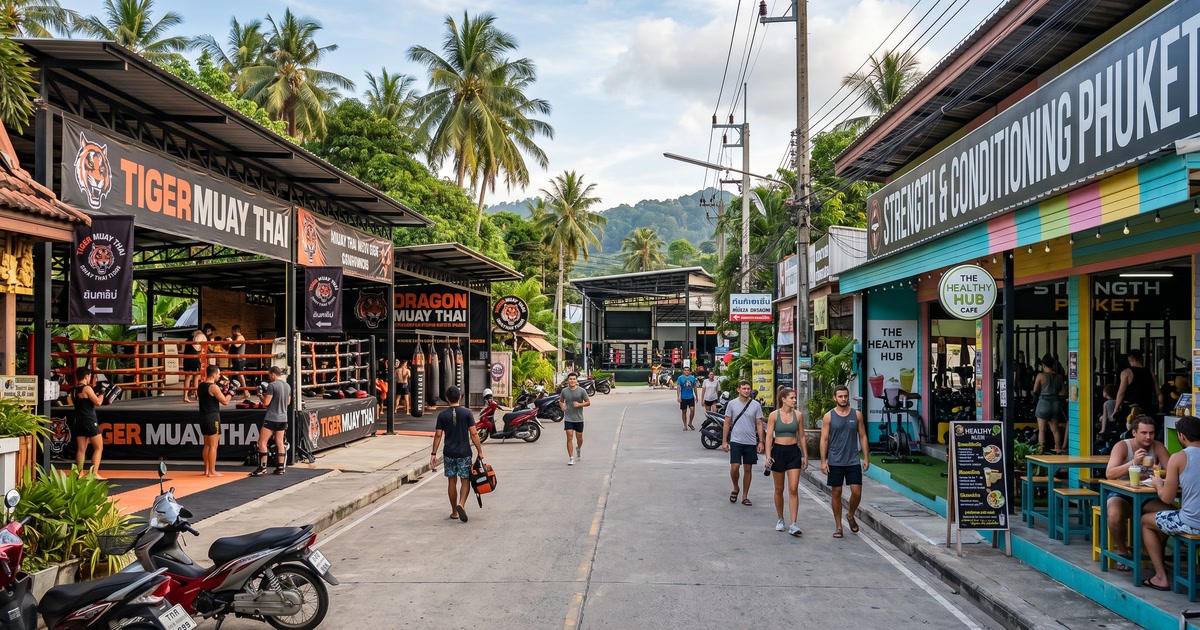
If your body clock permits, a short, light training session on arrival afternoon can be extremely effective for resetting the circadian clock. It doesn't need to be a full Muay Thai session — a 20-minute jog, 30 minutes of bag work, or a yoga class serves the purpose. Physical activity in natural light anchors the clock to local time.
Don't attempt a full twice-daily camp session on arrival day. Your reaction time and coordination are impaired by jet lag in ways that increase injury risk during contact work.
Eat Local Meals at Local Times
Eat dinner at normal Thai dinner time (6–8 PM) even if you're not hungry. A light meal of rice and protein, rather than something heavy or alcohol-accompanied. The digestive system has its own circadian rhythm — eating at local times helps synchronise it alongside the main clock.
Night One: Managing the Sleep
Night one is often the hardest. Your body may wake up at 2–3 AM regardless of what you do. Have a plan for this:
Keep the room dark and cool: Air conditioning to 20–22°C and blackout curtains. Melatonin production requires darkness — even phone screen use at 3 AM will make it harder to return to sleep.
Low-dose melatonin: 0.5–1mg of melatonin taken 30–45 minutes before your intended sleep time helps advance the circadian clock. Available at most Phuket pharmacies. Use the lowest effective dose — higher doses don't work better and can cause morning grogginess.
If you wake at 3 AM: Stay in bed, keep the lights off, and don't check your phone. If you can't sleep after 30 minutes, do something calm and non-stimulating (read on a low-brightness setting) rather than lying frustrated. Most people find they drift back off within an hour.
Day Two: Your First Real Training Day
Day two is typically the most disorienting — you're tired, your body isn't fully adjusted, and the camp environment is new. Manage expectations: this is the hardest training day of the trip and not representative of how you'll feel in a week.
Attend the morning session but regulate intensity: Show up, do the work, but hold back 20–30% on output. Jet-lagged training with suppressed immune function is when overexertion most often produces illness. The first few sessions are about presence and movement, not performance.
Nap strategically: A 20–25 minute nap between the morning and afternoon sessions (no longer — longer naps produce grogginess and disrupt night sleep) significantly improves afternoon session quality without interfering with circadian adjustment.
Caffeine management: Caffeine works fine for training performance, but cut it off by 2 PM Bangkok time. Late caffeine extends the time it takes for your clock to fully adjust.
When Does It Fully Resolve?
For most travellers coming from Europe, jet lag is largely resolved by days three to four. The body feels functionally normal, the 6 AM alarm stop feeling cruel, and training performance returns to a realistic baseline.
Travellers from the US East Coast typically need five to six days for full resolution. Western US travellers vary — some adapt faster, some slower.
The practical implication: if you're on a one-week trip, you're training in some degree of jet lag for the first half. This is worth knowing — it's not that the camp is harder than expected, it's that your body hasn't caught up yet. Plan your training itinerary accordingly, keeping the most intense sessions for days four onward.
Supporting Recovery Alongside Jet Lag
The same tools that support training recovery also support jet lag adjustment. Cold exposure (a cold shower, ice bath, or morning swim) after the first training session helps activate alertness during Bangkok's day. The recovery guide covers cold therapy options near major training areas.
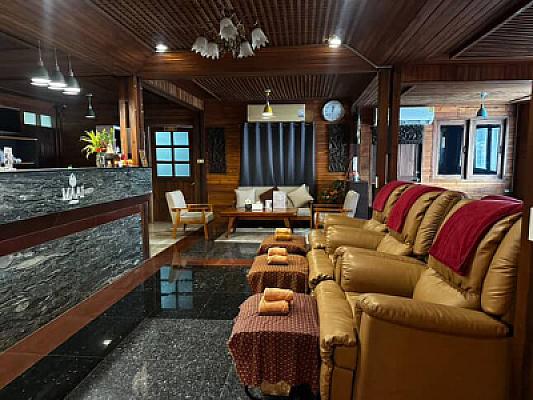
A sports massage on day two — lighter and more restorative than a deep tissue session — both helps the muscular soreness of early training and supports parasympathetic recovery that improves sleep quality.
The good news: by week two, jet lag is a memory and the training is the only challenge. The first 48 hours are a management exercise, not a representative sample of what the trip will feel like. Treat them as such.
See the Phuket training camps guide for what to expect from the first session, and the consistency guide for building on the momentum once you're adjusted.