Koh Samui Yoga Retreat vs Drop-In Classes: How to Choose
Deciding between an all-inclusive yoga retreat and DIY drop-in classes on Koh Samui? Here is a practical breakdown of costs, locations, transport, and daily schedules to help you choose.
Koh Samui is one of the premier destinations for yoga in Thailand. The island attracts world-class instructors, dedicated practitioners, and complete beginners. However, planning a trip here presents a major choice. You must decide whether to book an all-inclusive yoga retreat or stay in your own accommodation and attend drop-in classes.
Both options offer completely different experiences, budgets, and daily routines. Making the wrong choice can leave you feeling isolated on a remote beach or, conversely, stressed by daily traffic and logistics. This guide breaks down the practical realities of both paths so you can make an informed decision.
The Financial Reality: Retreat Costs vs. DIY Drop-Ins
Budget is often the deciding factor. Let us look at the actual numbers you will encounter on Koh Samui.
The Cost of a Yoga Retreat
An all-inclusive retreat package on Koh Samui typically bundles accommodation, meals, multiple daily classes, and sometimes wellness treatments like massages or detox consultations.
- Budget/Mid-range retreats: Expect to pay between 3,500 THB and 6,000 THB per night.
- Premium wellness resorts: Prices range from 8,000 THB to over 18,000 THB per night.
- What you get: A standard seven-day retreat at a mid-range venue like Samahita Retreat or Vikasa generally costs between 35,000 THB and 70,000 THB. This covers almost all your daily expenses except airport transfers and external excursions.
The Cost of DIY Drop-In Classes
If you choose to rent your own bungalow and pay as you go, your expenses are highly flexible.
- Single drop-in class: 400 THB to 600 THB.
- Multi-class passes: Most studios offer packages. A 5-class pass usually costs around 1,800 THB to 2,200 THB. A 10-class pass runs between 3,200 THB and 4,000 THB.
- Accommodation: A clean, modern guesthouse or beach bungalow in Bophut or Lamai costs 1,000 THB to 2,500 THB per night.
- Food: Local Thai meals cost 60 THB to 150 THB. Western-style cafe meals cost 200 THB to 400 THB.
If you are traveling on a budget, the DIY drop-in route is almost always cheaper. You can easily find a clean room, eat local food, and take one class a day for under 2,500 THB daily. Retreats charge a premium for convenience, curated menus, and community.
Location and Transport Logistics
Koh Samui is a large island. The main ring road is roughly 50 kilometers long. Traffic can be heavy, fast, and intimidating, especially for inexperienced scooter riders. Your choice of yoga style dictates how you will get around.
The Retreat Experience: Isolated and Easy
Most dedicated yoga retreats are located in quieter, southern, or western parts of the island. For example, Samahita Retreat is located in Laem Sor, a peaceful area on the south coast.
When you stay at a retreat, transport is a non-issue. You walk from your room to the yoga shala, then to the dining hall, and then to the beach. You do not need to navigate Samui's roads. The downside is isolation. If you want to visit the night markets in Fisherman's Village or go out for a drink in Chaweng, you will face a 45-minute taxi ride costing 600 THB to 800 THB each way.
The Drop-In Experience: The Commute Challenge
If you choose drop-in classes, you must consider how you will reach the studio.
If you rent a scooter for 250 THB to 300 THB per day, you have complete freedom. However, riding a scooter in Samui carries real risks, especially during the afternoon downpours.
If you do not ride a scooter, you must rely on songthaews, which are red passenger trucks, or ride-hailing apps like Grab and Bolt. Songthaews run regularly along the main ring road between Chaweng, Lamai, and Nathon. They cost 50 THB to 150 THB per ride during the day. If your accommodation or your chosen yoga studio is located off the main ring road, you will have to walk or pay for private taxis, which quickly drains your budget.
Daily Schedule and Flexibility
How do you want to spend your hours between practice? This is where the two options diverge completely.
The Structured Retreat Day
Retreats operate on a schedule. A typical day looks like this:
- 06:30, 08:00: Meditation and pranayama (breathwork)
- 08:00, 09:30: Dynamic asana practice
- 09:30, 11:00: Buffet breakfast/brunch
- 11:00, 16:00: Free time, spa treatments, or workshops
- 16:00, 17:30: Restorative or Yin yoga
- 18:00, 19:30: Dinner
This structure is excellent if you want to decompress, break bad habits, or deepen your practice. You do not have to make decisions. However, it can feel restrictive if you want to sleep in, explore local waterfalls, or try different restaurants.
The Flexible Drop-In Day
With drop-in classes, you design your own day. You can attend a 9:00 AM class at a studio in Bangrak, spend the afternoon working from a cafe, and have dinner at a local seafood market.
This option is ideal for digital nomads, couples where only one partner practices yoga, and travelers who want to experience the broader culture of southern Thailand. The risk is discipline. Without a pre-paid schedule, it is easy to skip classes in favor of beach days or late nights.
Top Venues on Koh Samui for Both Styles
To help you visualize these options, here are some of the most respected venues on the island.
Best for Retreats
- Samahita Retreat (Laem Sor): Established in 2003, this is a highly professional center focusing on classical yoga, breathwork, and fitness. It sits directly on a quiet beach in the south. It is perfect for serious practitioners who want to avoid the tourist crowds.
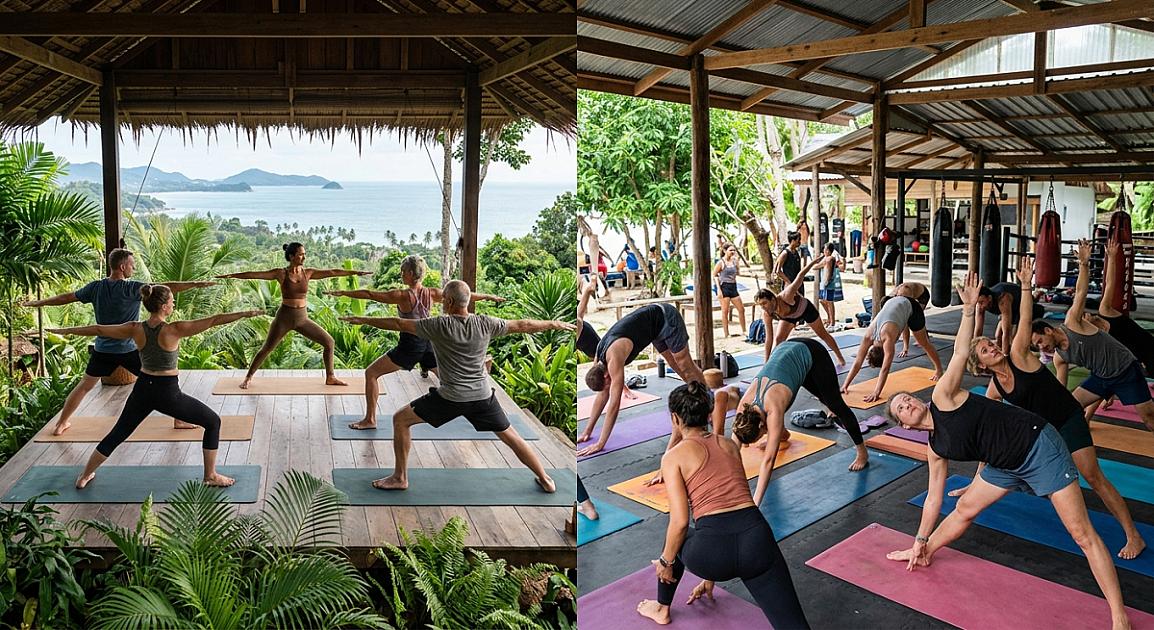
- Vikasa Yoga Retreat (between Chaweng and Lamai): Built onto a cliffside, Vikasa offers spectacular ocean views. It has a social, community-focused atmosphere. The onsite restaurant is famous for its healthy, high-quality buffet.
- Absolute Sanctuary (Choeng Mon): This resort focuses on wellness, detox, and Pilates reformer classes alongside yoga. It is a premium, hotel-style experience on the northeastern peninsula.
Best for Drop-In Classes
- Marga Yoga (Bangrak): Located in the north, close to the Big Buddha. This studio offers excellent alignment-focused classes, including Hatha, Vinyasa, and Yin. It is easily accessible for those staying in Bophut, Choeng Mon, or Plai Laem.
- Vikasa Yoga (Cliffside): While Vikasa is a retreat center, they open their cliffside yoga shalas to drop-in students for 500 THB to 600 THB per class. This allows you to experience their world-class views and teaching without paying for the full retreat package.
- Yoga House & Spa (Lamai): A cozy, welcoming space in Lamai that offers daily classes, sound baths, and therapeutic treatments. It has a relaxed, community feel.
How to Choose: The Decision Matrix
To make your final decision, ask yourself these three questions.
1. What is your primary goal for the trip?
If your goal is physical recovery, stress reduction, or intensive study, choose a retreat. The immersion helps you focus without distractions. If your goal is a general holiday that includes some healthy movement, choose drop-in classes.
2. Are you traveling alone or with others?
Solo travelers often find retreats highly rewarding. The communal dining tables and shared schedules make it easy to meet like-minded people from around the world. If you are traveling with a partner or friends who do not practice yoga, drop-in classes allow you to slip away for ninety minutes while they relax, keeping everyone happy.
3. How comfortable are you navigating Thailand independently?
If you are nervous about renting a scooter, finding your way around unfamiliar towns, or negotiating taxi fares, a retreat provides a safe, stress-free bubble. If you are an experienced traveler who enjoys exploring local neighborhoods, finding local food stalls, and managing your own schedule, you will likely find a retreat too confining and prefer the drop-in route.
Frequently Asked Questions
Do I need to book Koh Samui drop-in yoga classes in advance?
During the peak season from December to March, it is wise to book your spot online a day in advance, especially for popular morning classes. During the low season, you can usually just show up 15 minutes before class starts.
Can beginners join Koh Samui yoga retreats?
Yes. Most retreats on Koh Samui welcome all levels. Instructors are skilled at offering modifications for beginners. However, check the specific retreat itinerary to ensure it is not an advanced teacher training or intensive workshop.
What is the best area to stay in Samui for drop-in yoga?
Bangrak, Bophut, and Lamai are the best areas. They have established yoga studios, plenty of accommodation options, good restaurants, and easy access to the main ring road for transport.
Are yoga mats provided at Koh Samui studios?
Yes. All professional yoga studios and retreat centers on Koh Samui provide mats, blocks, straps, and bolsters free of charge for your practice.