Sparring in Phuket: When You Are Ready, What to Expect, and How to Stay Safe
When to start sparring at a Phuket Muay Thai gym, what to expect in your first sessions, how to find the right partner, and how to stay safe.
Sparring is the part of Muay Thai training that most beginners are both most curious about and most nervous about. Done right, it's the most valuable thing you can do to accelerate learning. Done wrong — too early, too hard, or with the wrong partner — it produces injuries that end trips. This guide covers how to know when you're ready, what to expect, and how to get the most out of sparring sessions in Phuket.
What Sparring Actually Is
There are several types of sparring in a Muay Thai context, and understanding the distinction matters — particularly for beginners.
Drilling: Not technically sparring, but the first step. Practising specific techniques with a partner who is cooperating — you throw a jab-cross, they step back. No defence or response. Pure technique rehearsal.
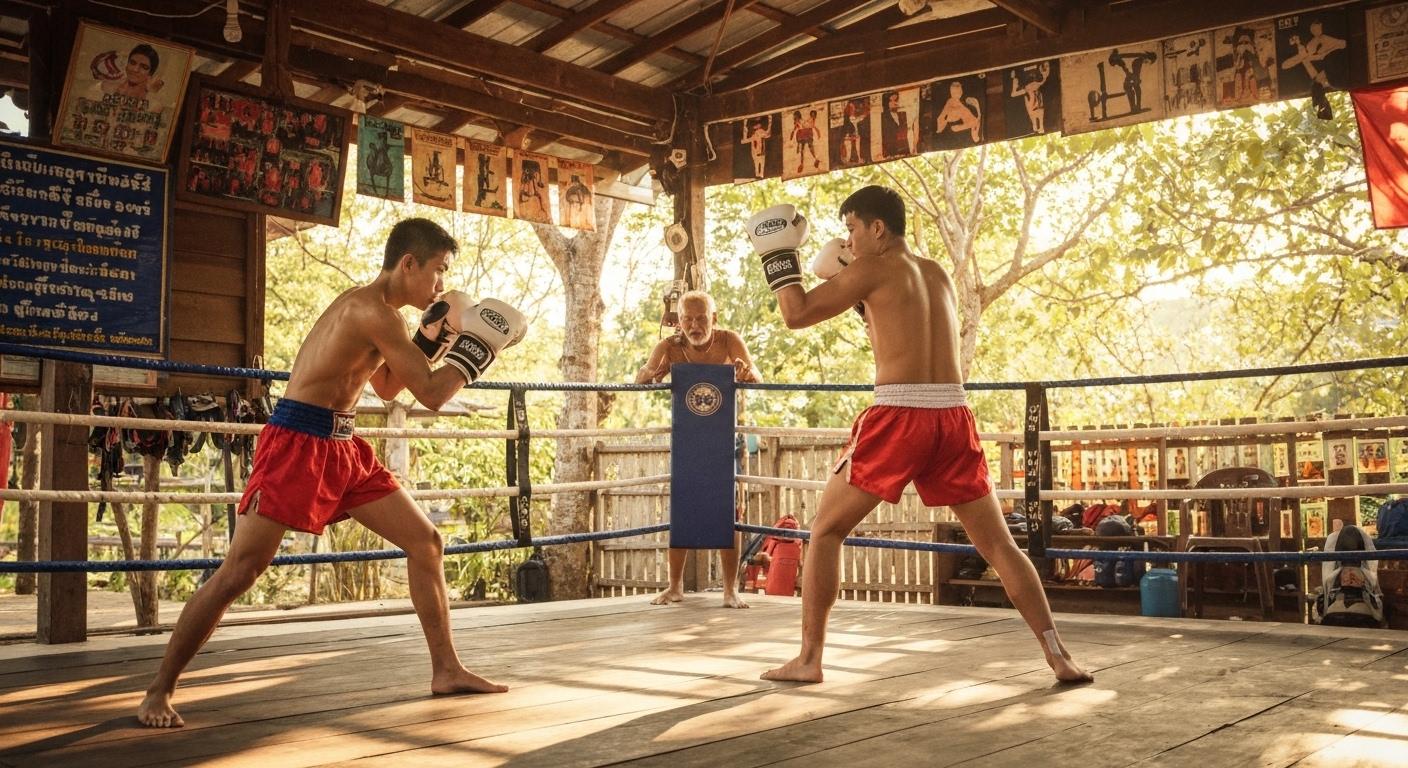
Technical sparring: Light contact at 30–40% power with focus on movement, distance, and timing. The goal is to learn, not to land. Both partners respect the agreement to keep it controlled. This is appropriate for beginners with two to three weeks of technical training.
Sparring: Higher intensity, 60–70% power, with realistic defensive pressure. Partners defend, counter, and work at closer to fight pace. Appropriate for intermediate and advanced practitioners who have solid defensive basics.
Hard sparring: 80%+ intensity, used by fighters preparing for competition. Rarely appropriate for visitors on training trips and not something most Phuket camps push on recreational trainees.
When camps say "sparring," they usually mean technical sparring for beginners and moderate sparring for more experienced students. The culture at most Phuket camps is respectful of level differences — experienced fighters generally don't go hard on beginners.
When Are You Ready?
There's no universal timeline, but the following are practical indicators that technical sparring is worth attempting:
- You have basic defensive instincts: You reflexively cover when something comes at you, rather than freezing or ducking in an unsafe direction. This develops through padwork and drilling — it should feel somewhat automatic before you start sparring.
- You have a working guard: You can hold a guard for extended periods without dropping your hands. Consistent hand position is what prevents facial injuries.
- You can throw a basic combination without thinking about the mechanics: Jab-cross-teep, jab-cross-low kick. If you're still mentally working through the sequence of a basic combination, sparring will be too cognitively overloading to be useful.
- You've been training consistently for at least two weeks: The minimum. This is not about being good — it's about having the motor patterns to function in a dynamic environment.
Your trainer will tell you when they think you're ready. If they haven't suggested sparring after three weeks of training, ask directly — they may be waiting for you to express interest. If they suggest it after less than a week, it's reasonable to say you'd like more time on technique first.
Your First Technical Sparring Session
Before You Start
Get the right equipment. For technical sparring you need:
- Sparring gloves (16oz or 14oz for smaller fighters) — larger than bag gloves, with more padding
- Headguard with cheek protection — not optional for beginners
- Mouthguard — essential
- Groin guard (for men)
- Shin guards
Most Phuket camps provide or rent equipment. If you're buying, the gear shopping guide covers what to look for and what to buy in Phuket versus bringing from home.
Choose the Right Partner
Don't spar someone significantly larger, heavier, or more experienced without having a conversation first about keeping it technical. A good sparring partner for a beginner is:
- Similar weight (within 5–10kg)
- Willing to agree explicitly on intensity before starting
- Experienced enough to control their output — less experienced partners are often harder to spar safely with because their technique and control are less developed
Trainers at good camps will pair beginners appropriately. If you're unsure, ask your trainer to assign you a partner rather than finding one yourself.
What to Focus On
In your first sessions, abandon ambition about landing techniques. Focus on:
- Keeping your guard up — this is the only thing that matters until it's automatic
- Movement and footwork — stay on the outside of your partner's range
- The teep (push kick) — the most useful tool for creating distance in early sparring; keep your partner at range rather than engaging in close work you haven't trained yet
- Breathing — people hold their breath when nervous. Exhale on every strike, breathe between exchanges
Don't worry about landing combinations. Don't try to show off technique you've been drilling on the bag. Sparring is a different skill from drilling, and the first few sessions are about learning to function while someone is trying to return techniques — not about looking good.
Common Beginner Mistakes in Sparring
Going too hard: The instinct to prove yourself is real and counterproductive. Partners escalate in response to intensity — if you throw a hard shot, you'll receive a harder one back. Keep it technical and your partner will reciprocate.
Closing your eyes: An extremely common response to incoming techniques. Eyes closed means no distance management, no defensive reads, and no counter opportunities. If you find yourself closing your eyes, slow the pace down or pause and reset.
Grabbing and holding: Clinching to stop the action when overwhelmed is natural but limits learning. Practice the teep to create distance instead of grabbing. Clinch is a legitimate Muay Thai technique — but grabbing without technique is just stalling.
Targeting the head: In technical sparring, head shots should be minimal and very light. Body kicks, leg kicks, teeps, and light jabs to the body are appropriate for beginners. A head kick at 50% power from someone with a developed technique can cause concussion regardless of headgear.
Sparring when tired: Fatigue dramatically increases injury risk in sparring. Defensive reactions slow, balance deteriorates, and the ability to pull techniques reduces. If you're exhausted after the padwork session, skip sparring that day or keep it to two or three light rounds maximum.
After Sparring: Recovery
Sparring, even technical sparring, creates different physical stress from bag work and padwork. Contact to the body creates bruising that accumulates across sessions. The recovery tools that help general training fatigue are especially useful post-sparring:
Cold exposure reduces inflammation from contact work — a cold shower or ice bath after a sparring session is noticeably effective. Sports massage on sparring days should focus on areas that received contact. See the sports massage guide for what to ask for specifically in a post-contact session.
If you took any significant shots — particularly to the head — build in a full rest day before the next sparring session. Most camps don't enforce this, but self-management here prevents cumulative effects from compounding.
Progressing Through Levels
Technical sparring becomes comfortable after three to five sessions. The guard stays up more automatically, the breathing settles, and the ability to read incoming techniques improves. This is when moderate sparring starts to make sense.
The progression from beginner to confident sparring partner typically takes three to four weeks at daily training volume — which is why one-week trips rarely include meaningful sparring, while month-long camps genuinely transform sparring competence. The camps guide covers which facilities structure sparring development well.
If your goal is eventually to fight, sparring readiness is a prerequisite — but fighting preparation involves additional conditioning and mental preparation beyond what recreational sparring develops. The fight preparation guide covers what that path looks like.
The point of sparring isn't to win rounds or dominate partners. It's to learn to use Muay Thai under realistic conditions. Approach it with that frame and every session produces useful data, regardless of how it goes.