Personal Trainer Prices in Bangkok: Costs and How to Choose
A realistic breakdown of personal training costs in Bangkok, from commercial gyms to private condo trainers, including hidden fees and how to find a qualified coach.
Finding a personal trainer in Bangkok is easy. Finding one who actually knows how to program, speaks your language, and fits your budget is much harder. The city has a massive fitness scene, but prices vary wildly. You can pay 800 THB per hour for a local freelance coach or 3,500 THB for an elite strength coach at a boutique studio in Thonglor.
This guide breaks down the actual costs of personal training in Bangkok, the hidden fees you need to watch out for, and how to choose a trainer who will actually help you reach your goals.
The Four Price Tiers of Bangkok Personal Trainers
Personal training rates in Bangkok generally fall into four distinct price brackets. What you pay depends on the facility, the trainer's qualifications, and their employment status.
Tier 1: Freelance Condo Trainers (1,000 to 1,500 THB per session)
This is often the most convenient option for expats living in modern high-rise condominiums. Freelance trainers travel to your building and use your condo gym.
Because these trainers have no gym overhead costs, they are cheaper. You can expect to pay between 1,000 and 1,500 THB per one-hour session. If you buy a package of 10 or 20 sessions, the price can drop to 800 or 900 THB per hour.
Tier 2: Commercial Gym Trainers (1,200 to 2,000 THB per session)
If you train at major commercial chains like Fitness First, Virgin Active, or Jetts, you can hire their in-house trainers.
Sessions generally cost between 1,200 and 2,000 THB. However, there is a major catch. You must also pay for a monthly gym membership, which costs between 1,500 and 3,000 THB per month. You cannot simply walk in, pay for a trainer, and leave. Commercial gyms also push hard on long-term contracts, so you will likely need to commit to a 10, 20, or 50-session package upfront.
Tier 3: Boutique Fitness Studios (1,800 to 2,800 THB per session)
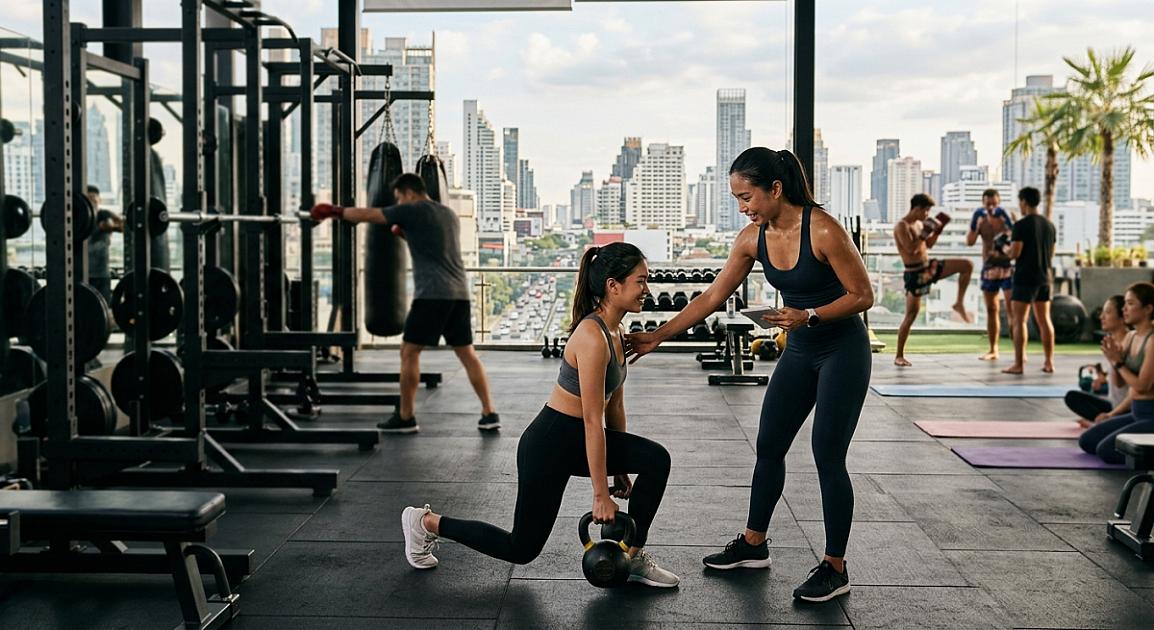
Boutique strength and conditioning gyms, such as BASE (with locations in Thonglor and Sathorn) or Aspire (located next to BTS Asoke), offer highly qualified trainers in specialized facilities.
Single sessions here cost between 1,800 and 2,800 THB. The advantage of boutique studios is that you do not usually need a separate monthly membership to train with a coach. The session price includes gym access. These facilities also tend to have better equipment than standard commercial gyms, including turf tracks, lifting platforms, and specialized sleds.
Tier 4: Elite and Specialist Coaches (2,500 to 4,000+ THB per session)
These are top-tier coaches who specialize in rehabilitation, competitive powerlifting, Olympic weightlifting, or athletic performance. Many are expats with degree-level qualifications in sports science or decades of coaching experience.
Expect to pay a premium for this level of expertise. Sessions start at 2,500 THB and can easily exceed 4,000 THB per hour.
Hidden Costs to Keep in Mind
The session rate is rarely the only expense. Before you sign a contract, calculate these additional costs.
Condo Gym Rules and Juristic Fees
Many condominium juristic offices in Bangkok have strict rules against outside personal trainers. They do this to prevent residents from running commercial businesses in shared spaces. Some condos charge an outside trainer fee of 100 to 200 THB per visit, or they may ban them entirely. Check your building rules before hiring a freelance coach.
Gym Day Passes
If you hire a freelance trainer but do not have a condo gym, you will need to meet at a public gym. Many independent gyms charge a day pass fee for you and sometimes a separate fee for your trainer to enter and coach you. This can add 300 to 500 THB per session to your total cost.
Transport and Traffic
Bangkok traffic is notoriously unpredictable. If your trainer has to travel from Ari to Sukhumvit for your session, they will likely build their travel time and BTS or MRT fares into your rate. To keep costs down, choose a trainer who lives or works near your local transit line.
How to Choose the Right Trainer in Bangkok
Do not choose a trainer based solely on their Instagram photos or how in-shape they look. Use these practical criteria to make your decision.
Check Their Certifications
In Thailand, the personal training industry is largely unregulated. Anyone can call themselves a coach. Ask if they hold certifications from internationally recognized bodies such as:
- National Academy of Sports Medicine (NASM)
- American Council on Exercise (ACE)
- International Sports Sciences Association (ISSA)
- Certified Strength and Conditioning Specialist (CSCS)
If they only have a local weekend certificate, they may not have the knowledge required to keep you safe, especially if you have pre-existing injuries.
Assess the Language Barrier
Communication is critical when you are lifting heavy weights. If you do not speak Thai, you need a trainer who can explain complex physical cues in English. During your initial consultation, pay attention to whether they can explain the "why" behind an exercise, not just tell you to do it.
Location and Convenience
If your gym is more than a 10-minute walk from a BTS or MRT station, or more than 15 minutes from your home, you will eventually stop going. The Bangkok heat and sudden monsoon downpours make long commutes to the gym highly unpleasant. Prioritize locations that are easy to access.
Red Flags to Watch Out For
When trialing a new trainer, watch out for these common warning signs during your first few sessions.
- The Phone Scroller: If your trainer is looking at Line or Instagram while you are performing a set of squats, fire them immediately. They should be actively watching your form and counting your reps.
- The Supplement Pusher: Some trainers in Bangkok earn high commissions by selling specific brands of protein powder, fat burners, or detox teas. If they focus more on selling you pills than fixing your form, walk away.
- No Assessment: A good trainer will never put you under a heavy barbell on day one. They should conduct a movement assessment, ask about your injury history, and discuss your diet before designing your program.
Frequently Asked Questions
Do I need a gym membership to use a personal trainer in Bangkok?
At large commercial chains like Fitness First, yes, you must pay for a monthly membership in addition to the trainer's fees. At boutique studios or when hiring a freelance trainer for your condo gym, a separate membership is usually not required.
Can freelance trainers use my condo gym?
It depends on your building's juristic office. Some Bangkok condos allow outside trainers freely, some charge a small entry fee, and others ban them completely to keep the gym quiet for residents. Always check your building rules first.
Are English-speaking trainers more expensive in Bangkok?
Generally, yes. Trainers who are fluent in English, including both expats and highly qualified Thai coaches, usually charge premium rates starting around 1,800 to 2,500 THB per session due to high demand from expats and tourists.
Is it cheaper to buy personal training sessions in bulk?
Yes. Almost all trainers and gyms in Bangkok offer discounts if you buy packages of 10, 20, or 50 sessions upfront. This can reduce the per-session cost by 15% to 30% compared to paying single-session rates.