Personal Training in Koh Samui: Costs, Gyms, and Trainer Guide
An honest guide to hiring a personal trainer in Koh Samui, covering real THB prices, gym options, and how to avoid common tourist traps.
Hiring a personal trainer in Koh Samui is different from hiring one in London, Sydney, or even Bangkok. You are dealing with intense tropical humidity, a highly transient fitness market, and varying standards of gym equipment. Whether you are an expat living in Maenam or a holidaymaker staying in a Chaweng villa, finding the right coach requires knowing the local landscape.
This guide breaks down the actual costs of personal training on the island, the different training formats available, and how to choose a qualified trainer who will not disappear halfway through your package.
How Much Does Personal Training Cost in Koh Samui?
Personal training prices in Koh Samui vary based on the trainer's experience, the gym location, and whether you buy sessions individually or in bulk.
Here is what you can expect to pay in Thai Baht (THB):
- Single Session: 1,200 THB to 2,500 THB. This is the standard rate for walk-ins or short-term tourists.
- 10-Session Package: 10,000 THB to 18,000 THB. Buying a package usually brings the per-session cost down to about 1,000 THB to 1,500 THB.
- Monthly Coaching (3 sessions per week): 12,000 THB to 22,000 THB. This is the most cost-effective option for long-term expats.
- Private Muay Thai Session: 800 THB to 1,500 THB. Private martial arts training is generally cheaper than functional fitness or bodybuilding coaching.
You must clarify if the trainer's fee includes the gym's daily entry fee. Some commercial gyms charge a drop-in fee of 250 THB to 400 THB per day on top of what you pay the trainer. If you train three times a week, these extra fees add up quickly. Always ask if the package price includes full gym access.
Training Formats: Air-Con, Open-Air, or Villa?
Koh Samui offers three main environments for personal training. Each has distinct pros and cons regarding climate, equipment, and focus.
1. Fully Air-Conditioned Commercial Gyms
If your goal is traditional bodybuilding, heavy powerlifting, or you simply cannot stand the tropical heat, you need an indoor, air-conditioned gym.
- Where to go: Elite Gym in Chaweng or Ultra Body Samui in Lamai.
- The Experience: These facilities have modern resistance machines, dumbbells up to 50kg, and proper lifting platforms. Training in air conditioning prevents heat exhaustion, allowing you to lift heavier and recover faster between sets.
2. Open-Air Functional Fitness and Muay Thai Camps
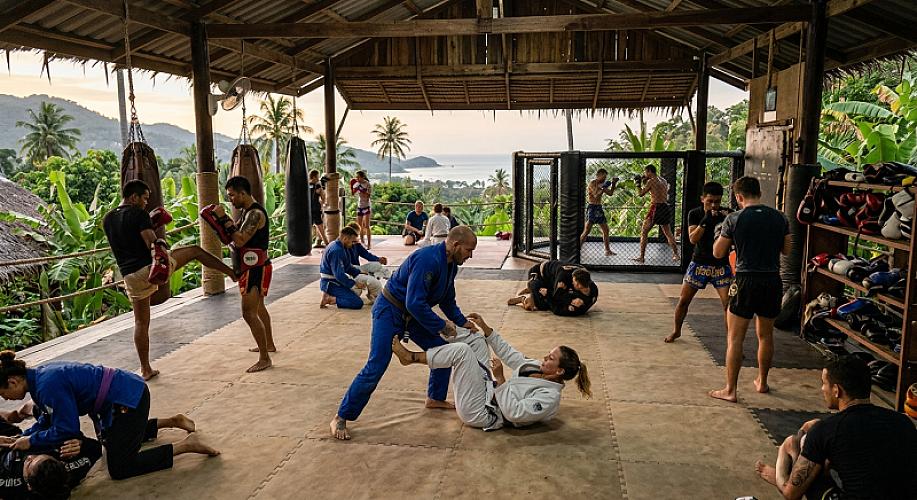
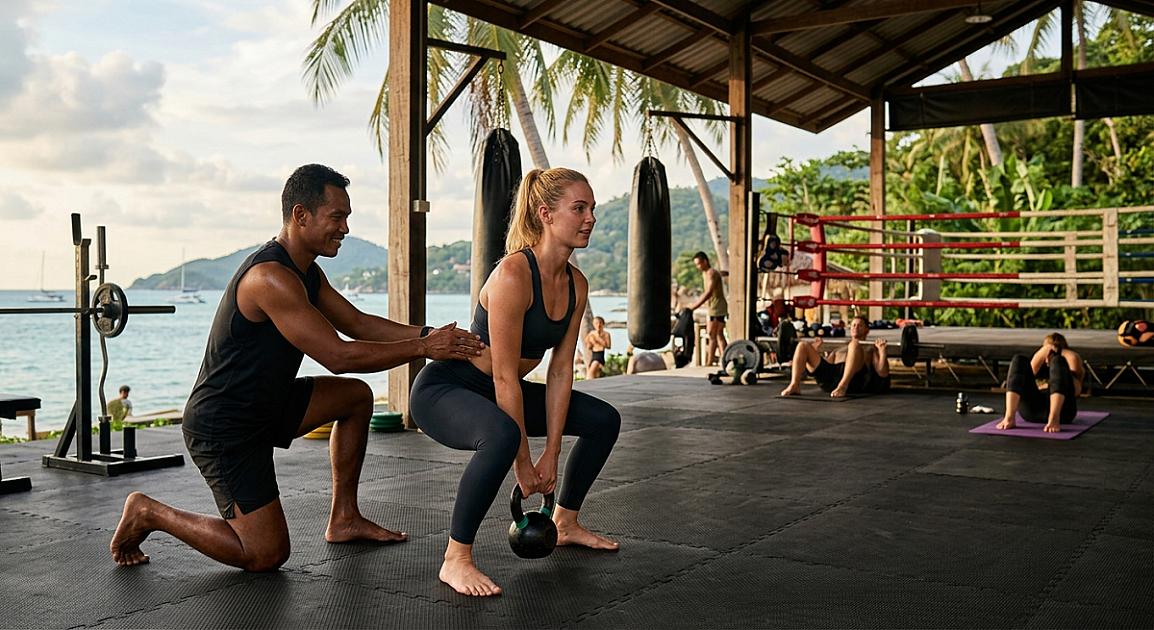
These gyms rely on natural breeze and industrial fans. They focus on high-intensity interval training (HIIT), calisthenics, kettlebells, and martial arts.
- Where to go: Fit Koh in Ban Tai (Maenam area) or Superpro Samui in Chaweng Noi.
- The Experience: You will sweat profusely. Training in 32-degree Celsius heat with high humidity challenges your cardiovascular system much harder than an air-conditioned room. It is excellent for fat loss and conditioning, but you must drink water mixed with electrolytes, which you can buy at any local 7-Eleven.
3. In-Villa Private Training
Many tourists and high-net-worth expats prefer the convenience of a trainer coming directly to their private villa in Bophut or Plai Laem.
- The Experience: The trainer brings portable equipment like resistance bands, suspension trainers (TRX), and light dumbbells. While highly convenient, you are limited by the lack of heavy weights. You will also pay a premium. Expect to pay an extra 500 THB to 1,000 THB per session to cover the trainer's travel time and transport costs.
Key Gyms with Personal Training Programs
If you want to find a trainer attached to a reputable facility, start with these established locations:
Fit Koh (Ban Tai / Maenam)
Located in the quieter northern part of the island, Fit Koh is a massive outdoor functional training facility. They specialize in body transformations and weight loss retreats. Their trainers are highly experienced in structural balance, mobility, and fat loss. It is a community-focused gym where expats and tourists mix easily.
Elite Gym (Chaweng)
This is a premium, multi-story indoor gym with excellent air conditioning. It is popular with serious lifters, bodybuilders, and those who want a modern Western-style gym experience. Their personal trainers focus on hypertrophy, strength training, and contest prep.
Superpro Samui (Chaweng Noi)
Superpro is a massive resort-style camp that blends Muay Thai, MMA, and functional fitness. If you want a hybrid personal training program that combines weight training with pad work, this is one of the best spots on the island. They have both Thai and foreign coaches.
How to Choose a Trainer and Avoid Common Pitfalls
Because Koh Samui is a holiday destination, the fitness industry has less regulation than in Western countries. Anyone can call themselves a personal trainer. Use these criteria to vet your coach:
Check for Real Qualifications
Do not rely solely on an Instagram profile with good lighting. Ask if they hold certifications from recognized bodies like NASM, ACE, ISSA, or FIT Thailand. A qualified trainer should understand biomechanics, injury rehabilitation, and nutrition science.
Ask About Work Permits
This is a critical legal point. Many foreign trainers work illegally in Thailand on tourist visas or elite visas without a work permit. Thai immigration authorities occasionally raid gyms. If your trainer is arrested or deported, you will lose your pre-paid package money. Ask the gym management directly if their foreign trainers are legally employed with proper work permits.
Assess Their Communication Style
If you do not speak Thai, ensure your trainer speaks fluent English. In Muay Thai camps, some local trainers have limited English. While they are incredible athletes, they might struggle to explain complex movement patterns or rehabilitation exercises. Test their communication during a single trial session before buying a 20-session package.
Practical Tips for Training in the Tropics
- Transport: Getting around Samui requires a scooter or a car. Taxis are notoriously expensive here compared to Bangkok, and there is no BTS or MRT. Ensure your gym has decent parking. If you do not ride a scooter, look for a gym close to the main ring road where you can easily catch a red songthaew (shared truck taxi).
- Timing: Avoid training outdoors between 11:00 AM and 3:00 PM. The sun is punishing, and your performance will suffer. Opt for early morning sessions (7:30 AM to 9:30 AM) or late afternoon sessions (4:30 PM to 6:30 PM).
- Hydration: Do not just drink plain water. The humidity on Samui causes rapid electrolyte loss. Buy Royal-D electrolyte powder packets from local pharmacies or convenience stores and mix them into your water bottle during your workouts.
Frequently Asked Questions
Do I need to pay gym entry fees on top of personal training?
It depends on the gym. Some facilities include gym access in the personal training package, while others require you to buy a separate membership or pay a daily drop-in fee of 250 to 400 THB.
Can I find female personal trainers in Koh Samui?
Yes, several major gyms like Elite Gym and Fit Koh have qualified female personal trainers on staff specializing in strength training, yoga, and weight loss.
Is it cheaper to train at a Muay Thai camp?
Yes, private Muay Thai sessions generally cost between 800 and 1,200 THB per hour, which is cheaper than Western-style fitness coaching.
How do I know if a foreign trainer is legal?
Ask the gym management if the trainer has a valid Thai work permit. Reputable, established gyms will only employ foreign coaches with legal working status.