Phuket Gym Day Passes vs Memberships: Cost & Value Guide
Deciding between gym day passes and monthly memberships in Phuket depends on your location, transport, and training frequency. Here is the raw cost breakdown.
Phuket has become a global hub for fitness. People travel here specifically to train in Muay Thai, strength and conditioning, and functional fitness. But the island is geographically massive, and gym pricing can be surprisingly high. If you are staying for more than a few days, you will face a choice. Do you buy daily passes as you go, or do you commit to a monthly membership?
This decision is not just about math. It involves your transport options, the local climate, and your actual training habits. Here is a practical breakdown of how gym access works in Phuket, what it costs, and how to choose the right option for your trip.
The Real Cost of Training in Phuket
Phuket gym prices vary wildly depending on the neighborhood and the type of facility. The highest concentration of fitness venues is in Chalong, specifically on Soi Ta-iad, and in the southern beach town of Rawai. Bangtao in the north is another rapidly growing fitness hub.
In these areas, you will find three main tiers of gyms.
Local Thai Gyms
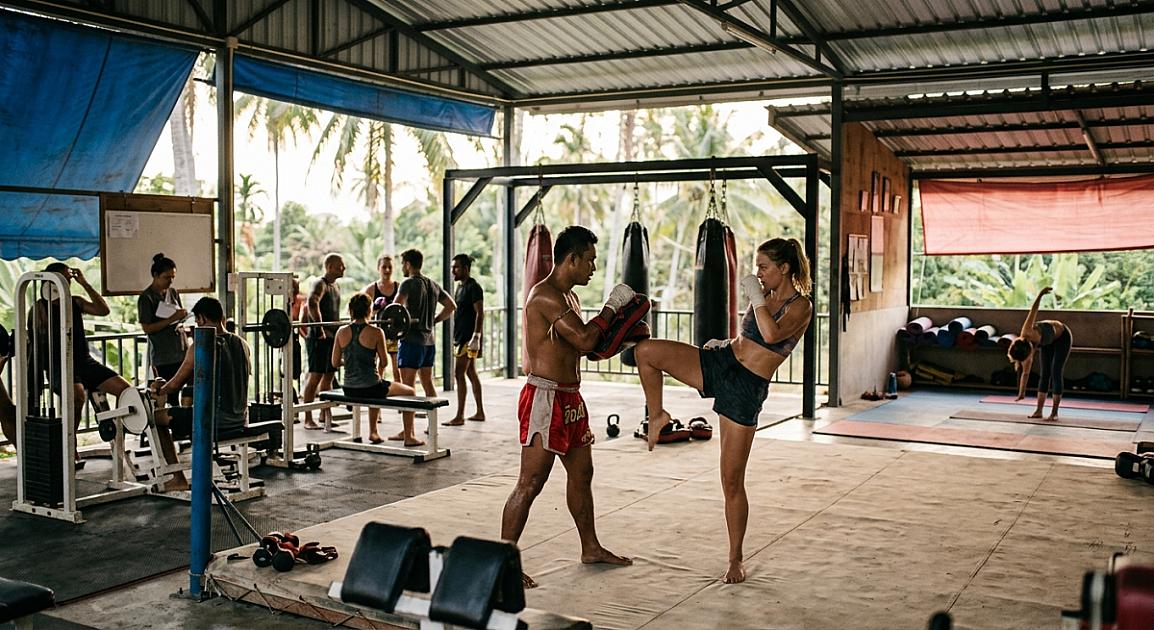
These are often open-air, basic weight rooms with older equipment. They rarely have air conditioning, but they have everything you need to lift weights.
- Day Pass: 100 to 150 THB.
- Monthly Membership: 1,000 to 1,500 THB.
Mid-Range Commercial Gyms
These are modern, air-conditioned facilities with a mix of free weights, machines, and cardio equipment. Examples include Club Asia Fitness in Phuket Town or various indoor gyms near Patong and Kathu.
- Day Pass: 250 to 400 THB.
- Monthly Membership: 2,000 to 3,500 THB.
Premium Functional Fitness and Combat Camps
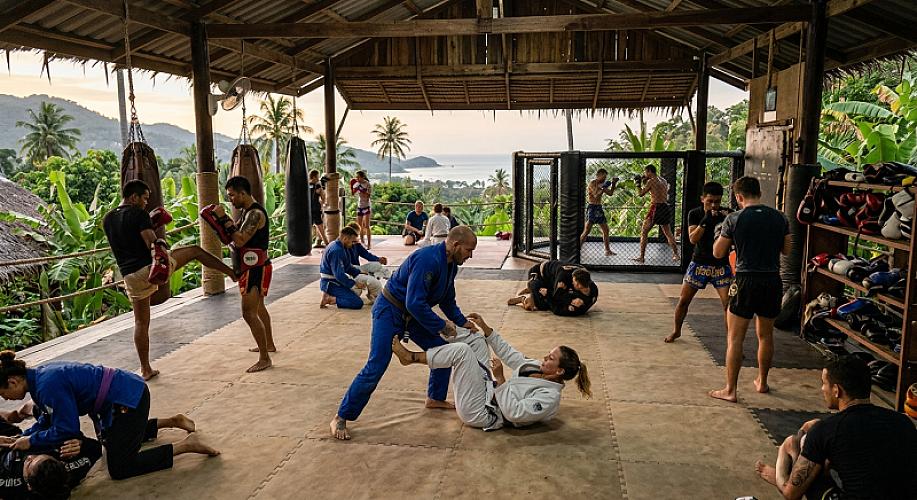
These are massive outdoor and indoor complexes offering CrossFit, Muay Thai, strength and conditioning, and ice baths. Examples include Unit 27, Tiger Muay Thai, and Titan Fitness on Soi Ta-iad, or Bangtao Muay Thai and MMA.
- Day Pass: 400 to 800 THB.
- Weekly Pass: 1,500 to 3,000 THB.
- Monthly Membership: 4,500 to 8,500 THB. This can go up to 12,000 THB if you include unlimited group classes and combat training.
The Math: When Does a Membership Make Sense?
If you are training at a premium functional fitness gym in Chalong or Bangtao, a single day pass averages 500 THB.
If you train three times a week, that is twelve sessions a month. At the day pass rate, you will spend 6,000 THB. A monthly gym-only membership at these same facilities usually costs between 4,000 and 5,000 THB.
Therefore, if you plan to train at least ten times in a month, the monthly membership is cheaper. If you are staying for three weeks and training five days a week, buy the monthly pass. Do not buy weekly passes, as they are heavily marked up.
For mid-range air-conditioned gyms, the tipping point is even lower. With day passes at 300 THB and monthly memberships at 2,200 THB, you only need to visit eight times in a month to make the membership worth your money.
Geography and Transport Costs
Many visitors underestimate the size of Phuket. You cannot easily commute from a hotel in Patong to a gym in Chalong every day.
If you do not ride a scooter, you will rely on taxis, Grab, or Bolt. A one-way ride from Kata to Chalong costs about 200 to 300 THB. If you make that trip five times a week to use a gym where you bought a cheap membership, you will spend 6,000 THB on transport alone in a month.
If you are staying in a remote villa or a quiet beach area, buying a monthly membership at a gym thirty minutes away is a mistake. You will end up skipping sessions because of the commute. In this case, paying a higher day-pass rate at a smaller, closer hotel gym or local fitness center is more practical and cheaper overall.
If your primary goal is training, rent a room within walking distance of your chosen gym in Chalong or Rawai. This eliminates transport costs entirely.
Climate and Gym Design
Phuket is hot and humid year-round. This affects how you train and which payment option you should choose.
Many of the famous strength and conditioning gyms are open-air. They have roofs but no walls. Training in 32-degree Celsius heat with 80 percent humidity is exhausting. If you are not used to this climate, your work capacity will drop significantly during your first week.
If you commit to a one-month membership at an open-air gym on day one, you might regret it after two sessions of extreme heat exhaustion.
Instead, buy a single day pass first. Test your tolerance for the heat. If you find it too difficult to recover, you can pivot to an air-conditioned commercial gym. Paying for that one expensive day pass saves you from wasting money on a monthly membership you will not use.
Visa Status and Flexibility
Your visa status should dictate how you pay for gym access.
If you are on a standard 30-day visa exemption, a monthly membership aligns perfectly with your stay. However, if you plan to extend your visa at the Phuket Immigration office, you will lose a full training day to queues and paperwork.
If you are planning visa runs to Malaysia or nearby countries, you will lose three to four days of training mid-month. Factor these gaps into your calculations. If you are going to be off the island for a week of your one-month stay, individual day passes or a 10-class pack may be more economical than a full monthly commitment.
Hidden Costs to Check
Before you hand over cash or swipe your card, ask the gym reception about these details.
- VAT: Some premium gyms do not include the 7 percent government value-added tax in their advertised prices. Ask if the price is net.
- Towel Rental: Many gyms charge 50 to 100 THB per towel rental. If you train daily, this adds up. Bring your own microfiber towel.
- Water: Some gyms offer free cold water refills. Others force you to buy plastic bottles at 20 to 30 THB each.
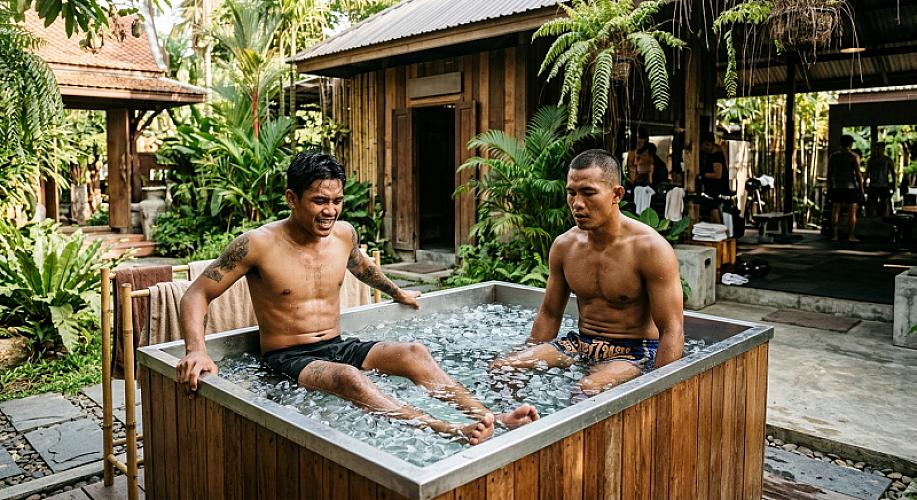
- Ice Baths: Access to recovery facilities like ice baths and saunas is rarely included in standard gym memberships. It often requires an extra fee of 200 to 400 THB per session.
The Verdict: Which Should You Choose?
Choose Day Passes if you are staying in Phuket for less than ten days, if you want to train at multiple different gyms across the island, or if you are staying far away from your primary gym and cannot guarantee daily transport.
Choose a Monthly Membership if you are staying in one neighborhood for at least three weeks, have a scooter or accommodation within walking distance of the facility, and plan to train at least three times per week.
Frequently Asked Questions
Can I freeze my monthly gym membership in Phuket if I get injured?
Most premium gyms on Soi Ta-iad will let you freeze your membership with a medical certificate from a local clinic. Smaller local gyms rarely offer this option.
Do Phuket gyms accept credit cards for day passes?
Large fitness centers and combat camps accept credit cards, though some add a 3% fee. Small local gyms only accept cash or Thai QR bank transfers.
Are class packages better than monthly memberships?
If you only want to attend specific classes like yoga or CrossFit three times a week, a 10-class pack is often cheaper and offers more flexibility than a monthly pass.
Is it cheaper to buy gym memberships online before arriving?
No. Walk-in rates are the same, and physical gyms often run unadvertised seasonal promotions or cash discounts that you can only get in person.