Phuket Gym Day Passes vs Monthly Memberships: Value Guide
A realistic cost breakdown of Phuket gym prices, comparing day passes, weekly rates, and monthly memberships to help you save money.
Phuket has transitioned from a holiday island into a global fitness hub. If you are landing here for a week of training or planning a three-month digital nomad stint, your biggest recurring expense after accommodation will likely be your gym membership. Gyms here know their market. They price their services to capture tourist dollars, which means a single day pass can sometimes cost as much as a weekly pass in your home country.
Choosing between a day pass, a weekly package, or a monthly membership is not just about dividing the total cost by the number of days you plan to train. You have to factor in the local climate, transport costs, and the specific training culture of different Phuket neighborhoods. This guide breaks down the actual costs and logistics to help you get the best value for your money.
The Raw Numbers: Day Passes vs. Weekly and Monthly Rates
Gym prices in Phuket vary wildly depending on the area and the type of facility. A basic, local Thai gym with free weights and no air conditioning will always be cheaper than a modern, multi-story functional fitness facility on Soi Ta-iad in Chalong.
Here is what you can expect to pay on average across the island in Thai Baht (THB):
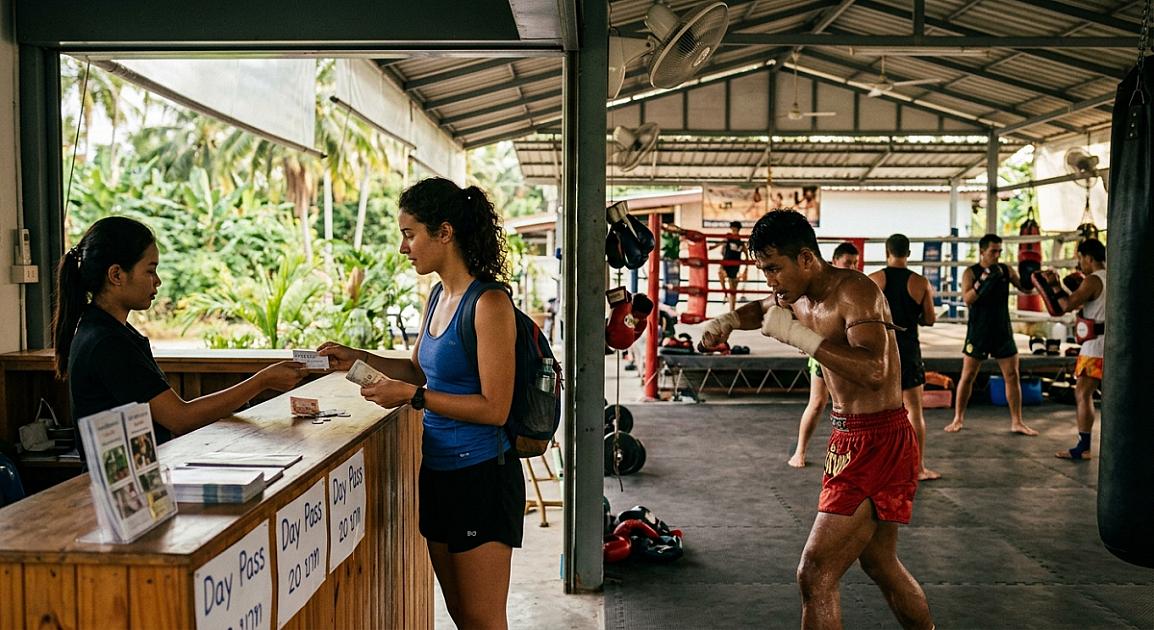
- Single Day Pass: 300 to 600 THB
- Weekly Pass: 1,500 to 2,500 THB
- Monthly Membership: 3,500 to 8,500 THB
To put this into perspective, let us look at the math. If you buy a day pass at a mid-range gym in Rawai for 400 THB and train four times a week, you spend 1,600 THB. A weekly pass at the same gym often costs around 1,500 THB and offers unlimited access.
If you are staying in Phuket for two weeks and plan to train five days a week, ten day passes will cost you 4,000 THB. Two weekly passes will cost around 3,000 THB. However, a full monthly membership at that same gym might only cost 3,500 THB. In this scenario, buying a monthly membership is cheaper even if you only use half of it. The tipping point where a monthly membership becomes cheaper than weekly passes is usually around the twelve-day mark.
Location Matters: Chalong, Bangtao, and Rawai
Phuket is a large island, and transport can quickly eat up any savings you make on a gym membership. Where you stay dictates where you should train.
Chalong (Soi Ta-iad)
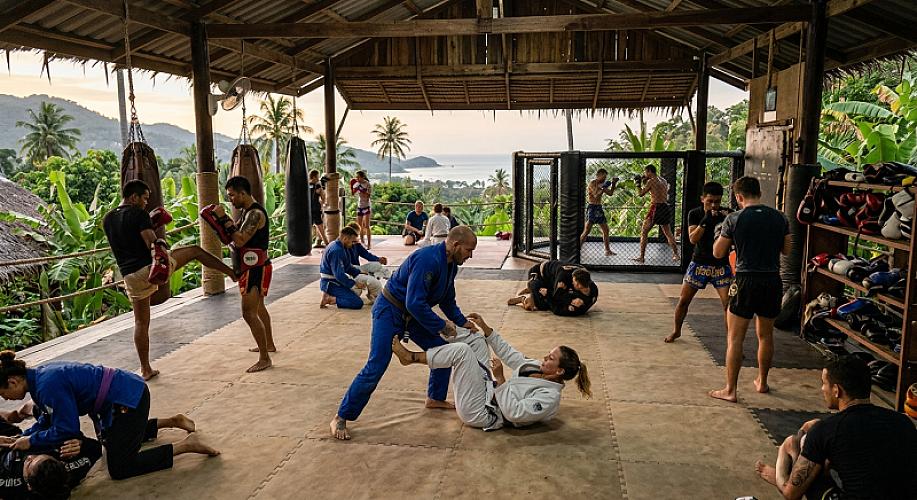
This is the fitness capital of Phuket. The street is lined with Muay Thai camps, strength and conditioning facilities, and health restaurants. Gyms here, such as Unit 27 or Tiger Muay Thai, offer premium facilities but charge premium prices. A monthly membership for strength and conditioning classes here can easily exceed 8,000 THB. Day passes are expensive, often starting at 500 THB. If you are staying on the street, you do not need transport, which saves you money. But if you are staying in Kata and driving to Chalong daily, you must add fuel and travel time to your budget.
Bangtao
This area caters to a wealthier crowd, expats, and luxury tourists. Gyms like Bangtao Muay Thai & MMA offer world-class facilities. Expect to pay around 600 THB for a day pass and up to 9,000 THB for a monthly pass that includes classes. There are fewer budget options here, so committing to a monthly pass is usually necessary if you want to keep daily costs down.
Rawai and Nai Harn
Located in the south, Rawai has a more relaxed expat community. Gyms here, like Muscle Bar or Rawai Active, are generally cheaper than those in Chalong or Bangtao. You can find quality air-conditioned gyms offering monthly memberships for 2,500 to 3,500 THB. Day passes usually hover around 300 to 400 THB.
The Hidden Costs of Phuket Gyms
The sticker price of a gym pass is rarely the final price you pay. Phuket has unique conditions that introduce extra costs.
Water and Hydration
Phuket is hot and humid. You will drink at least one to two liters of water per workout. Many gyms do not offer free water refills. They sell bottled water for 20 to 30 THB. If you train 20 times a month, that is an extra 600 THB just on water. Buying a large five-liter jug from 7-Eleven for 45 THB and bringing your own bottle is a simple way to save.
Towel Rental
Most premium gyms require you to use a towel on the equipment. If you do not bring your own, towel rental is usually 50 to 100 THB per session. Over a month, this can add 1,000 THB to your expenses. Buy a quick-dry microfiber towel at a local market for 150 THB instead.
Transport Costs
Phuket does not have a cheap public transit system like Bangkok. There is no BTS or MRT. You will rely on renting a scooter, which costs about 250 THB per day, or using ride-hailing apps like Bolt or Grab. A single ride from Rawai to Chalong can cost 200 THB. If you choose a cheaper gym that is far from your accommodation, the transport cost will quickly surpass the money you saved on the membership. Always choose a gym within walking distance or a short scooter ride from your villa or hotel.
Climate and Facility Types: Air-Con vs. Open-Air
Before you commit to a monthly membership, you must understand the difference between training in an air-conditioned gym versus an open-air facility.
Open-air gyms are common for Muay Thai and traditional strength training. They are cheaper, but the heat can be brutal. During the hot season from March to May, temperatures inside an open-air gym can reach 35 degrees Celsius with high humidity. Your workout volume will drop, and you will fatigue much faster.
If you are not used to the tropical climate, paying extra for an air-conditioned gym is worth the money. It allows you to train at a higher intensity. Many people buy a cheap monthly pass at an open-air gym, realize after three days that they cannot handle the heat, and end up paying for day passes at an air-conditioned gym anyway. Test the environment with a day pass before buying a monthly membership.
The Verdict: Which Should You Choose?
To get the absolute best value, use this simple decision framework based on your stay duration:
- Staying 1 to 4 days: Buy day passes. It gives you the flexibility to try different gyms and see different parts of the island.
- Staying 5 to 12 days: Buy a weekly pass. Almost every gym offers a discount on weekly packages that makes them cheaper than three or four individual day passes.
- Staying 12 days or more: Buy a monthly membership. Even if you leave before the month is over, the daily rate works out cheaper than buying multiple weekly passes.
Always ask about package deals that combine gym access with Muay Thai classes if you plan to do both. Many camps offer bundled rates that are significantly cheaper than buying separate memberships.
Frequently Asked Questions
Can I negotiate gym membership prices in Phuket?
Generally, no. Major gyms and Muay Thai camps have fixed pricing structures. However, you might get a discount if you sign up as a group or pay for three or more months upfront.
Do Phuket gyms require a deposit for monthly memberships?
Most gyms do not require a deposit for standard memberships. You pay the monthly fee upfront. Some premium clubs might charge a small fee for an access card.
Is water free at gyms in Phuket?
Rarely. Most gyms sell bottled water or charge a small fee for refills. It is always cheaper to bring your own water purchased from a local convenience store.
Are gym memberships cheaper during the low season?
Yes, some gyms and Muay Thai camps offer low-season promotions between May and October. It is worth checking their social media pages for seasonal discounts.