Phuket Gym vs Muay Thai Camp: Which Training Setup Suits You?
Deciding between a modern Western gym and a traditional Muay Thai camp in Phuket? Here is a direct comparison of costs, locations, and daily routines.
Phuket has become the fitness capital of Southeast Asia. Thousands of people land here every month with the sole intention of training, sweating, and getting into the best shape of their lives. But the island offers two very different paths to fitness: the modern Western-style gym and the traditional Muay Thai camp.
Choosing the wrong setup can ruin your trip. If you need air conditioning and flexible hours, a strict, open-air Muay Thai camp will make you miserable. If you want community and structured discipline, a solo membership at a commercial gym will feel isolating. Here is a practical breakdown of how these two setups compare in terms of daily life, costs, locations, and logistics.
The Daily Routine: Structure vs. Autonomy
At a Muay Thai camp, your day is dictated by the camp schedule. Most camps run two sessions a day. The morning session starts around 7:30 AM or 8:00 AM, before the midday heat becomes unbearable. The afternoon session begins around 4:00 PM as the temperature starts to drop.
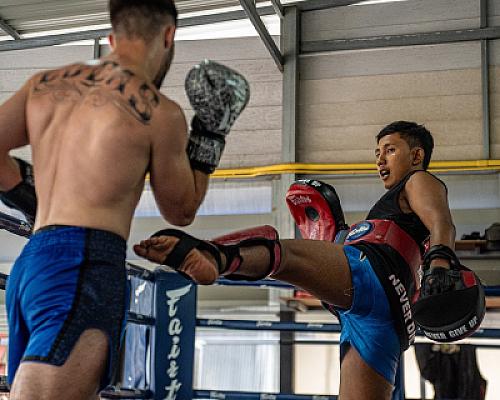
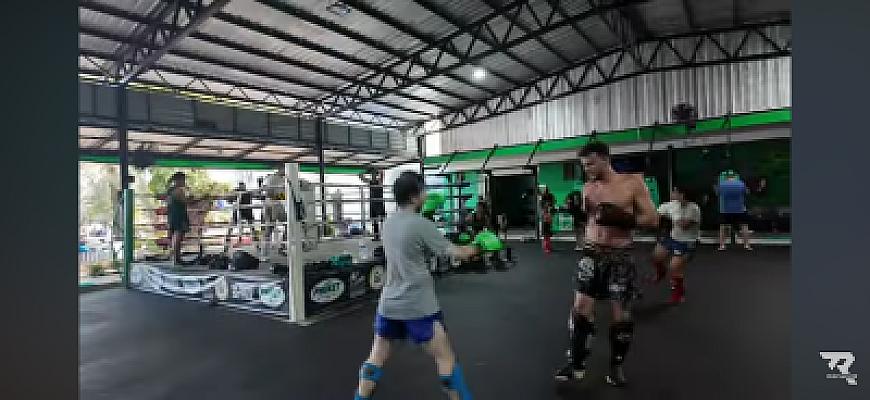
A typical camp session lasts two hours. It begins with a run or skipping rope, followed by shadow boxing, bag work, pad work with a trainer, clinching, and conditioning. It is highly structured, physically demanding, and group-oriented. You train alongside others, which builds an immediate social circle.
A Western gym offers complete autonomy. Places like Unit 27 in Chalong or Club Asia in Phuket Town let you train whenever you want. They open early and close late. You can do your own split, focus on powerlifting, or join a scheduled CrossFit or spin class. If you are a digital nomad who needs to work US or European hours, the flexibility of a Western gym is essential. You cannot easily fit a 4:00 PM Muay Thai session into a busy remote work schedule.
The Training Environment and Climate
Phuket is hot and humid year-round. Temperatures average 32 degrees Celsius, and humidity rarely drops below 70 percent.
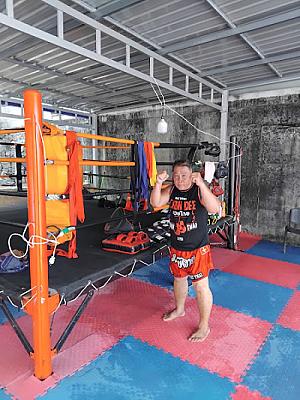
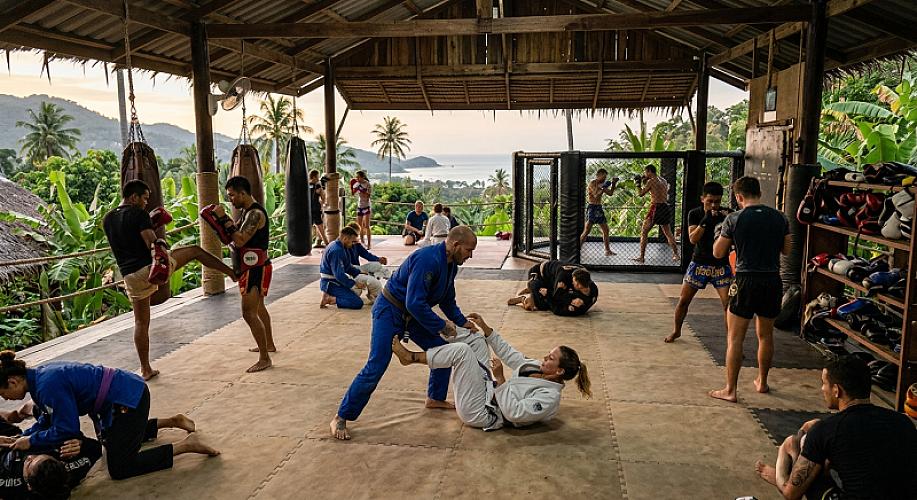
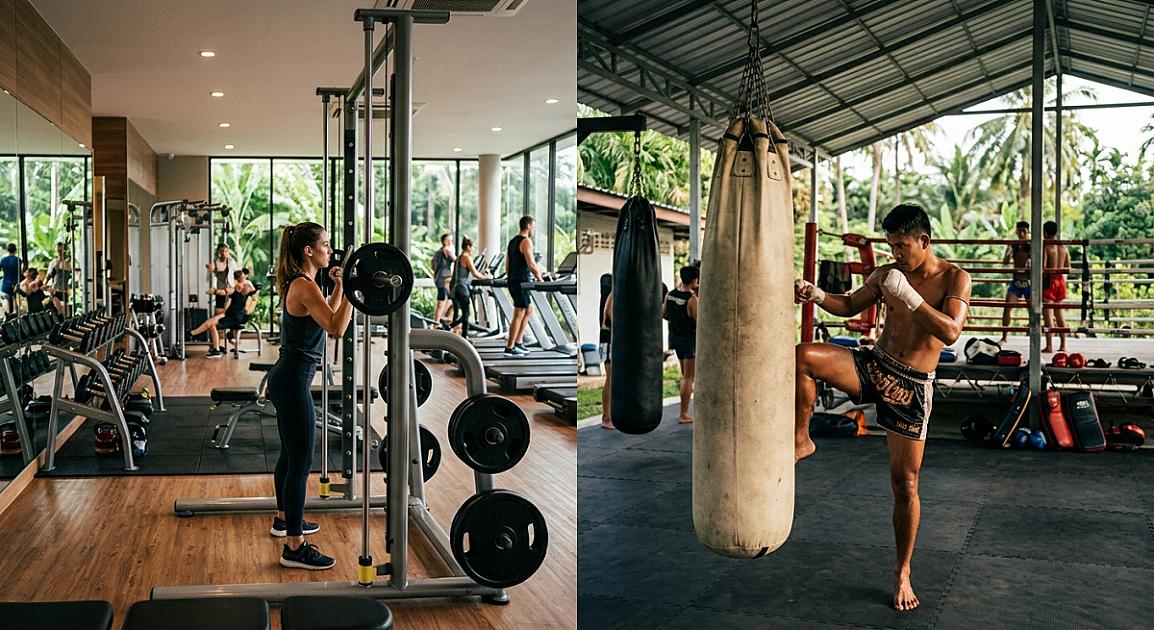
Muay Thai camps are almost exclusively open-air, covered by tin roofs. You will train on canvas mats surrounded by heavy bags, cooled only by wall-mounted industrial fans. You will sweat through your clothes within the first ten minutes. This environment is excellent for cardiovascular conditioning and mental toughness, but it requires a few days of acclimatization.
Western gyms in Phuket generally fall into two categories. You have fully air-conditioned, modern facilities with imported Hammer Strength equipment, lifting platforms, and cardio machines. You also have open-air strength and conditioning yards, like Titan Fitness on Soi Ta-iad, which offer a middle ground. If you struggle with heat exhaustion or have specific strength-training goals that require heavy barbell work, an air-conditioned gym is the safer bet.
Geographic Hubs: Where to Stay
Your training choice will largely dictate where you live on the island. Phuket is large, and traffic can turn a short drive into a frustrating hour-long battle.
Soi Ta-iad (Chalong)
This is a single, two-kilometer road in Chalong packed with fitness facilities, healthy restaurants, massage shops, and accommodation. It is home to Tiger Muay Thai, Dragon Muay Thai, and strength gyms like Unit 27 and Titan Fitness. If you want to eat, sleep, and breathe fitness with zero distractions, this is where you go. You do not even need a scooter here; you can walk to everything.
Rawai and Nai Harn
Located at the southern tip of the island, Rawai is popular with long-term expats and digital nomads. It has a more relaxed, coastal feel. Excellent Muay Thai camps like Sinbi Muay Thai and Kingka Muay Thai are located here, alongside quality Western gyms like Action Point. Rawai offers a better balance of training, beach life, and cafe culture.
Bangtao and Choeng Thalay
This area in the mid-north of the island has become highly developed. It is home to Bangtao Muay Thai & MMA, a massive, premium facility that attracts UFC fighters and high-income fitness tourists. The surrounding area is upscale, with high-end restaurants, beach clubs, and villa rentals. It is more expensive than Chalong or Rawai.
Cost Comparison: THB Prices
Training in Phuket is affordable compared to Western countries, but costs add up quickly. Here is what you can expect to pay in Thai Baht (THB).
Muay Thai Camp Costs
- Single Session: 400 to 600 THB
- Weekly Pass: 2,500 to 4,000 THB
- Monthly Pass (Two sessions per day): 10,000 to 15,000 THB
- Private Lesson (1 hour): 700 to 1,200 THB
Many camps offer all-inclusive packages that include training, shared or private on-site accommodation, and sometimes two meals a day at the camp restaurant. These packages usually range from 30,000 to 60,000 THB per month, depending on the level of luxury of the room.
Western Gym Costs
- Day Pass: 300 to 500 THB
- Weekly Pass: 1,500 to 2,500 THB
- Monthly Pass: 3,000 to 5,500 THB
If you want to combine both, some areas offer hybrid passes. For example, on Soi Ta-iad, you can buy packages that combine Muay Thai at one facility with strength and conditioning classes at another.
Transport and Logistics
Unless you live directly on Soi Ta-iad, you will need a way to get around.
Scooter rental is the most common option. A standard 125cc scooter (like a Honda Click) costs 250 to 350 THB per day, or 3,500 to 5,000 THB per month. You must have an International Driving Permit with a motorcycle endorsement to ride legally. Thai police regularly set up checkpoints in Rawai, Chalong, and Patong to fine tourists riding without the correct license or a helmet.
If you do not want to ride a scooter, you will rely on ride-hailing apps like Bolt and InDrive. They are much cheaper than local tuk-tuks, which charge high flat rates. A 15-minute ride on Bolt usually costs between 100 and 200 THB.
Which Setup Suits Your Stay?
Choose a Muay Thai Camp if:
- You are traveling solo and want to meet people immediately.
- You want a highly disciplined, structured routine where you do not have to think about what workout to do.
- You want to learn a practical skill and experience a core part of Thai culture.
- You want to maximize fat loss and cardiovascular endurance.
Choose a Western Gym if:
- You are a digital nomad or remote worker who needs to train at odd hours.
- You are focused on hypertrophy, powerlifting, or specific strength goals that require specialized machines.
- You cannot tolerate training in intense heat and humidity without air conditioning.
- You prefer to train alone and follow your own programming.
Frequently Asked Questions
Can beginners join Muay Thai camps in Phuket?
Yes. Almost every Muay Thai camp in Phuket has dedicated beginner classes. Trainers are accustomed to teaching people who have never thrown a kick before, and they will guide you through the basic stance, punches, and kicks at your own pace.
Do I need to bring my own gear to a Muay Thai camp?
You can rent or borrow gloves and hand wraps at most camps, but it is highly recommended to buy your own for hygiene reasons. You can buy high-quality, Thai-made gear like Fairtex or Twins Special directly at the camps or local shops for much cheaper than in Western countries.
Are Western gyms in Phuket crowded?
Yes, especially during the peak tourist season from November to April. The busiest times are usually between 8:00 AM and 10:00 AM, and 5:00 PM and 7:00 PM. Training during the middle of the day is much quieter if you can handle the heat.
Can I pay with a credit card at Phuket gyms?
Larger gyms and established Muay Thai camps accept credit cards, but they often charge a 3% transaction fee. Smaller local gyms and camps usually require cash (Thai Baht) or bank transfers via QR code if you have a Thai bank account.