Phuket Hotel Gym vs Local Gym: Where Should You Train?
An honest comparison of Phuket hotel gyms versus local fitness centers, including real costs, equipment standards, and transport logistics.
Choosing where to workout in Phuket depends on your training goals, your budget, and where you choose to stay on the island. Many travelers book a resort thinking the hotel gym will suffice, only to find a cramped room with a squeaky treadmill and dumbbells that stop at 12 kilograms. Others spend unnecessary money on external gym passes when their resort actually has a decent setup.
Phuket has become a global hub for fitness, particularly around the southern areas of Chalong and Rawai. Understanding the practical differences between training in your hotel and commuting to a local commercial gym will save you money, time, and frustration.
The Reality of Phuket Hotel Gyms
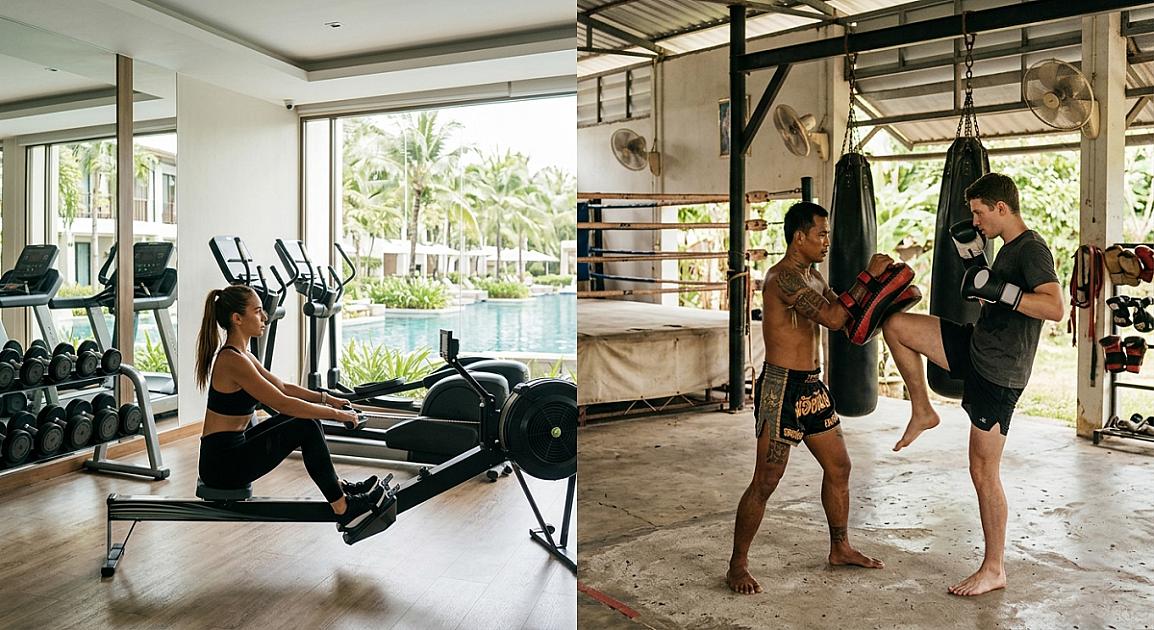
Hotel gyms in Phuket vary wildly. If you are staying in a budget resort or a standard three star hotel in Patong or Karon, the gym is usually an afterthought. You can expect one multi-use cable machine, a couple of cardio machines, and a small rack of light dumbbells. Heavy lifting is almost impossible in these spaces. There are rarely squat racks, barbells, or proper lifting platforms.
Five star resorts in areas like Bangtao, Layan, or Cape Panwa offer much better facilities. Places like the Rosewood Phuket or the Slate in Nai Yang have well-equipped fitness centers. Some even have outdoor functional training areas, heavy kettlebells, and proper squat cages.
The main advantage of a hotel gym is convenience. You can train in air-conditioned comfort, walk back to your room in your sweaty clothes, and you do not have to pay extra for a day pass. It is ideal if your goal is simply to maintain some baseline fitness, do some light cardio, or perform basic dumbbell movements.
The Phuket Local Gym Scene
If you are serious about strength training, bodybuilding, CrossFit, or Muay Thai, you will need to use a local commercial gym. Phuket has some of the best training facilities in Southeast Asia, concentrated in specific fitness neighborhoods.
Soi Ta-iad (Chalong)
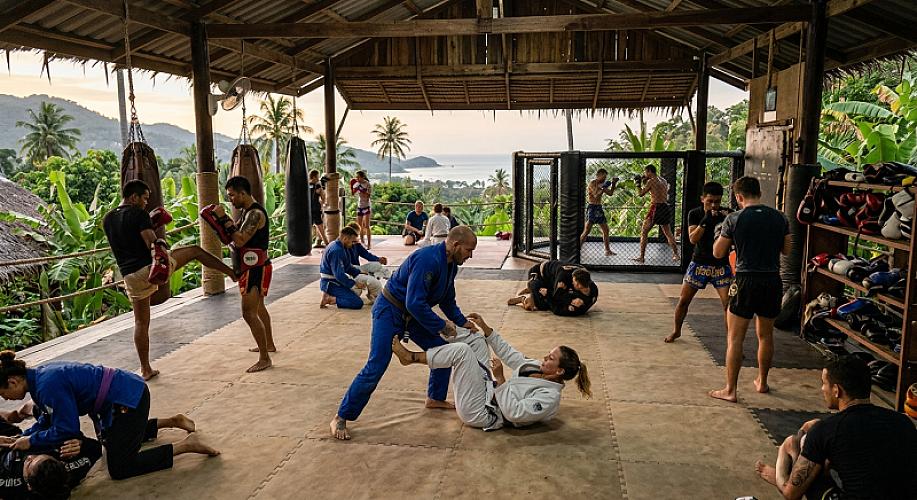
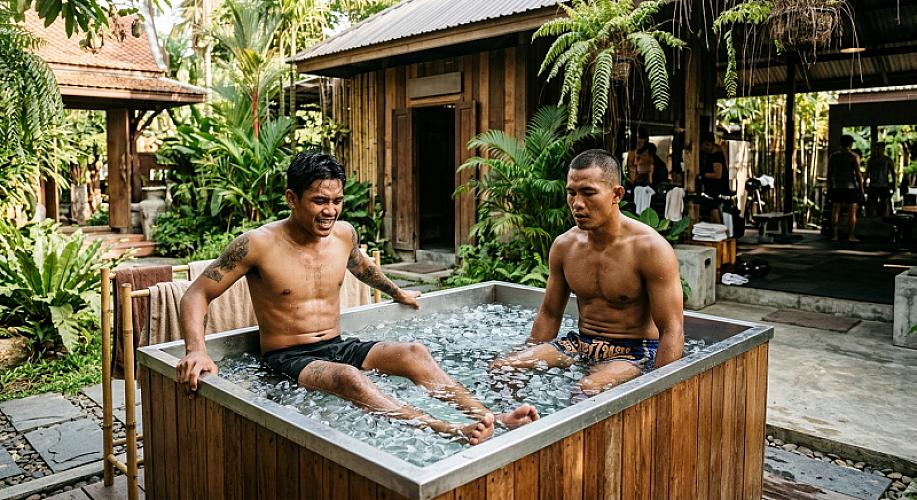
This single street in Chalong is the fitness capital of the island. It is home to world-famous facilities like Tiger Muay Thai, Unit 27, and Titan Fitness. These are not standard gyms. They are massive, high-performance training camps. You will find outdoor assault courses, heavy lifting zones, air-conditioned weight rooms, and specialized recovery facilities with ice baths and saunas.
Rawai and Nai Harn
Further south, Rawai has a massive expat community and excellent independent gyms. Places like Rawai Active or Action Point offer heavy dumbbells, multiple squat racks, and specialized plate-loaded machines. The crowd here is a mix of expats, competitive bodybuilders, and holidaymakers who train seriously.
Bangtao and Cherngtalay
In the north, the fitness scene is growing rapidly around the Laguna area. Gyms like Bangtao Muay Thai & MMA offer top-tier strength and conditioning facilities alongside martial arts. These gyms cater to a premium crowd, offering clean, modern equipment and excellent coaching.
Comparing the Costs
Training at your hotel is technically free, as it is included in your room rate. Local gyms in Phuket are highly professional, but they are not cheap.
Here is what you can expect to pay at local commercial gyms in Phuket:
- Daily Pass: 300 THB to 500 THB (approximately 9 USD to 14 USD)
- Weekly Pass: 1,500 THB to 2,500 THB
- Monthly Pass: 3,500 THB to 6,000 THB
If you are staying in Phuket for a month and want to train five days a week, a local gym membership is a significant expense to add to your budget. However, the quality of the equipment and the training atmosphere often justify the price for dedicated lifters.
Equipment and Training Environment
Local gyms are designed for people who want to train hard. You will find high-quality barbells, bumper plates, chalk, lifting platforms, and dumbbells that go up to 50 kilograms or more. The atmosphere is highly motivating. You are surrounded by people who are focused on their fitness, which can push you to train harder than you would alone in a quiet hotel room.
However, you must consider the climate. Many local gyms in Phuket, especially the larger functional fitness and Muay Thai camps, are open-air. They rely on giant ceiling fans rather than air conditioning. Training in 32-degree Celsius heat with 80 percent humidity is a shock to the system if you are used to a climate-controlled environment. You will sweat profusely and tire much faster. Hotel gyms are almost always heavily air-conditioned, making for a much more comfortable, though less intense, workout.
Logistics and Transport
Before you buy a membership at a local gym, look at the map. Phuket is a large island with hilly terrain and congested roads. Transport can quickly become your biggest daily expense and headache.
If you stay in a beach resort in Kata but want to train at a gym on Soi Ta-iad in Chalong, you face a 25-minute drive each way over the Kata hill.
- Scooter Rental: Renting a small scooter like a Honda Click costs 200 THB to 300 THB per day. This is the easiest way to get to the gym, but riding in Phuket requires experience and extreme caution.
- Ride-Hailing Apps: Using Bolt or InDrive is safer than riding a scooter. A one-way trip from Patong to Chalong can cost 300 THB to 400 THB. Doing this daily will quickly exceed the cost of your gym pass.
- Songthaews: The local blue buses are cheap, costing around 40 THB per trip, but they run on fixed routes, are very slow, and stop operating around 6:00 PM.
If you do not want to rent a scooter, it is best to choose your accommodation within walking distance of your chosen gym. If you prefer a beachfront resort far from the fitness hubs, you should plan to use the hotel gym or prepare to pay high transport fees.
Which Option Should You Choose?
Choose the Hotel Gym if:
- Your workouts consist of basic cardio, light dumbbell circuits, or bodyweight exercises.
- You want to train in cool, air-conditioned comfort.
- You are staying in a remote resort area and do not want to navigate Phuket traffic.
- You want to save money on gym passes and transport.
Choose the Local Gym if:
- You need squat racks, heavy barbells, or dumbbells over 20 kilograms.
- You want to participate in group classes like CrossFit, functional fitness, or Muay Thai.
- You feed off the energy of a busy, dedicated training environment.
- You are staying in a fitness-focused neighborhood like Chalong or Rawai where gyms are easily accessible.
Frequently Asked Questions
Can I buy single-day passes at most local gyms in Phuket?
Yes. Almost every commercial gym, Muay Thai camp, and fitness center in Phuket offers daily walk-in passes, usually ranging from 300 THB to 500 THB.
Are local gyms in Phuket air-conditioned?
Some are fully air-conditioned, but many of the larger functional fitness and strength gyms in Chalong and Rawai are open-air with large fans. Check the gym website or photos before visiting.
Do I need to bring my own towel to local Phuket gyms?
Many premium gyms provide towels, but smaller local gyms often require you to bring your own or rent one for a small fee of 20 to 50 THB.
Is it easy to get a taxi from my hotel to gyms on Soi Ta-iad?
Yes. You can easily book rides using the Bolt or InDrive apps, which are much cheaper than traditional street taxis in Phuket.