Strength Training for Muay Thai: What to Lift, When, and How Much
Should you lift weights while training Muay Thai? This guide covers which movements actually help your striking, how to fit lifting into a camp schedule, and how to avoid burning out in the heat.
The debate about whether Muay Thai fighters should lift weights has been going on in gyms for decades. Traditional Thai fighters rarely touched a barbell, focusing purely on roadwork and bag work. Modern fighters at the top level, however, usually integrate some strength work. For most people training in Phuket, the best approach is somewhere in the middle. Understanding why you're lifting is the first step to making it actually work for your Muay Thai, rather than just making you tired.
What lifting actually does for your striking
Strength training for Muay Thai isn't about getting "big" or looking like a bodybuilder. Extra muscle that doesn't help you move is just dead weight you have to carry through every round. The goal is to develop force, resilience, and the kind of leg and back strength that lets you kick harder and stay strong in the clinch.
When done right, lifting helps you strike with more power, stay injury-free, and recover faster between sessions. It protects your joints (especially your knees and shoulders) which take a lot of impact during sparring. What it won't do is fix your timing or your technique. That only comes from time on the pads and in the ring.
The movements that actually matter
Hip hinges: Deadlifts and Romanian deadlifts
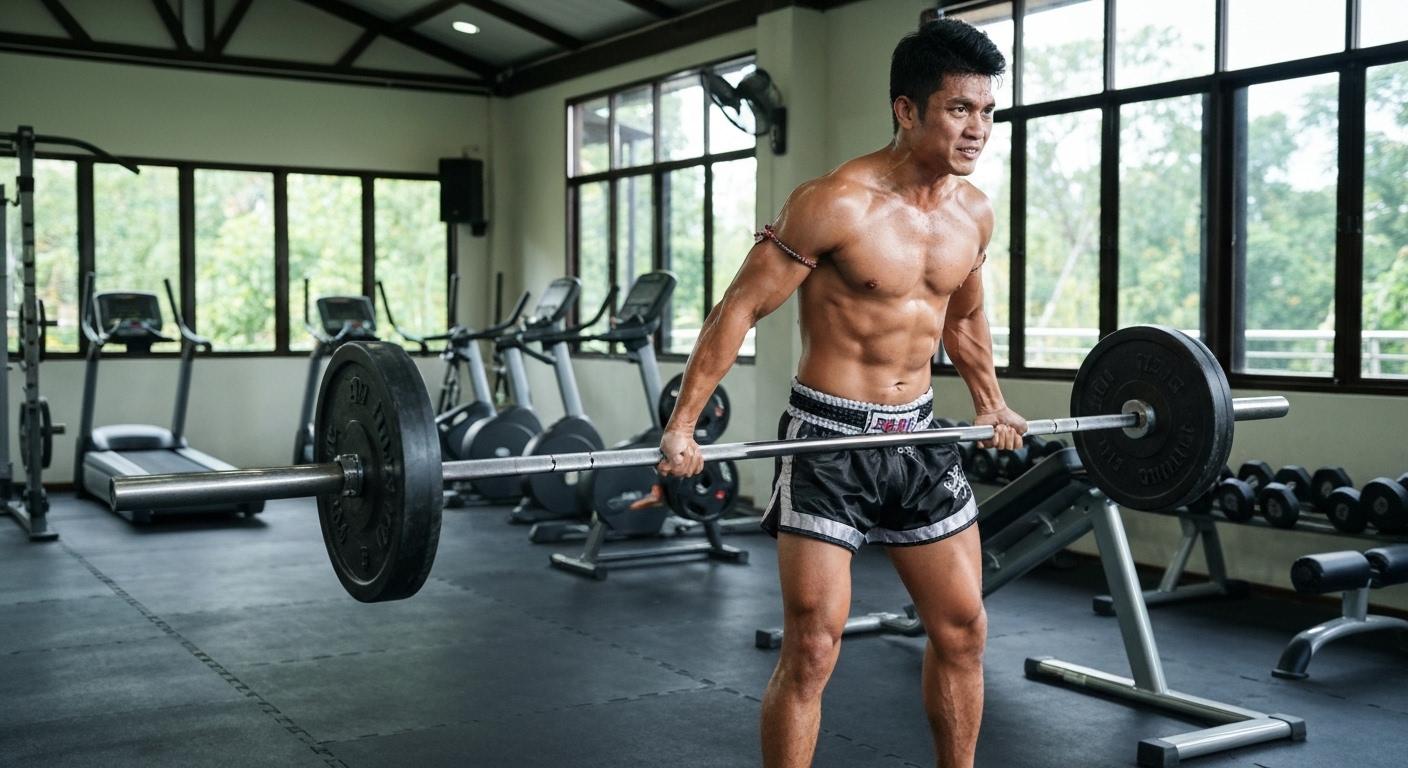
This is probably the most useful movement for a fighter. Your power comes from your hips, and deadlifts build the glutes and hamstrings that drive your kicks. I'd recommend Romanian deadlifts with moderate weight. They build that posterior strength without the heavy toll on your central nervous system that a max-effort conventional deadlift takes.
If you're training at a camp, two sets of eight to ten reps, two or three times a week is plenty. You want to stimulate the muscle, not exhaust yourself before your next Muay Thai session.
Single-leg work
Muay Thai is a one-legged sport. Every time you kick, you're standing on one leg. Bulgarian split squats or even simple bodyweight single-leg squats are incredible for building stability. They also help point out if one of your legs is significantly weaker than the other, which is hard to notice when you're just doing regular squats.
Pulling: Rows and chin-ups
If you’ve ever been stuck in a strong clinch, you know how much pulling strength matters. Rows and pull-ups build the upper back strength you need to control an opponent's head and neck. Since you’re already doing a lot of "pushing" movements during bag work and push-ups, pulling exercises help keep your shoulders healthy and balanced.
Core and bracing
Coaches always say power comes from the core, and they’re right. But it's not about having a six-pack. It's about being able to brace your trunk so the power from your hips actually reaches your shins or fists. Planks and anti-rotation movements (like Pallof presses) are much better for this than endless crunches.
Carries
Farmer's carries (walking with heavy weights in your hands) are simple but effective. They build grip strength, shoulder stability, and overall body tension. If you want to stay strong through a long clinch exchange, don't skip these.
How to fit lifting into a Muay Thai schedule
The biggest challenge is timing. A typical Muay Thai camp session is two hours of intense work, usually twice a day. If you try to add a heavy bodybuilding routine on top of that, you’re going to burn out or get hurt.
Spacing your sessions: Try to keep at least four hours between your Muay Thai training and your lifting. If you lift heavy right before Muay Thai, your technique will suffer because you’re tired. If you lift right after, you’re more likely to get injured.
Keep it short: Your lifting sessions should be 30 to 45 minutes, max. Two or three exercises, two or three sets each. Remember, the lifting is there to support your Muay Thai, not replace it.
Listen to your body: If you're in your first week at a camp, don't even think about lifting. Your body is already struggling with the heat and the volume of the sessions. Wait until week two or three when you’ve started to acclimate. Check our guide on overtraining signs to know when to pull back.
Where to lift in Phuket
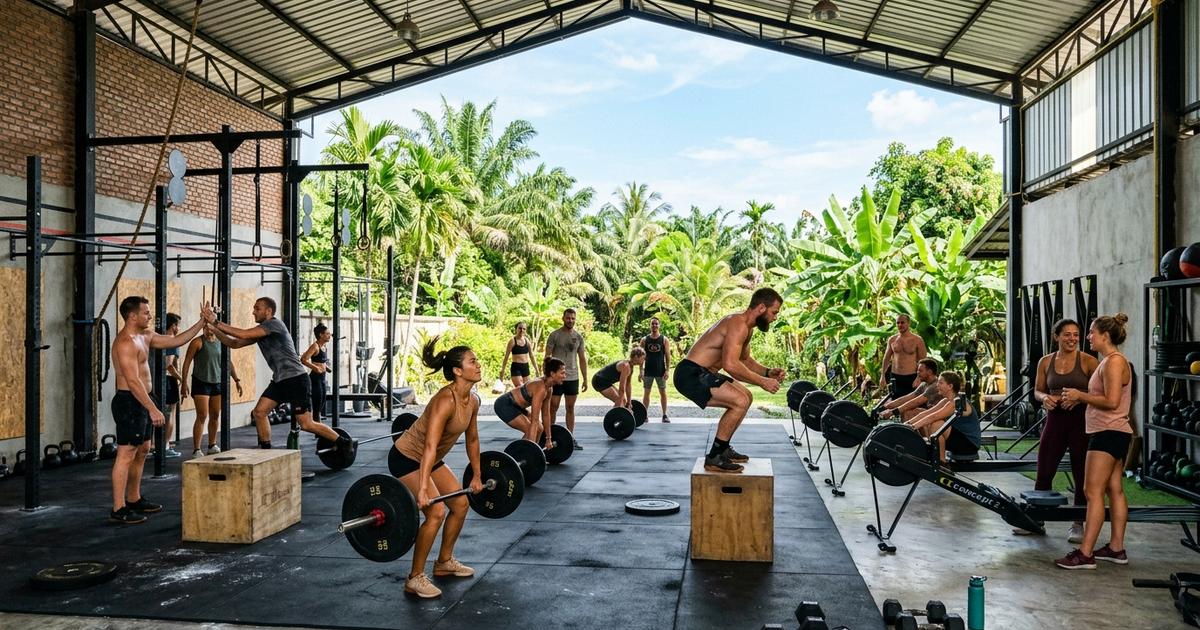
Many of the bigger camps now have their own weight rooms. Tiger Muay Thai has a massive facility, and Sinbi Muay Thai has a good selection of weights right next to the mats. If your camp doesn't have weights, you can do a lot with just resistance bands, pull-up bars, and bodyweight movements.
The long-term view
For most of us, consistency is more important than a "perfect" program. Even two short sessions a week will make you more resilient over time. If you're over 30, this becomes even more important. A strong body handles the impact of Muay Thai much better and keeps you on the mats longer. We have a specific guide for training over 40 if you want more age-specific advice.