Koh Samui Yoga: Retreat vs. Drop-In Studio Guide
Deciding between a structured yoga retreat and flexible drop-in classes in Koh Samui? Here is the honest breakdown of costs, locations, and logistics.
Koh Samui is one of the premier destinations for yoga in Thailand, but booking the wrong type of experience can easily ruin your trip. If you sign up for a strict seven-day retreat when you actually want to ride scooters to beach bars and explore night markets, you will feel trapped. Conversely, if you book a standard resort in Chaweng and plan to commute to daily drop-in classes, you might end up spending more money on expensive island taxis than on the yoga itself.
To get this decision right, you need to understand how Koh Samui is laid out, what things actually cost, and how the daily logistics of a retreat differ from a self-guided trip.
The Drop-In Studio Route: Freedom and Flexibility
Choosing drop-in classes means you book your own accommodation, eat wherever you want, and attend yoga classes when they fit your schedule. This is the best option if you are traveling with a partner who does not practice yoga, or if you want to mix your practice with sightseeing, beach days, and dining out.
The Real Costs of the Drop-In Lifestyle
While drop-in classes offer flexibility, the costs can add up quickly when you factor in transport and accommodation.
- Single Classes: Expect to pay between 400 THB and 600 THB per class.
- Class Passes: Most studios offer packages. A 5-class pass usually costs around 2,000 THB to 2,500 THB, while a 10-class pass runs between 3,800 THB and 4,500 THB.
- Accommodation: A decent mid-range hotel room or bungalow in Lamai or Bophut costs between 1,200 THB and 2,500 THB per night.
- Food: Eating at local Thai restaurants costs 80 THB to 150 THB per meal. Western-style health cafes charge 250 THB to 450 THB for a smoothie bowl and coffee.
Top Drop-In Studios on the Island
If you choose the drop-in route, you should base yourself near one of these established venues.
Marga Yoga (Bangrak): Located on the northern coast, this studio focuses on traditional Hatha and Ashtanga yoga. It is right near the beach, making it easy to grab breakfast nearby after a morning class. It is a great option if you are staying in the Bangrak or Bophut areas.
The Yoga House (Lamai): A quiet space located in the southern part of Lamai. They offer a mix of Yin, Vinyasa, and meditation classes. The atmosphere here is highly community-focused, attracting a mix of expats and long-term travelers.
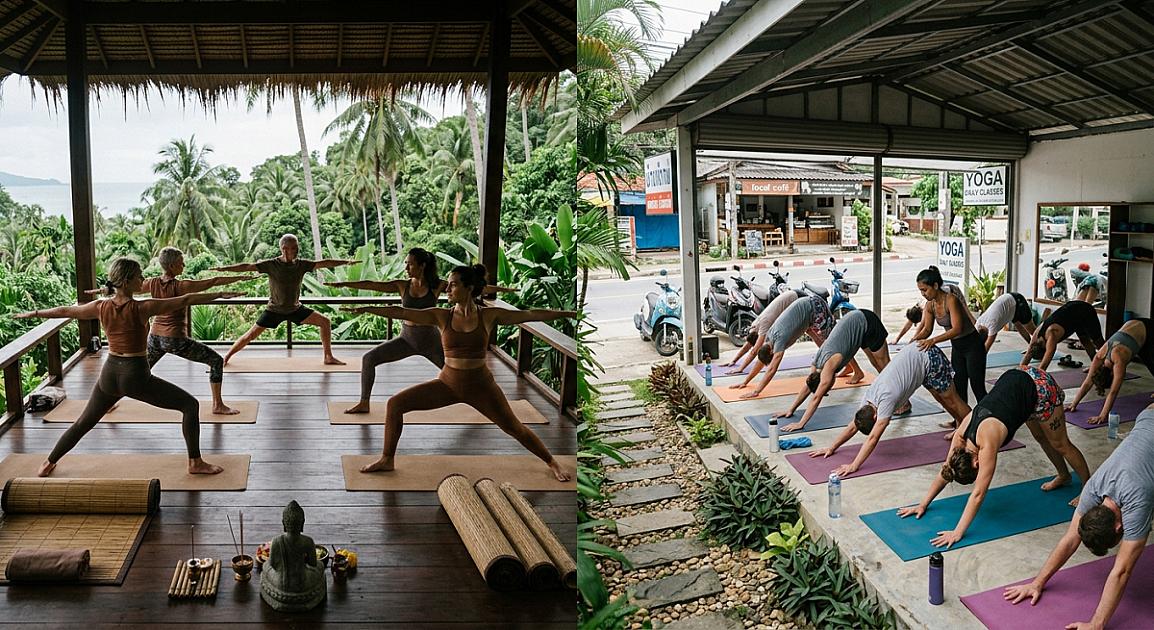
Vikasa Yoga (Chaweng Noi): While Vikasa is primarily a massive retreat center, they open their open-air yoga pavilions to drop-in students. A single class here costs around 600 THB, but you get to practice on a wooden platform directly overlooking the ocean.
The Retreat Route: Structure and Deep Immersion
An all-inclusive retreat is designed to remove all decision-making from your day. From the moment you wake up, your schedule is set: morning meditation, dynamic yoga, healthy meals, afternoon workshops, and evening restorative sessions.
This option is best for those who are feeling burnt out, recovering from a major life change, or wanting to make significant progress in their physical practice without distractions.
The Real Costs of a Retreat
Retreats require a larger upfront payment, but they cover almost all daily expenses.
- Budget Retreats: Simple fan-cooled bungalows with twice-daily yoga and two meals a day start at around 3,500 THB per night.
- Mid-Range Retreats: Modern air-conditioned rooms, fully structured wellness programs, and buffet meals cost between 5,500 THB and 9,000 THB per night.
- Luxury Retreats: High-end wellness resorts offering personalized medical consultations, spa treatments, and private villas can easily exceed 18,000 THB per night.
Top Retreat Centers on Koh Samui
Samahita Retreat (Laem Sor): Located on the quiet southern coast of the island, Samahita is a dedicated wellness center far away from the tourist crowds. There are no nearby nightclubs or busy shopping streets. They focus on classical yoga, breathwork, and fitness. It is highly structured and ideal for serious practitioners.
Vikasa Yoga Retreat (Chaweng Noi): Vikasa offers a more social, lifestyle-oriented retreat experience. Located on the cliffs between Chaweng and Lamai, it offers spectacular ocean views. The food is famously good, focusing on healthy organic buffets. It is a great option for solo travelers looking to meet like-minded people.
Absolute Sanctuary (Choeng Mon): A fitness and wellness resort that specializes in yoga, Pilates reformer classes, and detox programs. It feels more like a boutique hotel than an ashram, offering high levels of comfort and professional instruction.
Transport and Location Logistics: The Deciding Factor
Many travelers underestimate the size of Koh Samui and the cost of getting around. Taxis on the island do not use meters for tourists and charge high flat rates. A single ride from Chaweng to Lamai can easily cost 400 to 500 THB.
If you choose the drop-in route, you must plan your accommodation location carefully.
If you do not want to ride a scooter, stay within walking distance of your chosen studio. Walking along the busy main ring road is hot and dangerous due to the lack of sidewalks.
If you are comfortable riding a scooter, you can rent one for 200 to 300 THB per day. This gives you the freedom to stay in a quiet area like Maenam and ride to classes in Bangrak or Chaweng Noi. However, Koh Samui roads are notoriously steep and slippery when wet, so only choose this option if you are an experienced rider.
For those who want zero transport hassle, the retreat route is superior. Once you arrive at a place like Samahita or Vikasa, you do not need to leave the property. Everything you need is right there.
Which Fits Your Trip?
To make your final decision, look at your travel style and goals.
Choose a Drop-In Studio if:
- You are traveling with a partner or friends who do not practice yoga.
- You want to explore different beaches, restaurants, and nightlife options every day.
- You are on a tight budget and want to control your daily spending by eating at local markets.
- You only want to practice yoga three or four times a week.
Choose a Retreat if:
- You are traveling solo and want to connect with a community of healthy people.
- You are physically or mentally exhausted and want someone else to handle your meals and schedule.
- You want to deepen your practice quickly through twice-daily classes and workshops.
- You want to avoid the stress of navigating island traffic and negotiating taxi fares.
Frequently Asked Questions
How much does a single yoga class cost in Koh Samui?
A single drop-in yoga class on the island typically costs between 400 and 600 THB, depending on the studio and location.
Can I visit retreat centers for single classes?
Yes, some major retreat centers like Vikasa allow outside guests to book single drop-in classes, though booking in advance is highly recommended.
What is the cheapest way to get to yoga studios in Samui?
Renting a scooter for 200 to 300 THB per day is the cheapest option. Otherwise, shared red songthaew trucks along the ring road cost 50 to 100 THB per ride.
When is the worst time for a yoga trip to Koh Samui?
November is the peak monsoon season on Koh Samui. Heavy rain and flooding can disrupt travel and outdoor yoga shalas during this month.