Deciding between a structured yoga retreat and casual drop-in classes on Koh Samui? This guide breaks down the real costs, logistics, and top studios to help you choose.
Koh Samui is one of the top destinations in Thailand for yoga. The island attracts world class teachers, dedicated practitioners, and complete beginners. But when you start planning your trip, you face a major decision. Do you book an all inclusive yoga retreat, or do you stay in a regular hotel and buy drop in classes?
Both options have distinct advantages. A retreat offers structure and deep focus, while drop in classes give you the freedom to explore the island, eat at local night markets, and sunbathe on different beaches. Making the wrong choice can ruin your holiday, either by leaving you feeling trapped in a remote resort or exhausted from driving a scooter across the island in heavy traffic just to get to class.
This guide breaks down the practical realities, actual costs, and top locations for both options on Koh Samui.
The Reality of Koh Samui Geography and Transport
To understand how yoga fits into your trip, you must understand the layout of the island. Koh Samui is large. The main ring road, Route 4169, is roughly 50 kilometers long.
The northeast, including Chaweng, Choeng Mon, and Bophut, is highly developed. This is where you find the most restaurants, beach clubs, and shopping. The south and west coasts, around Lipa Noi and Laem Sor, are quiet, rural, and isolated.
Transport on Samui is expensive compared to Bangkok or Chiang Mai. There is no public train system. Your options are:
- Songthaews: Public passenger trucks. They run along the main ring road during the day. Rides cost between 50 THB and 150 THB depending on the distance. They stop running regularly after dark.
- Scooter Rental: A Honda Click costs about 250 THB to 350 THB per day. This is the cheapest way to get around, but Samui roads are dangerous. Gravel, steep hills, and erratic driving cause frequent accidents.
- Ride Hailing Apps: Grab and Bolt operate on the island, but prices are high. A 15 minute ride can easily cost 300 THB to 400 THB.
If you choose drop in classes, you must factor in these transport costs and travel times. Driving 30 minutes in the afternoon heat to attend a 90 minute Yin class can quickly lose its appeal.
Drop-In Classes: Freedom, Flexibility, and Real Costs
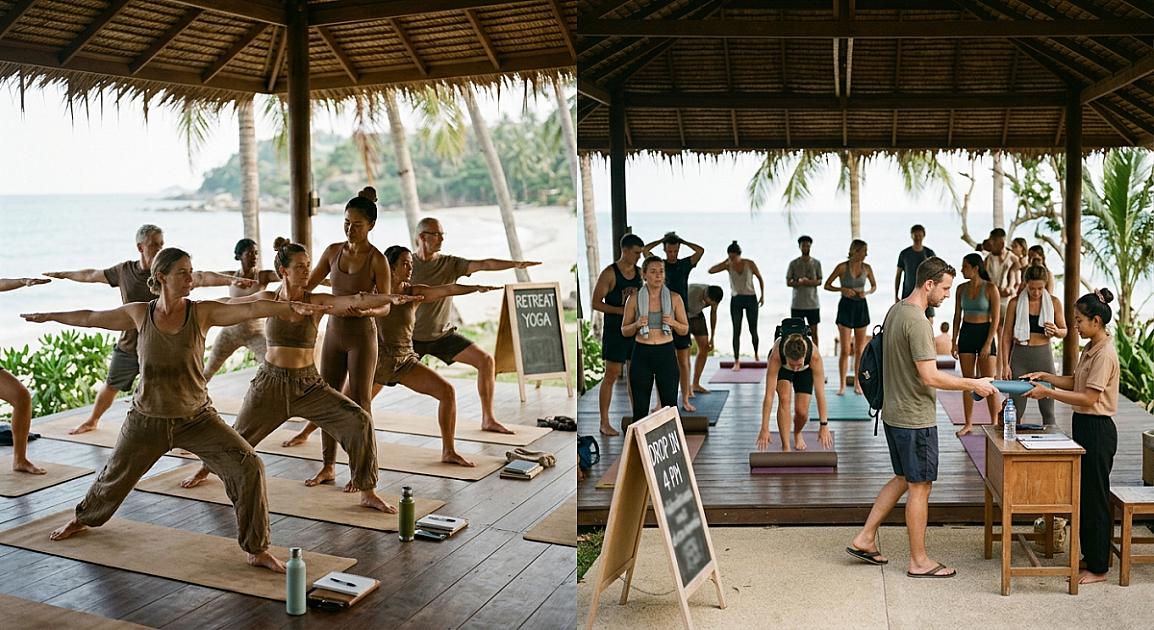
Drop in classes are ideal if yoga is just one part of your holiday. If you want to dive, drink coconuts on the beach, visit temples, and hang out in cafes, this is your best route.
What It Costs
Single drop in classes on Koh Samui generally cost between 400 THB and 600 THB. Most studios offer class packages that lower the cost per session:
- Single Class: 500 THB
- 5-Class Pass: 2,200 THB (valid for one month)
- 10-Class Pass: 4,000 THB (valid for two months)
Top Studios for Drop-In Classes
- Vikasa Yoga (Chaweng Noi): Located on the cliffs between Chaweng and Lamai. The main yoga sala overlooks the ocean. They offer multiple drop in classes daily, ranging from dynamic vinyasa to restorative yoga. The views are spectacular, and they have an excellent onsite healthy restaurant.
- Marga Yoga (Bangrak): A dedicated studio in the north of the island. They focus on traditional Hatha, Ashtanga, and Yin yoga. It is a smaller, community focused space with highly experienced teachers.
- The Yoga House (Lamai): A quiet space offering a mix of yoga, sound healing, and meditation. It has a relaxed, non commercial feel.
Pros of Drop-In Classes
- Complete Freedom: You can practice when you want. If you wake up and want to go on a boat trip instead of doing downward dog, you can.
- Culinary Variety: You are not locked into a resort meal plan. You can eat cheap pad thai at the night markets for 60 THB or visit high end restaurants in Fisherman's Village.
- Accommodation Choice: You can stay in a budget hostel, a private villa, or a luxury beachfront resort.
Cons of Drop-In Classes
- Logistical Stress: You have to arrange your own transport to and from the studio.
- Lack of Community: It is harder to make friends. People arrive just before class starts and leave immediately after.
Yoga Retreats: Immersive, Structured, and All-Inclusive
A yoga retreat is a fully managed experience. You pay one price for your room, meals, daily classes, and workshops. It is designed for those who want to disconnect from daily life, detox, or deepen their practice.
What It Costs
Retreat prices vary wildly depending on the level of luxury.
- Budget/Mid-Range Retreat: 35,000 THB to 55,000 THB per week. This usually gets you a private fan or AC room, two vegetarian meals a day, and two daily yoga classes.
- Luxury/Wellness Retreat: 80,000 THB to 150,000+ THB per week. This includes luxury beachfront accommodation, personalized nutrition plans, spa treatments, and private instruction.
Top Retreat Centers on Koh Samui
- Samahita Retreat (Laem Sor): Located on the quiet south coast. Samahita has been running since 2003 and is a highly respected center. They focus on classical yoga, breathwork, and fitness. The setting is peaceful, right on a quiet beach far away from the tourist crowds.
- Vikasa Retreat (Chaweng Noi): In addition to drop ins, they offer structured retreat programs. You stay in their cliffside bungalows and eat at the Vikasa Life Cafe. It is more social than Samahita due to its location near Chaweng.
- Absolute Sanctuary (Choeng Mon): A fitness and wellness resort. They specialize in yoga, Pilates reformer bootcamps, and detox programs. It feels more like a boutique hotel than a traditional ashram.
Pros of Yoga Retreats
- Zero Decision Fatigue: Your days are planned. You do not have to think about where to eat, how to get to class, or what to do next.
- Deep Progression: Practicing twice a day with the same teachers allows you to make rapid progress in your alignment and strength.
- Instant Community: You eat meals communally with other guests. It is incredibly easy to make friends as a solo traveler.
Cons of Yoga Retreats
- The Samui Bubble: You might not see much of the actual island. Many retreats are self contained, and leaving them requires expensive taxi rides.
- Rigid Schedules: If you want to sleep in or go out for drinks, you will feel like you are wasting the money you spent on the morning program.
The Math: A Direct Cost Comparison
Let us look at a realistic budget for a seven night trip to Koh Samui, comparing a DIY drop in approach with a mid range retreat.
Option A: The DIY Drop-In Week (Mid-Range)
- Accommodation: 7 nights in a decent 3-star hotel in Bophut or Lamai = 14,000 THB
- Yoga: 10-class pass at a local studio = 4,000 THB
- Food: Healthy cafe meals, local dinners, and fresh coconuts = 8,000 THB
- Transport: Scooter rental for 7 days + fuel = 2,000 THB
- Total: 28,000 THB
Option B: The All-Inclusive Retreat (Mid-Range)
- Retreat Package: 7 nights at a dedicated retreat center (including room, all meals, twice daily yoga, and workshops) = 48,000 THB
While the DIY option is cheaper, the 20,000 THB difference pays for convenience, community, and expert guidance. If you do not want to ride a scooter or deal with taxis, that price difference is often worth it.
How to Choose Based on Your Travel Style
Choose Drop-In Classes If:
- You are traveling with a partner or friends who do not practice yoga.
- You want to explore the island, visit different beaches, and try different restaurants.
- You are on a tight budget and want to control your daily spending.
- You are a digital nomad who needs to work several hours a day. Retreat schedules leave little time for deep work, and retreat Wi-Fi can be spotty in communal areas.
Choose a Retreat If:
- You are burnt out and need to recover from a stressful job.
- You are traveling solo and want to meet like minded people in a safe environment.
- You want to establish a daily meditation or pranayama practice under close supervision.
- You want to detox and avoid the temptation of Samui's nightlife.
Practical Samui Yoga Tips
If you choose drop in classes, buy a local SIM card at the airport or a 7-Eleven. You will need it to book rides via Bolt or Grab.
Pack light, breathable clothing. The humidity on Koh Samui is intense, especially from April to October. Heavy cotton t-shirts will get soaked instantly. Most studios provide mats and props for free, but you may want to bring a travel yoga towel for grip.
Drink plenty of water. You can buy electrolyte powder packets at any local pharmacy or 7-Eleven for about 6 THB. Mix one with water after a hot vinyasa class to avoid dehydration headaches.