A practical guide to finding the right Muay Thai camp on Koh Samui, covering costs, locations, training styles, and how to avoid common tourist traps.
Koh Samui has transitioned from a quiet backpacker island into a major hub for fitness tourism. Alongside yoga retreats and health food cafes, Muay Thai camps have multiplied across the island. You can now find everything from raw, tin-roofed fighter camps to air-conditioned fitness resorts.
Choosing the wrong gym can ruin your training experience. You might end up paying premium prices for a crowded class where you only get one round of pad work, or you might find yourself in a hardcore fighter camp when you just wanted a basic workout. Finding the right gym requires looking at location, training style, trainer ratios, and real costs.
Geography and Transport Costs
Koh Samui is large, and getting around is expensive. Taxis do not use meters for tourists and will easily charge 400 to 600 THB for a ten-minute drive. Most people rent a scooter, usually a Honda Click, which costs between 200 and 250 THB per day. If you do not ride a scooter, you must rely on songthaews, which are shared pickup trucks running along the main ring road, or ride-hailing apps like Grab and Bolt, which are still pricier than in Bangkok.
Because of these transport costs, you should choose a gym close to where you stay.
Chaweng and Lamai are the main tourist areas on the east coast. They host the largest and oldest gyms. The beaches are excellent, and there are plenty of restaurants, but accommodation is more expensive.
Bophut, Maenam, and Choeng Mon in the north are quieter and more relaxed. Gyms here tend to be slightly smaller, but they offer a more community-focused environment. Accommodation in the north is often cheaper, making it ideal for long-term stays.
Traditional Camps vs. Modern Hybrid Gyms
Gyms on the island generally fall into two categories.
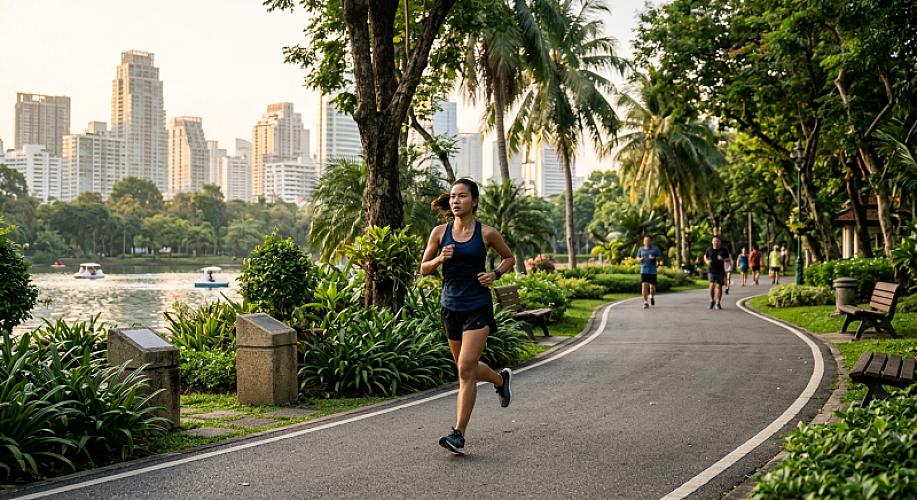
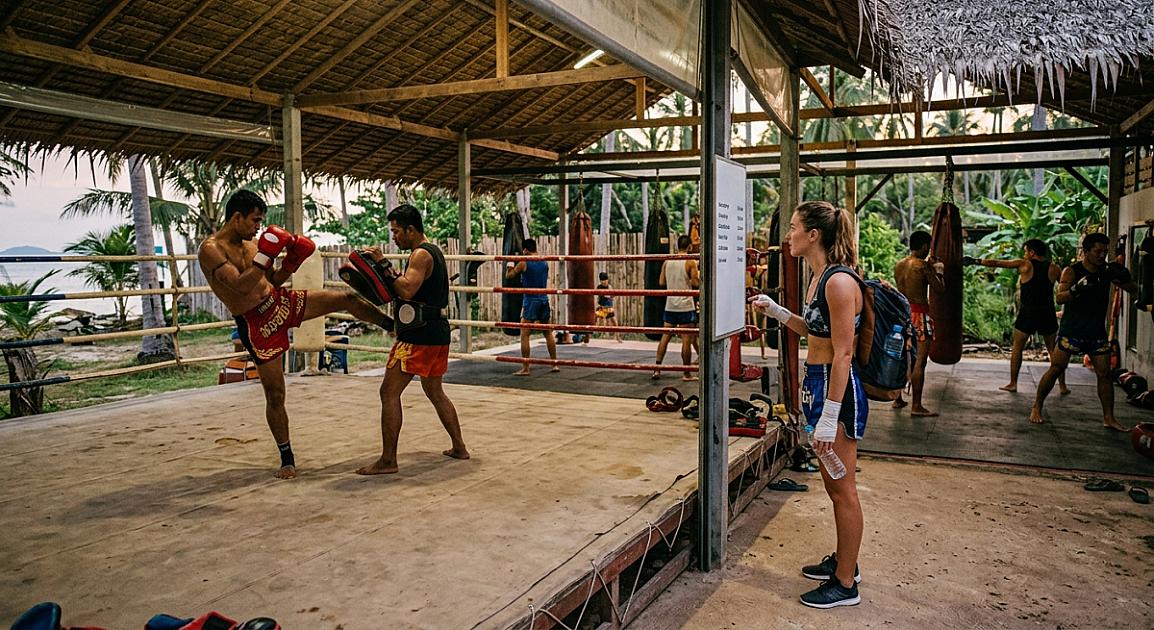
Traditional fighter camps focus on preparing active fighters for stadium bouts. The training is repetitive, intense, and highly focused on conditioning. You will run on the hot asphalt roads before the session, followed by heavy bag work, pad work, clinching, and sparring. The facilities are basic. They are open-air, cooled only by fans, and smell of Thai liniment.
Modern hybrid gyms cater to fitness tourists, expats, and beginners. They offer structured group classes, clean facilities, and sometimes air-conditioned strength and conditioning areas. The trainers here are used to working with people who have no intention of fighting. They focus on technique, weight loss, and general fitness.
The Real Cost of Training
Muay Thai pricing on Koh Samui is slightly higher than in northern Thailand, but comparable to Phuket. Here is what you should expect to pay in Thai Baht (THB):
- Single Drop-in Session: 300 to 500 THB.
- Weekly Pass (Twice daily training): 1,800 to 2,500 THB.
- Monthly Pass (Twice daily training): 6,000 to 10,000 THB.
- One-on-One Private Session: 800 to 1,200 THB per hour.
Many gyms offer packages that include accommodation and food. A monthly package with a basic fan room and two meals a day usually starts around 25,000 THB and can go up to 60,000 THB for luxury air-conditioned villas with meal plans.
How to Evaluate a Gym
Do not book a monthly package online before visiting the gym in person. Spend your first few days on the island doing drop-in sessions at two or three different places. When you visit, evaluate these specific factors.
Trainer-to-Student Ratio
In a poor-quality class, one trainer might try to manage ten students. You will spend most of your time hitting a heavy bag while the trainer looks at their phone. In a high-quality gym, the ratio is one trainer to three or four students. This ensures you get at least three to four rounds of individual pad work during a two-hour session.
Equipment and Cleanliness
Muay Thai gyms are hot and humid, which is a breeding ground for skin infections like ringworm and staph. Look at the mats. Are they wiped down between sessions? Are the communal gloves dry, or are they soaking wet with the sweat of previous students? It is always best to buy your own hand wraps and gloves. You can buy high-quality Thai brands like Fairtex, Twins, or King at gym shops for 1,800 to 2,500 THB.
The Training Schedule
Most gyms run two sessions a day. The morning session starts around 7:30 AM or 8:00 AM. The afternoon session starts around 4:00 PM. The midday heat on Koh Samui is intense. Do not attempt to train between 11:00 AM and 3:00 PM unless the gym has an air-conditioned space. The humidity will drain your energy quickly, and you risk heat exhaustion.
Top Gyms on Koh Samui
Here are four established gyms on the island, each catering to a different type of trainee.
Yodyut Muay Thai (Choeng Mon / Bophut)
Located in the north, Yodyut is highly regarded for its technical instruction. The trainers are patient and excellent at breaking down complex movements for beginners, but they also train active stadium fighters. The atmosphere is friendly and less intimidating than some of the older camps.
Punch It Gym (Lamai)
This is a Swiss-run gym that focuses heavily on organization and cleanliness. It has a highly structured curriculum, making it perfect for beginners and intermediate students who want to track their progress. They have an excellent onsite gear shop and clean facilities.
Superpro Samui (Chaweng)
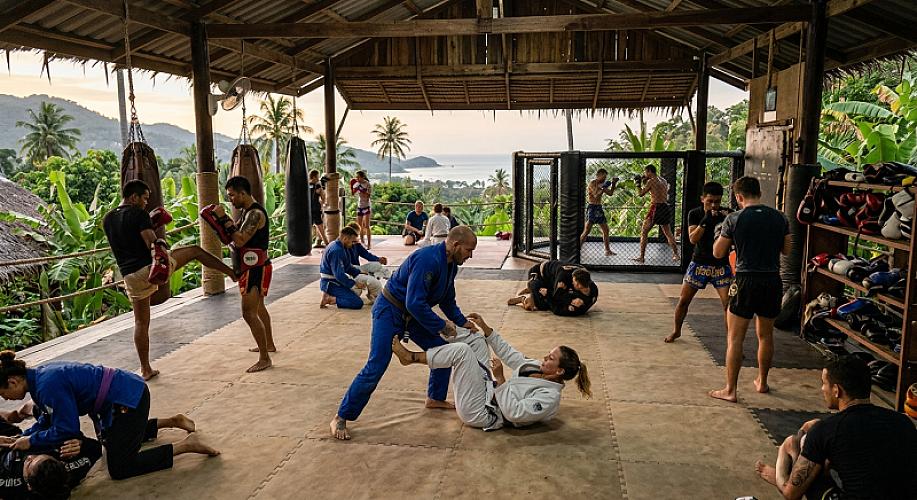
Superpro is a massive fitness resort. It offers Muay Thai, Mixed Martial Arts (MMA), Brazilian Jiu-Jitsu (BJJ), and a fully equipped Western-style fitness gym. They have an onsite swimming pool and various accommodation options. This is the best choice if you want a complete fitness holiday rather than just pure Muay Thai.
Lamai Muay Thai Camp (Lamai)
Located on a steep hill in Lamai, this is an old-school camp affiliated with the World Muay Thai Council (WMC). It has a raw, traditional feel and is known for intense conditioning. If you want to push your physical limits and train alongside professional fighters, this is the place to go.
Surviving the Climate
If you are arriving from a colder climate, your body will need at least a week to adjust to the heat and humidity of Koh Samui.
Do not try to complete the full two-hour session at maximum intensity on your first day. Take breaks, sit down when you feel dizzy, and drink plenty of water. You can buy electrolyte powder packets at any local 7-Eleven for 5 to 10 THB. Mix one packet with water during or after your session to prevent cramping and dehydration.
Frequently Asked Questions
Do I need to be in shape to start training Muay Thai on Koh Samui?
No. Gyms welcome complete beginners of all fitness levels. Trainers will adjust the intensity of the pad work and conditioning to match your current physical ability.
Should I buy my own gear before arriving in Thailand?
No. High-quality Muay Thai gear from brands like Fairtex and Twins is much cheaper in Thailand. You can buy everything you need directly at the gyms or local shops on the island.
Can I train Muay Thai during the rainy season on Koh Samui?
Yes. Most gyms are open-air with large roofs, so training continues during heavy rain. The rainy season, from October to December, is actually cooler and more comfortable for training.
Is accommodation included in the gym prices?
Not automatically. Gyms offer training-only rates, but most have packages that bundle training, accommodation, and sometimes meals for a discounted monthly rate.