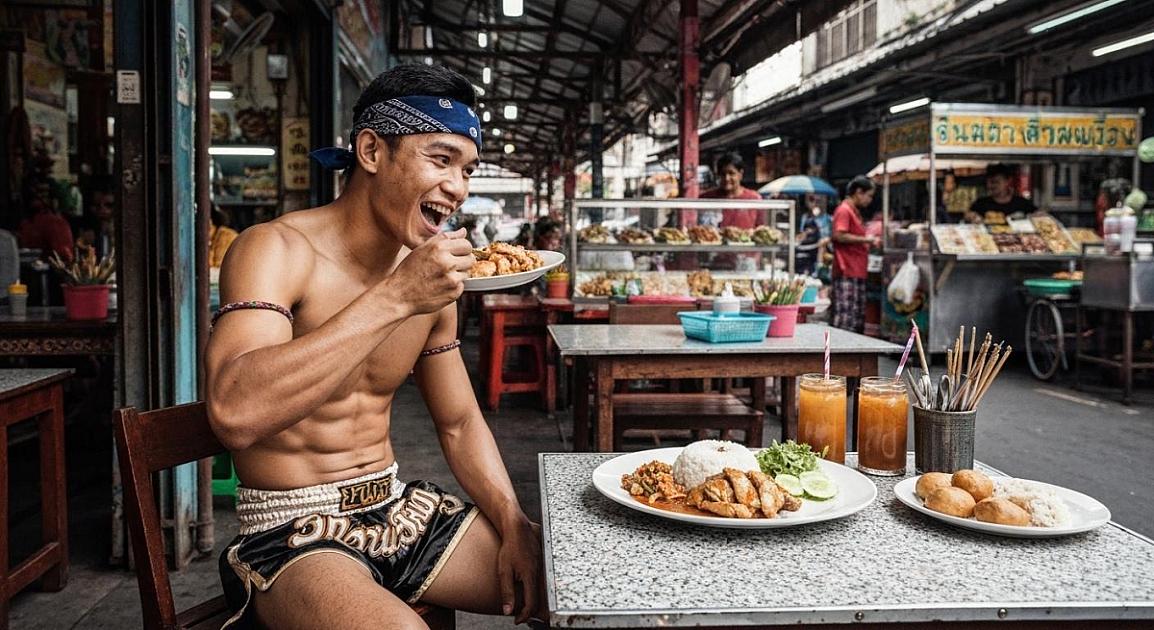
What to Eat When Training Muay Thai in Thailand
Training Muay Thai in Thailand changes your nutritional needs in ways that are not immediately obvious. The heat alone increases fluid and electrolyte requirements significantly. Add two training sessions a day, heavy ba
Training Muay Thai in Thailand changes your nutritional needs in ways that are not immediately obvious. The heat alone increases fluid and electrolyte requirements significantly. Add two training sessions a day, heavy bag work and sparring, and you are burning more than most people account for. Getting the food side right makes a real difference to how you feel and how quickly you recover.
\n\nThe Heat Changes Everything
\n\nBefore getting into specific foods and timing, it is worth addressing the heat. Training in 30+ degree temperatures with high humidity means you are losing fluid and salt at a much higher rate than you would in a temperate climate. Many people arriving in Thailand underestimate this and end up feeling flat, headachy and slow after the first week, not from overtraining, but from chronic low-level dehydration.
\n\nA useful benchmark: if your urine is not pale yellow by mid-morning, you are already behind on fluids. Drink water consistently throughout the day, not just during training. Coconut water (available fresh from street stalls for around 30-40 THB per coconut) is genuinely useful here as it contains natural electrolytes and is easier to keep down than plain water when you are already hot and working hard.
\n\nAvoid training within two hours of a heavy meal. In the heat, digestion and intense exercise genuinely compete for blood flow, and training on a full stomach in 30-degree weather leads to nausea much faster than it would at home.
\n\nPre-Training Meals
\n\nFor morning sessions (typically starting at 7-8am), most experienced fighters eat something light 60-90 minutes beforehand. The goal is to have enough glycogen available without having a full stomach that slows you down.
\n\nThai breakfast options that work well before training include: khao tom (rice soup), which is easy to digest and widely available at local restaurants from around 40-60 THB. It is plain, not heavy, and provides enough carbohydrate to get through a session. Sticky rice with a simple protein (grilled chicken or a boiled egg) is another option available at most morning markets for 40-80 THB total.
\n\nAvoid coconut milk-heavy dishes before training. Pad Thai with coconut milk, curries and any fried rice cooked with a lot of oil sit heavily and do not serve you well before an intense session. This cuts out quite a few popular Thai breakfast options at tourist-facing restaurants.
\n\nIf you prefer something Western and can find it, a banana with peanut butter or oats with fruit covers the same bases at a similar calorie count.
\n\nPost-Training Recovery
\n\nAfter a session, you have a window of roughly 30-60 minutes where protein and carbohydrate uptake is more efficient. This does not need to be a precise science, but eating something substantial within this window noticeably accelerates recovery when you are training twice a day.
\n\nThe classic Thai post-training meal is khao man gai: rice cooked in chicken broth with poached chicken and a ginger-garlic sauce on the side. It is ubiquitous across Thailand, usually costs 50-70 THB at a local restaurant, and provides a clean combination of protein and carbohydrate. The broth also helps with rehydration. It is one of the most practical recovery meals in the country and Thai fighters eat it regularly.
\n\nKao pad (fried rice with egg and a protein) works as a recovery meal, though it is higher in fat than khao man gai due to the oil used in cooking. For most people training twice a day, this is not a serious concern since total calorie needs are high anyway.
\n\nIf you want a protein supplement, protein powder is available in Thailand at most health stores and pharmacies. Brands like XPN, Optimum Nutrition and local alternatives are stocked in Tops Market, Big C and most sports nutrition shops. Expect to pay 900-2,500 THB for a standard container depending on brand and size.
\n\nThai Foods That Work Well for Training
\n\nGai yang (Thai grilled chicken) from street stalls is one of the best sources of lean protein you will find at low cost. A half-chicken with sticky rice at a market stall costs 60-100 THB and provides a solid 35-45g of protein depending on size. The marinade (lemongrass, garlic, coriander root) is not a problem nutritionally.
\n\nTom yum with seafood or chicken is a high-protein, lower-calorie option that also provides herbs with anti-inflammatory properties. At a local restaurant this costs 80-150 THB. It is worth knowing that tom yum in Thailand does not typically contain coconut milk (that is tom kha), so it is lighter than many expect.
\n\nSom tam (green papaya salad) is high in vitamins and reasonably low in calories. At a market stall it costs 40-60 THB. It is spicy, which is fine, but the fermented fish sauce (pla ra) version used in Isaan-style som tam can upset stomachs not accustomed to it. If you are not used to it, order the standard version with regular fish sauce.
\n\nPad kra pao (Thai basil stir fry) with minced chicken or pork and a fried egg over rice is a high-protein, fast-cooking option. Available at almost any local restaurant for 60-80 THB, it is practical when you need something quick between sessions.
\n\nWhat to Be Careful With
\n\nFruit intake: Thailand has extraordinary fruit, and it is easy to eat a lot of it. Most Thai fruits are high in sugar: mango, papaya and particularly durian. Eating large amounts of fruit as a training snack is not ideal if you are also eating substantial rice at each meal. A serving of fruit after training is fine; eating fruit as your primary carbohydrate source while training hard is not enough.
\n\nChang and Leo beer are everywhere and social drinking at Muay Thai camps is more common than at most gyms. Alcohol genuinely impairs recovery and sleep quality, both of which matter more than usual when training twice daily. One or two drinks in the evening after a hard training day is not catastrophic, but making it a nightly habit will slow your progress noticeably.
\n\nStreet food hygiene varies. Stomach issues are common in the first week in Thailand regardless of where you eat, as your gut adjusts to different bacteria and spice levels. This is less a food choice issue and more a matter of time. That said, avoiding raw shellfish and anything that looks like it has been sitting out in the heat for hours is sensible basic caution.
\n\nCheck out our Phuket training guide for places to stay near great local food stalls.
Practical Meal Planning
\n\nIf you are training twice a day at a Muay Thai camp, your approximate daily intake needs are higher than you might expect. For a 75kg person training six hours a week, expect to need 2,800-3,500 calories daily depending on size and session intensity.
\n\nMost camps include meals in their package price, and the food provided is usually khao man gai or similar recovery-appropriate Thai food served communally after sessions. If your camp does not include food, eating at local restaurants rather than tourist-facing places will cost you 200-400 THB per day for three meals, compared to 600-1,200 THB at a tourist restaurant. The food at local places is also better for your training.
\n\nHydration target: 3-4 litres of water daily on training days, plus electrolytes if you are sweating heavily. A packet of electrolyte powder (Hydralyte or similar) dissolved in water is useful during particularly intense sessions or on especially hot days. These are available at most pharmacies for 20-50 THB per sachet.
Combine your nutrition with the right training. Check out our Phuket guide and the Rawai vs Chalong guide for location-specific tips.
The RoamFit editorial team researches and maintains Thailand's fitness directory. We combine verified Google data, on-the-ground knowledge of gyms, Muay Thai camps and studios, and hands-on testing to help expats, health tourists and locals train anywhere in the country. Every guide is fact-checked against the listings in our directory.