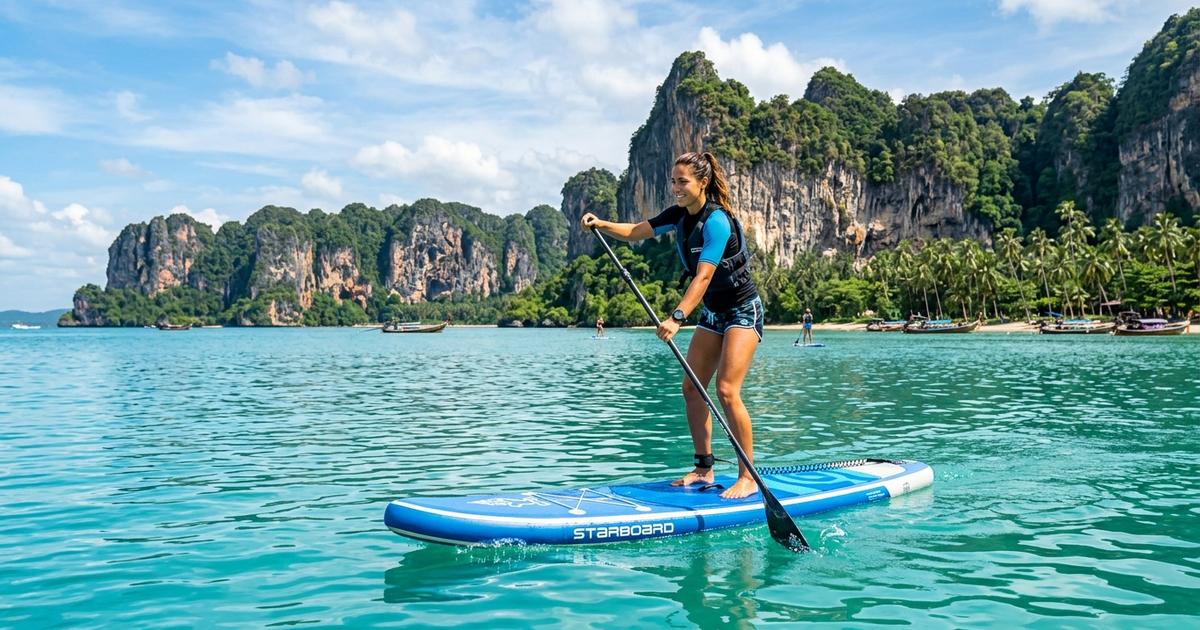
Water Sports as Fitness in Phuket: Surfing, SUP, and Kitesurfing
Phuket has ocean access on three sides, which should make it an obvious choice for water sports. The reality is more nuanced. The island's coastline changes dra...
Phuket has ocean access on three sides, which should make it an obvious choice for water sports. The reality is more nuanced. The island's coastline changes dramatically with the seasons, and the sports that work in November are often unavailable (or actively dangerous) in July. Getting the seasonal timing right is the most important factor in planning water sports fitness training in Phuket.
\n\nThe Seasons and What They Mean
\nPhuket has two distinct seasons that determine what is possible on the water. The dry season, roughly November through April, delivers calm seas on the west coast (Patong, Kata, Karon, Kamala, Surin) with manageable wave conditions. This is when the island looks like the pictures.
\n\nThe monsoon season, May through October, brings strong southwest winds, important swell on the west coast, and rough conditions at most beaches. The east coast (Ao Po, Koh Maprao area) is more sheltered during monsoon. This weather pattern is exactly what creates the conditions for surfing and kitesurfing, but it also makes casual SUP and swimming genuinely risky in the same areas.
\n\nSurfing
\nPhuket is not a surfing destination in the Bali or Hawaii sense. The waves are real during monsoon, particularly at Kalim beach (just north of Patong) and Kata beach, but they are inconsistent and short-period swells that intermediate and advanced surfers would find unremarkable. For beginners, this is actually fine: you do not need perfect waves to learn, and the beach breaks at Kata during May-September provide exactly the kind of soft, forgiving waves that make learning possible.
\n\nSurf rentals and lessons are concentrated around Kata beach. Board rentals run 200-400 THB per hour for a basic longboard or foam board. Lessons for complete beginners are widely available at 1,200-2,000 THB for a 1.5-2 hour group lesson including board and instruction. Solo lessons run 2,500-4,000 THB.
\n\nFor fitness purposes, beginner surfing is more exhausting than it looks. Paddling out, positioning for waves, and repeatedly popping up from a prone position work the back, shoulders, and hip flexors hard. Two hours of beginner surf lessons will leave most people significantly more tired than two hours of gym work.
\n\nStand-Up Paddleboarding (SUP)
\nSUP is the most accessible water sport for fitness purposes in Phuket because it works during the dry season when most visitors are on the island, and the conditions required are gentler than surfing or kitesurfing.
\n\nThe Nai Harn Lake area in the south of the island is a consistent location for SUP training, as it is sheltered from ocean swell. Several operators run board rentals and lessons there. Equipment hire runs 400-600 THB per hour for a standard touring board. Nai Harn beach itself during dry season mornings (before the trade winds pick up around 10-11am) also works for SUP.
\n\nKamala beach and Surin beach on the west coast are calm enough for SUP training during dry season mornings. By early afternoon, even during calm months, the wind picks up enough to make paddling significantly harder.
\n\nFrom a fitness standpoint, SUP is particularly effective for core training. Maintaining balance on the board while paddling engages the entire core continuously in a way that land-based core training does not replicate. An hour of steady-state paddling is roughly equivalent to 45-50 minutes of moderate rowing from a cardiovascular load perspective.
\n\nKitesurfing
\nKitesurfing is where Phuket becomes genuinely competitive as a destination. The monsoon winds from May through October create consistent conditions for learning and progressing in the sport, and there are several established kite schools operating on the island.
\n\nLearning Locations
\nThe primary kite learning spots in Phuket are at Nai Yang beach in the north (sheltered bay with relatively consistent wind and shallow water) and Karon beach (which sees good wind during monsoon). Nai Yang is generally considered the better beginner location because the bay geometry creates more forgiving conditions when you are still working out kite control.
\n\nSchools and Pricing
\nKiteboarding Asia (Nai Yang) is one of the more established schools, along with several other IKO-certified operators in the same area. A standard beginner learn-to-kite package runs 10,000-15,000 THB for a 9-12 hour course spread over 3-4 days. This typically takes a complete beginner to independent riding on flat water. For people who already know how to bodyboard with a trainer kite, the learning curve is faster.
\n\nRental after certification runs 2,000-2,500 THB per session (typically 2-3 hours on the water) including equipment.
\n\nFitness Demands
\nKitesurfing is physically demanding in ways that surprise beginners. The early stages involve a lot of body dragging through the water, which works the entire upper body against resistance. Once riding, continuous edge control and jumps engage leg muscles in sustained isometric and explosive ways. A two-hour kite session in good conditions is serious physical training.
\n\nWater Sports and the Tourist Double-Price Problem
\nPhuket's tourist pricing on water sports is real. At beach-front operations near major beaches, prices for the same board rental or lesson can run 30-50% more than at operations slightly removed from the tourist strip. For occasional sessions, this is minor. For regular training (multiple sessions per week), the difference adds up. Finding operators who cater to regular trainees rather than one-time tourists, and negotiating monthly or weekly rates, makes financial sense if you are planning extended training.
\n\nSafety and Red Flags
\nPhuket has had a consistent problem with beach safety incidents, particularly at beaches without lifeguard coverage during monsoon. Red flags on Phuket beaches are not decorative: they indicate conditions that have injured and killed people, including experienced swimmers. The flags are taken down when conditions are safe and put back up quickly when they change. If a red flag is up, do not enter the water for swimming or paddling, regardless of what other people around you are doing.
\n\nFor kitesurfing, only train at established schools with certified instructors. Attempting to teach yourself to kite, or following informal instruction from a friend, creates risk for both the learner and everyone else on the beach.
Related: track your progress with our guide to fitness apps in Thailand and fuel your training with budget-friendly nutrition tips.
See our guide on eating for fitness and finding coworking spaces in Phuket.
Stay active with running clubs or check our prenatal fitness guide.
The RoamFit editorial team researches and maintains Thailand's fitness directory. We combine verified Google data, on-the-ground knowledge of gyms, Muay Thai camps and studios, and hands-on testing to help expats, health tourists and locals train anywhere in the country. Every guide is fact-checked against the listings in our directory.