Eating for Fitness in Thailand Without Tourist Prices
Thailand is cheap for food if you eat like a local. It becomes significantly less cheap once you cross into hotel restaurant territory, health food cafes on bea...
Thailand is cheap for food if you eat like a local. It becomes significantly less cheap once you cross into hotel restaurant territory, health food cafes on beach roads, or fitness-branded meal prep services in Phuket. The gap between 60-baht pad kra pao at a market stall and 280-baht grilled chicken with quinoa at a health cafe is real, and for people training regularly, the food bill matters as much as the gym fee.
\n\nProtein in Thailand: Where to Get It
\nThailand actually makes high-protein eating easier than many countries, once you know where to look. The default cooking style uses chicken, pork, fish, and eggs in nearly every dish. The problem is that tourist-area restaurants use less meat and more rice/noodle filler than the same dishes prepared for Thai customers. The solution is to eat at places where Thais eat.
\n\nMarket Food
\nThe morning wet markets in every Phuket area (Talad Kaset in Phuket Town, Chalong market, the fresh market behind Nai Harn beach) sell cooked food stalls alongside raw produce. Grilled chicken (gai yang) from a market stall typically runs 40-60 THB for a quarter chicken. A plastic bag of rice is 10 THB. This is the cheapest way to eat adequate protein in Thailand and the quality is often better than restaurant equivalents because market food turns over fast.
\n\nWhole roasted chickens at Thai fresh markets cost around 180-220 THB and will last two meals for one person, or serve as the protein for two people at one meal. This is the most cost-efficient protein source available in Phuket outside of cooking yourself.
\n\nEggs
\nEggs are cheap, consistent, and available everywhere. A tray of 30 eggs at the market or from Lotus/Big C costs around 130-150 THB. A two-egg omelette at a market stall costs 30-40 THB. Scrambled eggs with pork and basil (khai jeow) at a stall is 50-60 THB and provides more protein than most gym-branded "protein breakfast" options at three times the price.
\n\nConvenience Stores
\n7-Eleven and Family Mart in Thailand have better food options than their Western equivalents. The protein relevant items: boiled eggs (20 THB for two), steamed chicken rice from the hot counter (45-60 THB), Japanese-style chicken sandwiches (35-45 THB), and protein-branded products including RTD protein drinks from Whey+ or local Thai brands (50-90 THB). The steamed rice from the 7-Eleven hot counter is a reasonable meal when you are between training sessions and need something fast.
\n\nCarbohydrates Around Training
\nRice is the baseline carbohydrate in Thailand and it is fine for training nutrition. The concern about "white rice being bad" does not hold up well when the rest of your diet is vegetables and lean protein, and when you are training twice a day. Thai jasmine rice has a higher glycemic index than brown rice, but for people doing high-intensity training, this is not a meaningful problem.
\n\nFruit is abundant and cheap. A papaya or a watermelon cut to order at a market stall costs 30-50 THB. Bananas come in varieties (kluai khai, the small yellow ones, and kluai nam wa, the larger ones) and cost almost nothing: 10-20 THB for a bunch. Mangoes in season (roughly March through May) are available everywhere for 30-60 THB per kilo.
\n\nWhat to Cook If You Have a Kitchen
\nServiced apartments and most long-term rental accommodation in Phuket comes with at least a small kitchen. If you have access to a stove and a rice cooker (or even just a microwave), the cost of eating well drops substantially.
\n\nA grocery run at Makro (the Thai equivalent of a bulk food store, with locations near Thalang in Phuket) or at Lotus on Chalong bypass gives access to whole chicken (70-90 THB per kilo), eggs, vegetables, tofu (20-30 THB per block), and canned tuna (30-40 THB per can) at prices significantly below prepared food costs. Weekly food spending for one person eating for fitness can come in at 1,500-2,500 THB if cooking rather than eating out for every meal, compared to 5,000-8,000 THB or more for prepared food from restaurants and health food cafes.
\n\nWhat Thai Food Does Well for Training
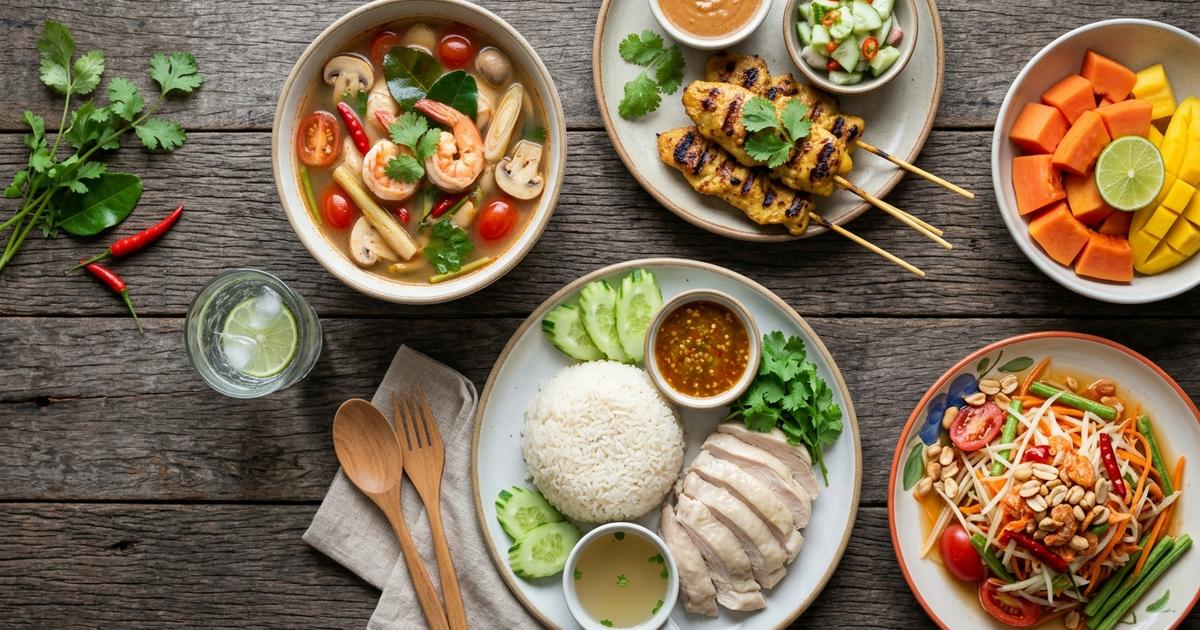
\nSeveral Thai dishes work particularly well for training nutrition. Tom yum soup (protein from shrimp or chicken, light on fat, warm and hydrating) is an excellent post-training meal. Larb moo (minced pork salad with herbs) is high protein, moderate carb, and available at most Northern Thai and Isan restaurants across Phuket. Khao man gai (poached chicken and rice) is the cleanest available prepared protein-and-carb combination in Thai cooking , simple, digestible, and available at almost every food court and market.
\n\nPad kra pao (stir-fried basil with your choice of meat) is another reliable option. Ask for "pet nit noi" (a little spicy) if you want some heat but are not fully heat-adapted yet. A standard portion with rice is 60-80 THB at a local stall.
\n\nWhat to Avoid
\nThe obvious ones: fried food at tourist spots (expensive and high in low-quality oil), sugary Thai drinks (iced tea and Thai coffee with condensed milk have substantial sugar content), and the health food restaurant markup trap. A place calling itself a "fitness cafe" or "health kitchen" in Patong or Kata will typically charge 250-400 THB for a meal that delivers the same macros as a 70-THB market stall plate nearby, just with better Instagram presentation.
\n\nAlcohol and training do not mix well anywhere, but Thailand's cheap beer pricing makes it an easy habit to slip into. A Chang or Singha at a bar runs 80-120 THB; at 7-Eleven, a can is 45-60 THB. If you are training seriously, the impact of regular alcohol on sleep quality, recovery, and body composition is the same in Thailand as anywhere else.
\n\nSupplements in Thailand
\nProtein powder and basic supplements are available in Thailand but more expensive than ordering online from Europe or the US. A 2kg bag of whey protein from a Thai brand (like XTrainer or Amix distributed locally) runs 1,500-2,500 THB. International brands available at Watsons, GNC, or supplement shops in Big C/Lotus are pricier still. If you use protein supplements regularly, bringing a supply from home or ordering on Lazada from the cheaper Thai brands is the practical approach.
\n\nCreatine, basic vitamins, and fish oil are readily available at Boots Pharmacy, Watsons, and supplement shops at reasonable prices. Electrolyte products (important given the sweating volume from training in Thai heat) are widely available, with local Thai oral rehydration sachets at pharmacies being the cheapest option at 15-25 THB per sachet.
Related: learn about surfing and SUP in Phuket or see which fitness apps work best in Thailand.
Don't forget to join a running club or find a coworking space for your remote work.
Discover water sports for fitness and the best apps to track your progress.
The RoamFit editorial team researches and maintains Thailand's fitness directory. We combine verified Google data, on-the-ground knowledge of gyms, Muay Thai camps and studios, and hands-on testing to help expats, health tourists and locals train anywhere in the country. Every guide is fact-checked against the listings in our directory.