Rock Climbing in Thailand: Fitness Benefits, Top Spots, and How to Get Started
Rock climbing works muscle groups that most gym routines completely miss. Back, forearms, shoulders, core, legs: all of it gets used in ways that pulling a dumbbell never quite replicates. Thailand, specifically the area
Rock climbing works muscle groups that most gym routines completely miss. Back, forearms, shoulders, core, legs: all of it gets used in ways that pulling a dumbbell never quite replicates. Thailand, specifically the area around Krabi, is one of the better places on earth to climb outdoor limestone, which makes it worth taking seriously as a fitness activity while you are here.
Why Climbing Works as Fitness Training
The honest case for climbing as fitness is not that it replaces everything else. Cardio capacity comes from running and swimming more efficiently. But climbing develops grip strength, upper back thickness, and pulling power to a degree that most gym-goers never reach. After two weeks of climbing six pitches a day, your forearms and lats will feel the difference.
It is also problem-solving in a way that most fitness activities are not. Every route requires reading the wall, deciding on foot placement, managing body position: there is mental engagement that keeps it from feeling like work. That tends to translate into people actually doing it consistently rather than skipping sessions.
Outdoor Climbing: Krabi and Railay
Railay Beach
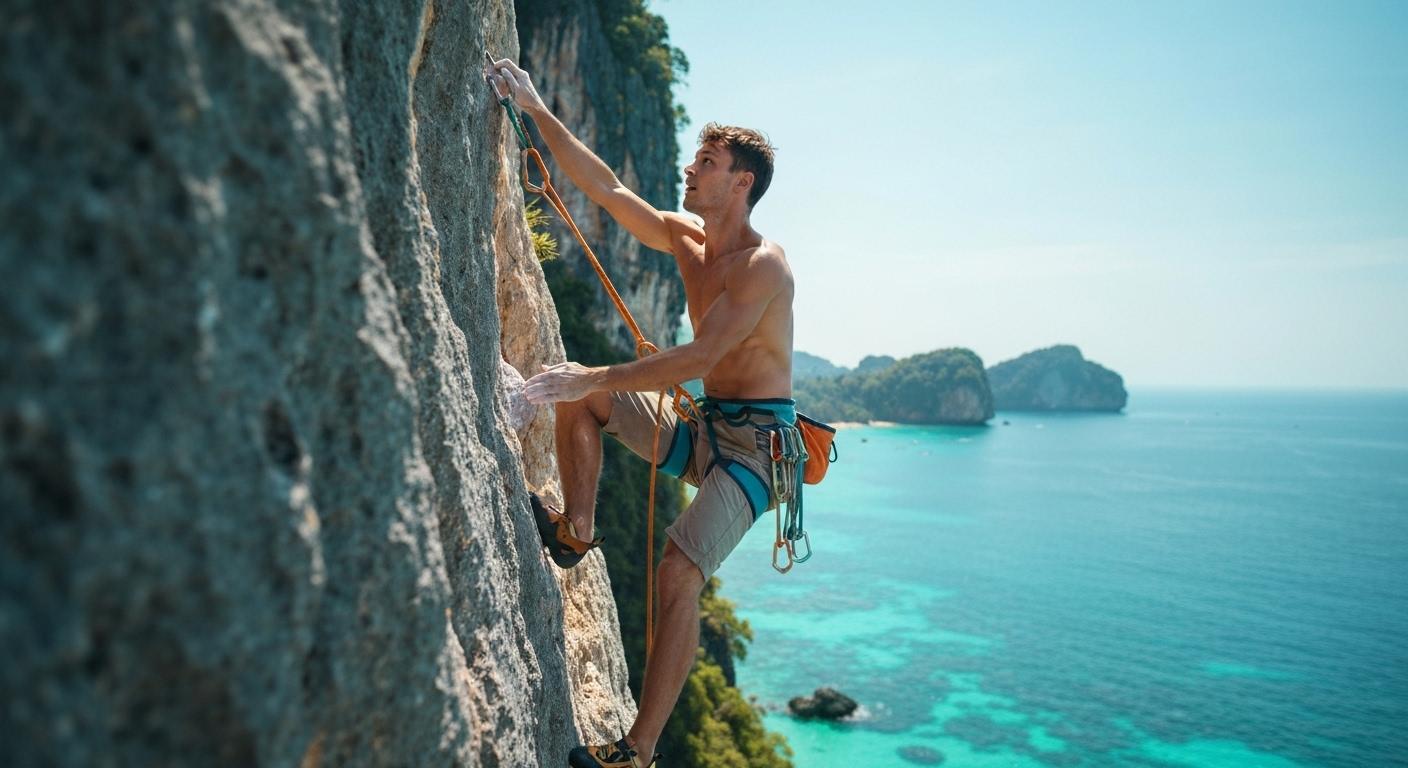
Railay is probably the most photographed climbing area in Southeast Asia. The limestone karsts rising out of the water create a striking backdrop, and the routes genuinely cover a range from beginner-friendly grades (5b/5c in French sport grades) to hard sport climbing in the 7s and above. The area is accessible only by longtail boat from Ao Nang in Krabi, which adds some logistical texture but keeps it from being overrun by casual visitors.
The main walls are Muay Thai Wall (approachable for beginners, well-bolted routes), One-Two-Three Wall, and the longer, more serious routes on the Diamond Cave side. Conditions are best from November through April. From May onward, the humidity spikes and rain makes the rock unpredictably slick.
Tonsai Beach
Tonsai is adjacent to Railay but feels like a different world. It attracts climbers who are there primarily to climb rather than to take photos, and the campsite/bungalow culture there is stripped down accordingly. Deeper Water Soloing (DWS), where you climb routes over water and fall in when you come off, is popular here and is one of the more enjoyable things you can do in Thailand. The routes for DWS tend to be in the 6a-7a range, appropriate for intermediate climbers.
Guides and instruction for beginners are available at Tonsai through several guiding companies that operate out of the beach. Expect to pay 1,500-2,000 THB for a half-day introduction with gear included, or 2,500-3,500 THB for a full day.
Climbing Gyms in Bangkok
If you are based in Bangkok and want to train climbing rather than just do it as a one-off activity, the city has a growing number of indoor bouldering and lead gyms.
Boulder Thailand
One of the more established climbing gyms in Bangkok, with locations in the Ekkamai-Thong Lor area and in Rama 9. Bouldering passes run around 250-300 THB for a day visit, or roughly 1,800-2,000 THB for a monthly pass. The walls are reset regularly and the difficulty range covers beginner problems through competition-level V8-V10 terrain. The Rama 9 location is larger and has both bouldering and rope climbing sections.
Gravity Lab
Located near On Nut BTS station, Gravity Lab is another popular option in Bangkok with a mix of bouldering walls and lead climbing. Day passes are competitive with Boulder Thailand at around 280 THB. The crowd here skews slightly more toward regular trainers and less toward one-time visitors, which means the atmosphere is more focused. They run technique classes on weekday evenings, worth attending if you are a beginner who wants structured instruction rather than just trying to figure things out on the wall.
Climbing Gyms in Phuket
Phuket's indoor climbing options are more limited than Bangkok's. There are some climbing walls at certain gyms and adventure sports centers around Patong and Kamala, but dedicated climbing gyms with proper route setting are thin. For serious indoor climbing training while based in Phuket, the outdoor crags at Railay (about 2.5 hours by road and boat) remain the better option.
Ao Nang in Krabi is accessible in about 2-2.5 hours from Phuket by car, making it feasible as a day or weekend trip for climbing. The driving route is reasonable and the roads are in good condition. From Ao Nang, longtail boats to Railay run frequently and cost around 100-120 THB per person.
Gear Considerations
If you are just starting out, you do not need to buy anything immediately. Climbing gyms rent shoes for 100-150 THB per session and provide harnesses and belay devices for lead climbing. Outdoor guiding companies in Railay and Tonsai provide all necessary equipment as part of the guide fee.
Once you commit to climbing regularly, the first purchase worth making is your own climbing shoes. Rental shoes have been stretched by hundreds of feet and typically fit poorly, which affects performance significantly. A basic pair of beginner shoes from brands like La Sportiva, Scarpa, or Black Diamond runs 2,500-4,500 THB in Bangkok at shops around Siam Paragon or from climbing gym pro shops.
Chalk bags and chalk blocks are cheap (150-300 THB) and make a real difference on sweaty days, especially in Thailand where humidity means hands are almost always damp.
Getting Started
The fastest way to get into climbing is to show up at an indoor gym during a quieter period (weekday afternoons work well) and ask if they run any introduction sessions. Most gyms in Bangkok offer one-on-one or small group intro sessions that cover the basics of movement on the wall, falling safely, and belay technique for rope climbing. These typically run 400-800 THB including equipment rental.
Bouldering, climbing without ropes on shorter walls with thick crash mats, is the simplest entry point. There is no belay certification required, you can work problems at your own pace, and the community at bouldering gyms is generally welcoming to newcomers. Start there, build the movement fundamentals, and move to outdoor climbing once you can consistently climb V2-V3 indoor problems.
Fitness Progress and What to Expect
The first two weeks of climbing regularly will feel like a lot of forearm pump (the intense forearm fatigue climbers get mid-route) and skin soreness on your fingertips. Both pass. After a month of consistent training (three to four sessions per week), grip strength and pulling endurance improve noticeably. Core strength, particularly the ability to hold body tension on steep terrain, develops more gradually over two to three months.
Most people do not become strong climbers in a single Thailand trip. What you can realistically expect from a focused two-week climbing stay around Railay is to come back with better movement awareness, significant forearm development, and a clear sense of whether climbing is something you want to pursue longer-term.
Heading to the islands? Check out our Muay Thai camps in Koh Samui and the full Samui fitness guide. For a broader view, see our Phuket vs Bangkok fitness comparison.